
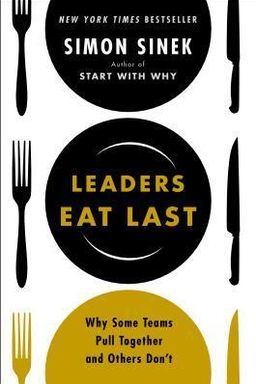
Leaders Eat Last cover

Leaders Eat Last

by Simon Sinek

Explore the depths of true leadership with Simon Sinek''s ''Leaders Eat Last.'' Discover how biological instincts shape hierarchy and how leaders can create safe, trusting environments that inspire collective progress. Challenge modern performance addictions and embrace integrity for sustainable success.

Leaders Eat Last: The Biology of Trust and Leadership

What makes people willing to risk their lives—or careers—for others? Simon Sinek argues that the answer lies in biology and leadership. In Leaders Eat Last, he shows that our ability to cooperate and thrive depends on chemical systems shaped for survival—systems that reward safety, connection and service but break down under fear, isolation and greed. Great leaders understand this biology and design cultures that mimic the conditions of strong tribes: safety inside, shared threats outside, and trust flowing in every direction.

Sinek contends that leadership is not about rank or authority; it is about responsibility. When leaders protect their people, oxytocin and serotonin—our social bonding chemicals—flow, triggering loyalty and cooperation. When they prioritize numbers or personal gain, cortisol and dopamine dominate, producing stress, competition and ethical blindness. The book connects neurochemistry, anthropology and real-world organizations to explain why empathy, honesty and protection create resilient teams in both the battlefield and the boardroom.

The Circle of Safety

At the heart of Sinek’s argument is the Circle of Safety—a social contract leaders create by extending protection to everyone in their care. Inside that circle, people feel secure enough to collaborate and innovate rather than guard their backs. Outside it, the team faces external threats together. When the circle weakens—through layoffs, politics or selfish management—cortisol floods the workplace, and cooperation collapses.

Leaders like Bob Chapman of Barry-Wehmiller restored safety by dismantling symbols of mistrust—time clocks, locked parts cages, and hierarchy barriers. These small acts released social chemicals that rebuilt trust and ownership. Contrast that to fear-driven cultures like Merrill Lynch under Stanley O’Neal, where competition replaced cooperation and internal sabotage followed.

The Biology of Belonging

Sinek explains behavior through four chemicals: Endorphins, Dopamine, Serotonin and Oxytocin (E.D.S.O.). Endorphins dull pain; dopamine rewards achievement; serotonin builds status through trust; and oxytocin fosters connection. Balanced cultures use both the “selfish” pair (endorphins and dopamine) and the “selfless” pair (serotonin and oxytocin). When organizations pursue only dopamine hits—bonuses, rankings, rapid gains—they drift toward addiction and loneliness. When leaders balance drive with empathy, teams sustain energy and creativity for the long run.

Cortisol, the stress chemical, plays the villain here. Chronic fear from layoffs or distrust keeps cortisol high, suppressing immunity and cognition. Companies like Next Jump countered this by guaranteeing lifetime employment, reducing fear and enabling coaching instead of firing. The result: turnover plummeted and performance rose.

Empathy and Moral Courage

Sinek personalizes leadership through stories like Captain Mike “Johnny Bravo” Drowley, an A-10 pilot who risked his life to protect soldiers because he imagined their fear below the clouds. His empathy—built through mental rehearsal of others’ experiences—shows that compassion fuels bravery and sound judgment. Similarly, Captain David Marquet empowered his submarine crew by trusting their intent rather than demanding obedience, proving that shared authority unleashes collective intelligence.

When empathy fades, abstraction takes over. The book warns against decisions made through spreadsheets or detached metrics—echoing Milgram’s experiments and cases like the Peanut Corporation of America, where executives followed rules yet ignored humanity. Moral blindness begins where personal connection ends.

Modern Challenges: Stress, Distraction, and Shareholderism

Sinek calls our current era Destructive Abundance—a system awash in dopamine incentives, shareholder primacy and digital distraction. Leaders chase quarterly highs and social-media validation, numbing the sense of purpose that sustained earlier generations. The antidote is service: shifting from “me” to “we.” The same way Alcoholics Anonymous teaches recovery through helping another person, organizations recover when individuals serve one another rather than compete for the next hit of recognition.

The book closes by inviting you to live the Circle daily: build real friendships at work, tell the truth even at cost, give time instead of money, and always protect people before numbers. Biological safety is not sentimentality—it is the foundation of resilience. When you lead this way, performance, innovation and loyalty follow naturally because the brain rewards protection and service with trust and stability.

Core message

The health of an organization depends on the leader’s willingness to put people first. Build safe circles, balance biological drives, and replace fear with empathy, and people will give you their best—together.


The Circle of Safety

A Circle of Safety is more than a metaphor—it’s a leadership responsibility. When you extend protection to your team, you replace internal fear with shared focus on external challenges. Within that circle, colleagues cooperate because they trust the leader’s intent. Outside it, cortisol and self-preservation dominate.

How it works

Inside a strong circle, people feel free to admit mistakes, offer help and take initiative. The U.S. Marines illustrate this perfectly: leaders eat last, literally serving their troops before themselves. That ritual reinforces hierarchy as service, not privilege. Bob Chapman's factories mirror this ethos in peacetime business—when he removed fences, time clocks and locked cages, trust replaced suspicion, and employees began protecting one another.

When circles break

When leaders shrink the circle to include only a few insiders, everyone else fends for themselves. Office politics erupt, silos form and cooperation disintegrates. Chronic cortisol cultures—like those at collapse-prone firms such as Enron or Merrill Lynch under Stanley O’Neal—teach people to survive rather than serve. Over time, innovation dies because no one feels safe enough to risk honesty or creativity.

Building your own circle

  • Show protection through action: take responsibility when things go wrong.
  • Remove artificial barriers that signal distrust—complicated approvals, physical separations or executive perks.
  • Create shared rituals of belonging—meals, recognitions and acts of service that make protection visible.

When people feel genuinely safe, oxytocin levels rise, communication opens, and the group becomes more resilient. You don’t build safety through slogans; you build it through daily, consistent protection of your people’s dignity and future.


Empathy as Leadership Power

Empathy doesn’t weaken leadership—it anchors it. When you see and feel what your people experience, you make stronger, faster, and more ethical decisions. Sinek illustrates this with Captain Mike “Johnny Bravo” Drowley, who descended into a storm to save soldiers under fire because he could feel their fear. His empathy, not orders, drove his courage.

How empathy becomes action

Johnny Bravo trained to visualize the view from the ground—to imagine what soldiers saw and felt. That practice wired his brain to respond personally, not abstractly, when the call came. Similarly, leaders who spend time “below the clouds”—at plant floors, customer sites or employee workspaces—see people, not data points. Bob Chapman listening to long-tenured workers or Charlie Kim walking office halls built empathy that guided tough decisions protecting people rather than profits.

Why empathy outperforms detachment

Empathetic leadership releases serotonin and oxytocin in teams. Employees feel recognized, cared for and willing to go the extra mile. Detached, purely data-driven leaders flood the workplace with cortisol and fear. The contrast shows why empathy is a performance tool, not merely morality—it fuels loyalty and initiative.

Leadership lesson

Go where your people are. See what they see. The courage to care is the foundation of moral authority and decisive leadership.


The Chemistry of Trust

Human cooperation runs on chemicals. Sinek uses biology to explain why trust feels good and fear drains us. Four core chemicals—Endorphins, Dopamine, Serotonin and Oxytocin (E.D.S.O.)—govern how we balance pursuit with partnership. Add cortisol, the stress chemical, and you can assess any culture’s chemistry quickly.

The balance of drives

Endorphins ease pain and sustain effort. Dopamine rewards accomplishment, motivating us to chase goals and celebrate wins—but can become addictive. Serotonin connects pride with service, encouraging leaders to earn respect by caring for others. Oxytocin seals trust through generosity and kindness. Cultures rich in serotonin and oxytocin perform best under pressure because they replace anxiety with belonging.

Cortisol and chronic stress

Cortisol warns of danger but destroys cooperation when it stays high. Studies like Whitehall found that lack of control or recognition elevates stress and weakens health. When companies use fear—layoffs, humiliation or endless competition—they keep cortisol flooding workers’ systems, leading to sickness and burnout. By contrast, Charlie Kim’s lifetime employment policy dropped turnover from 40% to 1% because it eliminated fear and raised oxytocin.

(Note: This reframes motivation scientifically—traditional “carrot and stick” systems are really “dopamine and cortisol” systems, unsustainable over time.)

Designing chemical balance

  • Set achievable goals to channel dopamine without addiction.
  • Celebrate mentorship and service to trigger serotonin and oxytocin.
  • Minimize fear-based competition to keep cortisol in check.

A healthy culture feels good because it literally is good for your body. The chemicals of cooperation create trust you can measure in energy, resilience and creativity.


Culture Begins with the Leader

Leaders set the tone for everything. Sinek’s repeated refrain—“so goes the leader, so goes the culture”—summarizes years of research and vivid contrasts. Cultures mirror the chemical state of their leaders: calm and altruistic leaders broadcast safety; anxious or self-focused leaders infect the environment with fear.

Two extremes

Merrill Lynch under Stanley O’Neal became a cautionary tale. O’Neal isolated himself physically and socially, rewarding internal rivalry that destroyed cooperation. When crisis came, no one told him hard truths. By contrast, Captain David Marquet on the USS Santa Fe decentralized authority, replacing permission with intent. His crew’s performance soared because trust and accountability replaced dependence.

Another model is James Sinegal at Costco, who prioritized long-term trust over short-term profit. By paying well and maintaining benefits even in recessions, he proved that people-first strategy produces sustained performance.

How leaders influence biochemistry

Leadership behavior shapes chemical climate. Presence, transparency and shared sacrifice release serotonin and oxytocin. Fear, secrecy and favoritism spike cortisol. People don’t copy your words—they mirror your biology. Walk the halls, share routines, and take blame publicly; these visible acts recalibrate the team’s emotional chemistry.

Key principle

You set culture by how you use power. Share it, and trust multiplies. Hoard it, and fear spreads faster than facts.


From Abstraction to Humanity

Abstraction is invisible but dangerous. The moment you stop seeing people and start seeing metrics, you begin to justify harm. Sinek ties this to Milgram’s obedience studies and to modern corporate scandals where process outran morality. Distance dulls empathy because you no longer feel oxytocin for those unseen.

Corporate distance, ethical collapse

From the Peanut Corporation of America’s food scandal to BP’s Deepwater Horizon disaster, the pattern repeats: people obey metrics instead of consciences. Following orders, submitting reports and chasing quarterly goals insulated leaders from the human cost of their decisions.

Remedies to restore empathy

  • Bring people to the data—show who benefits or suffers from each decision.
  • Encourage site visits, customer meetings and frontline exposure to break abstraction.
  • Limit digital distraction—face-to-face time triggers the oxytocin that keeps moral instincts alive.

Abstraction and distraction feed each other in the digital age. Real relationships—not dashboards—are your moral compass. See people, and you will act humanely.


Integrity and Moral Courage

Integrity is the test of trust. In the Marines, candidates who admit mistakes remain trustworthy; those who hide or deflect lose leadership potential. That rule applies everywhere: you may respect competence, but you only follow honesty in crisis.

Truth builds safety

Ralph Lauren’s revelation of bribery in Argentina showed how transparency preserves credibility. Bank of America’s denial of responsibility for its unpopular debit-card fee did the opposite. Openness lowers cortisol by signaling that people won’t be punished for truth. Deception spikes stress and corrodes morale.

Practicing integrity daily

  • Admit errors clearly and promptly.
  • Avoid spin—explain reasoning and values openly.
  • Hold leaders accountable for cultural impact, not just results.

When you choose truth over optics, people choose you in return. Ask yourself the “foxhole” question: would others trust you with their safety when danger comes?


Friendship and Service

The simplest way to rebuild cooperation is friendship and service. Friendships create the constant low-dose oxytocin that keeps groups cohesive; service reorients motivation from dopamine highs to enduring fulfillment. Together they cure what Sinek calls “performance addiction.”

Friendship as structure

When colleagues know one another beyond job titles, they compromise and collaborate more easily. The bipartisan friendship of Bob Goodlatte and Stephanie Herseth Sandlin turned into legislative teamwork after shared experiences abroad. Workplaces can mimic this through shared meals, off-site retreats and unstructured conversation time.

Service as recovery

Organizations addicted to performance metrics can heal through purposeful service just as recovering addicts do in AA’s Step Twelve. Helping others releases oxytocin and serotonin, balancing dopamine-driven cravings for recognition. Making mentorship and assistance part of job design keeps organizations humane.

Final reminder

Time and attention, not bonuses, are the true currencies of leadership. When you give people both, you regenerate trust faster than any strategy document can.

Dig Deeper

Get personalized prompts to apply these lessons to your life and deepen your understanding.

Go Deeper

Get the Full Experience

Download Insight Books for AI-powered reflections, quizzes, and more.