
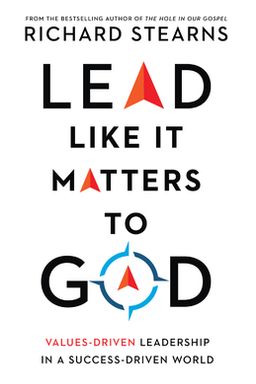
Lead Like It Matters to God cover

Lead Like It Matters to God

by Richard Stearns

Lead Like It Matters to God offers Christians a blueprint for value-driven leadership, emphasizing transformation over success. Richard Stearns shares insights from his career to guide leaders in creating workplaces that reflect Christian principles, fostering environments of respect, love, and integrity.

Leading Like It Matters to God

What if leadership was never meant to be about success, fame, or achievement—but about faithfulness? In Lead Like It Matters to God, Richard Stearns argues that the essence of leadership is not found in maximizing profits or gaining influence, but in embodying the character of Christ through our everyday work. Stearns contends that much of modern leadership culture—both secular and within the church—has drifted into an obsession with outcomes and success, yet God’s standard for leadership turns that paradigm upside down. God cares far more about how we lead than what we achieve.

From his decades of experience—first as CEO of Parker Brothers and Lenox, and then as president of World Vision—Stearns invites you into a redefinition of leadership rooted in values rather than victory. His life story mirrors the tension between worldly metrics and spiritual ones: after climbing the corporate ladder to success, he faced unexpected career failures and transitions that ultimately led him into ministry. Through these humbling experiences, he discovered that God’s economy measures worth differently. As Mother Teresa once told a senator, “God did not call me to be successful; he called me to be faithful.” That statement—simple yet revolutionary—became Stearns’s compass for life and leadership.

The Core Revolution: Values Over Success

Stearns launches his discussion with a powerful theological insight: leadership, in God’s design, participates in Christ’s ministry of reconciliation. Quoting 2 Corinthians 5:20—“We are therefore Christ’s ambassadors”—he reminds readers that every Christian leader, no matter their workplace, represents God’s kingdom. Whether you are managing a business, raising children, teaching students, or serving in local government, you are part of God’s revolution to bring healing and restoration to the world. Leadership is not about commanding, acquiring, or climbing; it’s about cultivating environments where integrity, justice, and compassion can flourish.

The book confronts what Stearns calls the “idolatry of success.” Modern culture worships outcomes—revenues, titles, follower counts—without questioning what those metrics mean in light of eternal purposes. He likens this obsession to breathing a colorless, odorless gas: pervasive, invisible, and slowly deadly. When results become our god, our souls shrink. Leadership then devolves into manipulation rather than ministry. In God’s kingdom, however, fruitfulness replaces success: love, joy, peace, kindness, and faithfulness (from Galatians 5:22–23) become the evidence of true leadership effectiveness.

Ambassadors in Everyday Workplaces

Stearns reframes leadership for ordinary contexts. Workplaces are the mission fields of modern life—where the ways we respond to stress, power, and pressure testify about our faith. He acknowledges how brutal secular environments can be—dog-eat-dog politics, toxic performance cultures—but insists that these spaces are crucibles for character formation. During his own career in corporate America, Stearns faced dismissals, manipulative managers, and professional setbacks. Yet each experience taught him that faithfulness under pressure is not weakness but strength. When you take God to work, your faith becomes practical: it guides daily decisions, relationships, and priorities. You model what divine leadership looks like in human systems.

To illustrate, Stearns draws on biblical figures like Moses, Joshua, and David—leaders who faced failure or fear yet persevered through trust. These stories, alongside his own, form a mosaic showing how God molds character through humility, surrender, and endurance. As Stearns puts it, “God’s power is made perfect through our weakness.” The leader’s job is not to appear flawless but to point others to the flawless One.

The Seventeen Values: A Framework for Faithful Leadership

The heart of the book lies in seventeen values that define how to lead like it matters to God: surrender, sacrifice, trust, excellence, love, humility, integrity, vision, courage, generosity, forgiveness, self-awareness, balance, humor, encouragement, perseverance, and listening. Each value represents an aspect of Christ’s character lived out in human leadership. These are not techniques or formulas but spiritual disciplines—habits of being rather than doing.

For instance, humility dismantles ego-driven authority; integrity forbids compromise when no one is watching; encouragement lifts others toward their potential. Each chapter uses stories from Stearns’s corporate and ministry career to show how these virtues work in practice—from the “executive toilet” anecdote that humbled him at Lenox to the way his perseverance guided World Vision through controversies like the AIDS response in Africa. Through these examples, he demonstrates how ordinary faithfulness creates extraordinary impact.

Why This Matters Now

Stearns writes amid a cultural crisis of leadership. Scandals in corporations, churches, and politics reveal values in collapse. The 21st century desperately needs leaders who exhibit courage, empathy, and truth instead of self-interest. Stearns urges readers to reclaim leadership as sacred vocation—to lead as Christ’s ambassador wherever they are. He reminds us that God’s kingdom advances not through the powerful few but through faithful many who embody his love in their workplaces and relationships.

“Success may be a byproduct of your faithfulness,” Stearns concludes. “But faithfulness is success.”

As you journey through this summary, you’ll explore how surrender begins leadership, how trust sustains it, how excellence glorifies God, and how love and integrity define its impact. You’ll see leadership reframed not as a pursuit of ambition but as an act of worship—a daily decision to serve God in the sphere he’s placed you. Because leadership truly matters to God, and when it reflects his character, it changes the world.


Surrender: The Starting Point of Leadership

Stearns begins his leadership framework with the paradox at the heart of Christian faith: you must lose control to lead well. True leadership starts with surrender—handing your ambitions, plans, and anxieties back to God. This idea contradicts the world’s mantra that leaders must assert dominance, control outcomes, and demonstrate power. Yet, in Scripture, surrender is the seed of transformation. “For whoever wants to save their life will lose it,” Jesus said, “but whoever loses their life for me will find it.” (Matthew 16:25).

Letting Go of the Illusion of Control

Through his corporate ascent, Stearns learned that striving for self-made success leads to emptiness. When he became CEO of Parker Brothers at thirty-three, he enjoyed power and acclaim—until sudden termination exposed how fragile worldly achievements are. After two firings in one year, he entered what he calls his “wilderness period.” In that forced silence, God reshaped his understanding of vocation. He realized his job was not to manage outcomes but to know, love, and serve God wherever he was.

During unemployment, his prayer shifted from “Help me find a better job” to “Show me how to know and serve you here.” That surrender led him to Lenox and, years later, World Vision, where he made life decisions based entirely on obedience rather than ambition. When asked if he would leave his corporate success for ministry—a move that meant selling his home and taking a massive pay cut—his recruiter challenged him: “Are you open to God’s will for your life?” Stearns said yes, reluctantly but faithfully. That yes changed everything.

The Daily Discipline of Surrender

Surrender is not a one-time event; it’s a daily act. Stearns emphasizes beginning each day with a prayer: “Lord, help me know, love, and serve You in this place.” This transforms work from performance to partnership with God. Leaders who surrender experience freedom—they have nothing left to lose because they’ve already entrusted everything to God. They lead differently: calmly, humbly, and without fear of failure.

He humorously compares unsurrendered Christians to bad waiters who forget their one job. God calls believers to perform one sacred task—join his kingdom revolution of reconciliation—yet many become distracted by worldly success. Like undercover agents in workplaces, Christians serve a higher mission beneath their career titles. Our “real job,” Stearns reminds us, is to represent Christ faithfully wherever we’re planted, with surrender as our badge.

Freedom through Dependence

A surrendered leader finds strength not in autonomy but in dependence. Stearns experienced this when he assumed leadership at World Vision—an overwhelming role requiring him to manage global poverty and humanitarian crises. In prayer, he confessed helplessness: “Lord, I have no idea how to do this.” He sensed God’s reply: “I have you exactly where I want you—helpless and dependent.” Through that humility, Stearns discovered God’s sufficiency replaces every deficiency.

“A surrendered leader has nothing left to lose because they’ve already placed everything in God’s hands.”

In a culture that prizes control, surrender feels unnatural. Yet it is the hidden key to resilient, peaceful, and redemptive leadership. When you begin with surrender, you stop striving and start serving. Leadership becomes less about your success and more about God’s story through you—one chapter at a time.


Excellence: Working for the Lord

In Stearns’s vision of leadership, excellence is not perfectionism—it’s wholehearted devotion. Quoting Colossians 3:23, he reminds leaders: “Whatever you do, work at it with all your heart as working for the Lord, not for human masters.” Excellence means doing your best to honor God, regardless of how outcomes turn out.

Effort Over Outcome

Stearns distinguishes between outcome-focused cultures and effort-driven ones. He recounts organizational scandals—like Wells Fargo’s phony account crisis—to show how fixation on results breeds corruption. Instead, excellence celebrates diligence and fairness. Drawing from Jesus’s Parable of the Talents, he explains that God commended the servants not for how much profit they earned but for how faithfully they used what they had. Excellence, therefore, is faithfulness in action.

Creating a Celebration Culture

At World Vision, Stearns built a “celebration culture.” Employees were praised for effort, collaboration, and creativity—not just outcomes. He warns that leaders who only reward success create shame cultures that stifle innovation. Positive reinforcement, by contrast, motivates excellence through encouragement instead of fear. This approach mirrors coach Pete Carroll’s philosophy: cultivate joy in striving rather than anxiety about winning.

Excellence as Worship

For Stearns, excellence is worship. When leaders embody God’s character in their craft—whether designing tableware at Lenox or raising funds for humanitarian work—they honor the Creator who gave them those abilities. Mediocrity dishonors that gift. Excellence, pursued with humility, is a testimony: it declares that all good work belongs to God. “Good outcomes do not lead to excellence,” Stearns writes. “Excellence leads to good outcomes.”

His story of transforming World Vision’s culture underscores the point. Moving from vague mission to defined goals tripled revenue and amplified impact for the poor. Excellence didn’t distance the ministry from grace—it magnified it. When Christians pursue excellence for God’s glory, others see the beauty and integrity of his kingdom reflected in their work.


Love and Humility: The Heart of Leadership

Stearns calls love and humility the twin engines of Christian leadership. Without love, leaders manipulate; without humility, they self-destruct. Together, they transform workplaces into communities of grace.

Love as Leadership Currency

Drawing from 1 Corinthians 13 and Matthew 22, Stearns insists that loving coworkers is leadership’s supreme command. Leaders earn influence through care, not expertise. He recalls visiting Lebanese pastors who loved their former enemies—Syrian refugees who once occupied their country—with food and compassion. Their love turned years of hatred into healing. In the office, love looks like knowing your people, affirming their worth, and placing their growth above personal gain.

Humility That Listens

Stearns’s humiliating “executive toilet” story—where he clogged the CEO restroom on his first day—became a parable about humility. God reminded him that titles never exempt leaders from servanthood. “True humility is not thinking less of yourself; it is thinking of yourself less,” Rick Warren wrote, and Stearns echoes it. At Lenox, he intentionally invited dissenting voices to challenge his decisions. This fostered trust and innovation. Later, as CEO of World Vision, he prayed from weakness rather than confidence, hearing God say, “I have you exactly where I want you.”

Humility empowers others. When leaders acknowledge limits, they elevate their teams and release gifts hidden in the group. Stearns’s conversation with a discontented vice president at Parker Brothers—where he humbly requested the man’s help instead of demanding loyalty—restored unity. Humility, he concludes, is not soft leadership but courageous dependence on God and others.


Integrity: The Bedrock of Credibility

Integrity, Stearns argues, is the “North Star of leadership.” Without it, even charisma and competence collapse. Integrity means doing the right thing when no one is watching—aligning private character with public witness.

Private Character and Public Trust

Stearns’s early career at Parker Brothers revealed how companies evaluate unseen character. After being hired as a marketing assistant, he learned their secret “Clint Test”: sending him to lunch with a junior employee to observe how he treated someone with no influence. His kindness, not his résumé, won him the job. That hidden test illustrated how integrity radiates outward into culture: when leaders embody it, trust cascades through teams, eliminating fear, gossip, and toxicity.

Relational and Corporate Integrity

Beyond personal honesty, relational integrity governs how leaders treat people. Firing someone unjustly or exploiting authority pollutes the moral fabric of the organization. Conversely, transparency and fairness create belonging. At World Vision, Stearns institutionalized integrity through the “pumpkin seed incident”—when marketers failed to fulfill an advertising promise to donors. He unwaveringly ordered the seeds sent as promised and addressed all staff: “Integrity always trumps revenue.” That policy became cultural doctrine.

Integrity also scales to institutions. From Wells Fargo’s fraud to Theranos’s deceit, Stearns notes how moral compromise destroys brands and souls alike. For Christians, integrity is mission—it reflects God’s light to the watching world. Leaders illuminate workplaces by consistent truthfulness, even when costly. The reward is credibility that endures long after achievements fade.


Courage and Perseverance: Faith Under Pressure

Few qualities reveal a leader’s faith as vividly as courage and perseverance. Stearns links courage to faith—trusting God amid uncertainty—and perseverance to character—refusing to quit despite hardship. Together, they sustain hope when outcomes are unclear.

Courage to Do the Right Thing

Stearns’s defining act of courage came when he led World Vision’s controversial AIDS response. At the time, most American Christians avoided the topic, viewing it as the result of sin. His own staff warned, “World Vision is a G-rated ministry, and this is an R-rated issue.” But Stearns pressed ahead, saying, “God help us if we fail to do the right thing at such a time as this.” His brave choice sparked criticism but ultimately transformed public attitudes. Through education and empathy, World Vision helped millions and inspired legislation like President Bush’s PEPFAR initiative.

Perseverance through Storms

Later, Stearns faced toxic leadership at Lenox under an abusive CEO. Instead of fleeing, he chose patience and grace, protecting coworkers from harm and embodying peace amid chaos. His steady integrity eventually led to the CEO’s resignation—and Stearns’s promotion to lead the company. Perseverance, he teaches, does not mean passive endurance but active faith in God’s justice. “Bless those who persecute you,” Paul wrote. Stearns lived that command in real time.

Faith Enables Courage

Stearns connects these values to biblical models: Moses confronting Pharaoh; Joshua entering Canaan; Paul enduring imprisonment. For each, courage birthed from faith. As he reminds readers, “For the Christian, the opposite of fear is not courage but faith.” When you trust that the outcome belongs to God, you can face any challenge. Courage becomes contagious—it stiffens others’ spines and inspires perseverance. Together, they form the heartbeat of leadership that matters to God.


Listening and Encouragement: Amplifying Others

Listening and encouragement complete Stearns’s vision of servant leadership. The best leaders, he writes, amplify others’ voices and lift their spirits. These are relational disciplines—the way leaders reflect Christ’s empathy in community.

Listening Creates Wisdom

Stearns references Martin Luther King Jr.’s “I Have a Dream” moment, born from listening to Mahalia Jackson’s cue. He uses this story to argue that wisdom often arrives through humility—when we pause long enough to hear God through others. At World Vision, he practiced “the waggle dance” of bees: group collaboration where each member contributes insight until consensus forms. By listening broadly, he found that collective wisdom often exceeded his own instincts.

Encouragement as Leadership Fuel

Encouragement, according to Stearns, is spiritual oxygen. He tells how early discouragement at Gillette almost derailed him—until his new boss at Parker Brothers, Ed, nurtured confidence by saying, “You’ve got what it takes.” That affirmation propelled him from entry-level marketer to company president. “Treat a man as he can and should be,” Stephen Covey said, “and he will become as he can and should be.” Stearns’s career proves it. Encouragement unlocks potential, while criticism cripples.

Through listening and affirmation, leaders transform employees into collaborators, workplaces into communities, and goals into shared visions. The leader’s task is not to be the loudest voice but the most attentive ear—and the kindest tongue. When people feel heard and valued, they rise to their calling. That is how leadership changes the world.


Faithfulness: Success Reimagined

Stearns closes his book by redefining success entirely. In God’s economy, success is faithfulness—steadfast obedience over impressive results. He reminds readers that we are “Christ’s ambassadors,” sent where we work to reflect his character. Every spreadsheet, meeting, and conversation can become a sacred act when done for God’s glory.

Faithfulness Over Achievement

Through stories of Mother Teresa’s humility and King Solomon’s regret, Stearns contrasts worldly success with spiritual fulfillment. Solomon achieved unimaginable wealth but described it as “meaningless, a chasing after the wind.” Teresa, by contrast, embraced weakness, calling herself “a little pencil in the hand of a writing God.” Stearns sees leadership the same way: we are instruments for God’s purposes, not authors of our own glory.

Faithfulness in Practice

At World Vision, Stearns saw faithfulness ripple outward. A family sponsoring one child in Kenya unknowingly supported a future archbishop—proof that God multiplies small acts of obedience into far-reaching impact. Like the farmer scattering seed in Jesus’s parable, leaders may never see their harvest, but their faithfulness plants eternity. Stearns’s pastor friends, Merold and Margaret Stern, embodied this truth—quietly serving a small church for fifty years, shaping countless lives through unseen consistency.

“What God accomplishes through you involves you,” Stearns concludes, “but it does not depend on you.”

Faithfulness frees leaders from anxiety. It teaches that outcomes are God’s responsibility, obedience ours. When you lead like it matters to God, success loses its tyranny—and life regains its sacred meaning.

Dig Deeper

Get personalized prompts to apply these lessons to your life and deepen your understanding.

Go Deeper

Get the Full Experience

Download Insight Books for AI-powered reflections, quizzes, and more.