
Idea 1
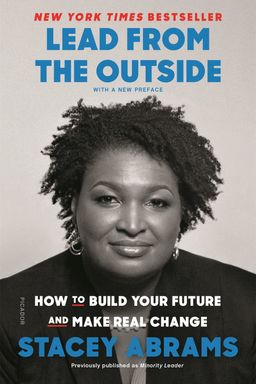
Leading from the Outside: Turning Otherness into Influence
Have you ever felt like an outsider staring through the glass at rooms where real decisions get made? Stacey Abrams, political leader, lawyer, entrepreneur, and bestselling author, has lived that reality—and turned it into a strategy for transformation. In Lead from the Outside, she argues that those who have been excluded from traditional power systems—because of race, gender, class, or identity—can and must learn to lead precisely from those edges. Her claim: leadership isn’t conferred by title or invitation. It’s taken, built, and earned by understanding how to turn your so-called disadvantages into tools of power.
Abrams writes not as a detached theorist but as a practitioner. She draws from her own path—from growing up in working-class Mississippi, to becoming Georgia’s first female minority leader, to running for governor and almost winning despite a heavily stacked deck. Across chapters, she pairs personal stories with pragmatic frameworks: clarifying ambition; naming fear and using it as fuel; hacking opportunity when systems are closed; building networks instead of mythical ‘mentors’; mastering money; preparing to fail forward; and sustaining work, life, and activism in a messy world she calls ‘Work-Life Jenga.’ Each chapter scaffolds a skill outsiders need to thrive inside powerful spaces without sacrificing who they are.
The Core Argument: Otherness as a Source of Power
At its heart, the book’s thesis is deceptively simple: otherness, when examined and embraced, can be a leadership advantage. Traditional systems reward sameness—those who look, sound, and act like the people already in charge. But outsiders see what insiders don’t: the spaces between the rules, the inequities in the game, and the hacks that allow new players to succeed. Abrams frames this as both survival and innovation. Leaders from marginalized backgrounds must learn to name their fears, confront bias directly, and wield their perspective as strategic insight.
She identifies recurring patterns in her journey—the loneliness of being the “only one,” the sting of lowered expectations, and the sheer grit needed to keep going. But she also demonstrates how those same experiences honed her empathy, strategy, and creativity. Outsiders, she insists, are uniquely positioned to see new routes to progress because they’ve already learned to build their own maps.
Why This Matters Now
Abrams’s message lands in a world where conversations about diversity and inclusion often stop at slogans. She moves past them, offering a manual for how to actually function when inclusion hasn’t arrived yet. For women, people of color, and others marginalized at the decision table, she provides both validation and tactics: how to claim ambition without apology, how to ask for help, how to navigate scarcity, and how to recover from failure while remaining visible enough to try again. In this sense, the book sits beside works like Sheryl Sandberg’s Lean In or Brené Brown’s Daring Greatly, but from a more intersectional and hands-on perspective—less about corporate survival and more about reshaping the system itself.
The Key Concepts
Abrams organizes her lessons around core competencies that any leader can practice:
- Ambition: You must dare to want more, even when society trains you to want less. Clarifying the ‘what,’ ‘why,’ and ‘how’ of your dreams turns vague hopes into executable plans.
- Fear: Rather than pretending to be fearless, successful leaders name fear, understand its roots, and reframe it as a guiding force.
- Opportunity: Those shut out of formal systems learn to “hack” opportunity—finding pathways through networking, volunteering, or spotting overlooked needs others ignore.
- Mentorship and community: The “myth of the mentor” gives way to a board of advisers—sponsors, peers, and situational allies who can each fill different gaps.
- Money mastery: Power depends on financial fluency—understanding debt, wealth, fund-raising, and the emotional scripts that shape our relationship to money.
- Failure and resilience: Learning to fail forward, to claim mistakes as learning tools, becomes essential armor for anyone blazing new trails.
- Work-Life Jenga: Abrams rejects the fantasy of balance in favor of strategy—stacking, adjusting, and sometimes rebuilding when life falls over.
The final chapters, “Taking Power” and “Preparing to Win and Embrace the Fail,” blend reflection with urgency. Abrams contends that taking power isn’t about domination but deliberate agency: analyzing your beliefs, building allies across difference, and daring to claim visibility even when being visible is risky. Her personal stories—from challenging Georgia’s voter suppression to writing novels under a pseudonym—illustrate both the structural barriers and the creative tactics that define leadership from the margins.
For Whom This Book Speaks
Though written in the context of politics and advocacy, Abrams’s blueprint resonates across professions. Teachers, entrepreneurs, activists, and creatives who’ve ever felt outnumbered or underestimated will see themselves in her narrative. Her voice is candid, humorous, and fiercely precise: part memoir, part manual, part manifesto. What you get isn’t theory but operating instructions tested in the real world.
Core Message
“Leadership is hard,” Abrams reminds us, “but for those on the outside, it’s a necessity.” You cannot wait to be chosen; you must architect your own power through preparation, persistence, and presence. The skill set that grows from being overlooked—the capacity to adapt, to see patterns others ignore—turns outsiders into innovators. If you harness it intentionally, otherness becomes your strategic edge.
By the end, Abrams reframes leadership not as a privilege granted from above but as a deliberate craft of self-definition. The outsider, she tells us, is not a victim but a visionary in progress. With the right tools—ambition, courage, allies, and strategy—anyone can lead from where they stand, even and especially when they stand apart.