
Idea 1
A Scholar’s Journey Through Empire and Rebellion
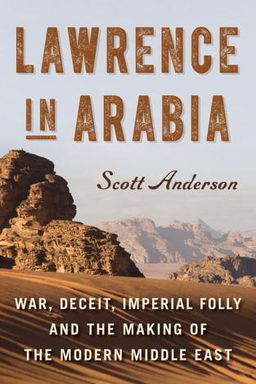
How does one man move from being an Oxford scholar to commanding desert tribes and reshaping the politics of an empire? The book traces T. E. Lawrence’s metamorphosis against the backdrop of early twentieth-century imperial rivalry, war, and ideological upheaval. It presents not just his biography, but an anatomy of intelligence, deceit, ambition, and the birth of modern Middle Eastern borders.
You start with Lawrence in academic isolation—cycling across France, studying medieval castles, and developing habits of endurance and precision. These traits become the foundation for his later effectiveness: linguistic fluency, physical stamina, and an ability to live austerely among Arabs. When David Hogarth recruits him from the Ashmolean Museum to archaeological digs in Carchemish, Lawrence’s scholarly curiosity transforms into field intelligence. There he masters Arabic, befriends locals such as Dahoum, and begins to view the East not as an object of study but as an autonomous world. This empathy, grounded in observation rather than superiority, becomes central to his later political work.
Empire, Espionage, and the Shadow Wars
The book expands the canvas: archaeology, commerce, and diplomacy overlap with espionage. In 1913–1915, Lawrence’s world merges academic exploration with clandestine mapping. German operatives like Max von Oppenheim and Curt Prüfer weave plots for pan-Islamic revolution; British engineers and scholars collect intelligence under archaeological cover. You see how knowledge becomes power—maps, wells, and tribal ties function as military resources. Lawrence’s ability to read culture and terrain in tandem makes him uniquely effective in this informal war. (Note: This convergence anticipates modern intelligence work that blends anthropology with strategy.)
The Ottoman Collapse and the Moral Layer of Politics
The larger historical field—the disintegrating Ottoman Empire—adds urgency and tragedy. Young Turk reformers promise modernization, Islam, and Turkism simultaneously; these incompatible ideals breed repression and the Armenian catastrophe. Meanwhile, oil prospectors like William Yale and Socony executives pursue concessions that transform commerce into geopolitics. The book situates Lawrence among these ambitious forces, showing that every scholarly or military choice takes place inside a larger web of deceit, opportunism, and resource hunger.
From Opportunity to Betrayal
Arab nationalism presents a fleeting chance for genuine political reordering. You follow the missed alliance between Emir Hussein of Mecca, secret societies like al-Fatat, and British planners who envision landing troops at Alexandretta. When Gallipoli absorbs Allied focus and France vetoes the alternative plan, the window closes. The subsequent McMahon–Hussein correspondence and Sykes–Picot treaty institutionalize hypocrisy: the same British officials promise Arab independence while secretly dividing the region with France. This contradiction becomes the emotional and political core of the book—why empires lose the moral right to win.
Lawrence’s Tactical Revolution
In reaction to bureaucratic rigidity and bloody conventional failures at Kut and Gaza, Lawrence invents a new model of war. He transforms from staff intelligence officer to insurgent architect, applying his earlier scholarship to live conflict. His “drift like a gas” vision defines guerrilla warfare: avoid direct confrontation, strike lines of supply, move in dispersed clouds. Dressed in Arab clothes and guided by tribal trust, he learns that leadership comes from cultural fluency, not command structures. Irregular warfare becomes a philosophy of adaptation—military tactics integrated with anthropology.
Revolt, Victory, and Trauma
The capture of Aqaba in July 1917 and subsequent sabotage raids illustrate this philosophy in action. Tribal loyalties, represented by Faisal’s diplomacy and Auda Abu Tayi’s warrior energy, sustain momentum. Yet personal cost accumulates: Lawrence’s ordeal at Deraa, his order for “no prisoners” at Tafas, and his horror at the Damascus hospital expose the psychological toll. By war’s end, his achievements are undone by imperial diplomacy—Allenby’s compliance with French domination and the later Paris settlement transforming Arab hopes into mandates controlled by outsiders.
Knowledge as Power, Betrayal as Legacy
The book closes with a haunting duality. Intelligence networks like NILI demonstrate how local expertise and conviction can change a war but also how bureaucracy and prejudice can kill them. The same tension defines Lawrence’s fate: idealism crushed by institutional deceit. Sykes manipulates information, Weizmann and Faisal attempt pragmatic bargains, and Lloyd George and Clemenceau casually divide the spoils. For you as a reader, the thread connecting archaeology, espionage, and insurgency becomes clear—knowledge, when fused with moral conviction, can challenge empire, but untempered ambition turns knowledge into betrayal.
In essence, the book argues that modern Middle Eastern history was not predetermined; it was improvised through individual genius, corporate greed, and bureaucratic secrecy. Lawrence’s transformation—scholar to spy to rebel—embodies that volatile intersection. His triumphs reveal what cultural understanding can achieve; his disillusionment reveals how institutions betray those who think for themselves.