
Idea 1
How Bad Vibes Became Law
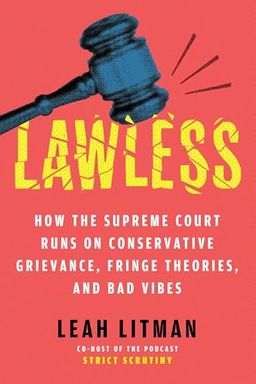
How can you tell when a court stops merely interpreting law and starts channeling a political project? In this book, Leah Litman argues that today’s Supreme Court is running on conservative grievance—what she calls “bad vibes”—and that those vibes travel through institutions, doctrines, and funding networks to produce outcomes that look technical but land as partisan wins. The core claim is simple but unsettling: method isn’t neutral. Originalism, the “major questions” doctrine, selective First Amendment protections, and a narrowed notion of corruption together transform conservative political preferences into binding law that reshapes your rights, your vote, and your government.
Litman contends that this isn’t an accident or a single-term story. It’s a decades-long, well-funded project that built a judicial pipeline (via the Federalist Society and allies), choreographed the right cases (via groups like Alliance Defending Freedom), and rewrote core legal baselines on money in politics, administrative power, and civil rights. To see it, you have to watch the full ecosystem—judicial selection, dark-money architecture, doctrinal pivots, and social rituals that reward judges who deliver.
What “vibes” look like in doctrine
“Vibes” here aren’t mysticism; they’re a recurring orientation. In Dobbs, the majority installed a “history and tradition” test that treats 18th- and 19th‑century practices as dispositive on modern reproductive rights—a jurisprudence shaped by eras when women couldn’t vote. In religion cases like Masterpiece Cakeshop, Fulton, and 303 Creative, the Court recasts equality duties as burdens on religious speech, creating exemptions that let discrimination re-enter the marketplace. In voting cases like Shelby County, Rucho, and Brnovich, the Court dismantles federal protections and declares extreme gerrymandering a non-justiciable political question, even as it narrows ways to challenge racially disparate voting burdens.
These moves travel with another pair: money-as-speech rulings (Citizens United, McCutcheon, SpeechNow) supercharge wealthy influence, while corruption cases like McDonnell narrow criminal law to explicit quid pro quo, blessing a culture of access, trips, and gifts as non-criminal “politics as usual.” And on governance, the major questions doctrine and Chevron’s demise shift technical choices from expert agencies to courts, creating a standing veto on ambitious regulation (West Virginia v. EPA; COVID-era rules; student-debt relief).
The machine behind the rulings
Litman shows how a selection-and-funding machine makes these doctrinal tilts predictable. From Ed Meese’s originalism push in the Reagan era, through the Federalist Society’s vetting pipeline, to Mitch McConnell’s confirmation tactics, personnel choices primed the Court to deliver on movement goals. Donor ecosystems—DonorsTrust, Americans for Prosperity, Marble Freedom Trust—pair with litigation shops (ADF), messaging outlets, and amicus networks to feed cases with sympathetic facts and sustained political cover. Leonard Leo sits at the hub, brokering funds and access that socialize judges into a congenial interpretive world.
The result is coordinated choreography: choose nominees with deregulatory, originalist priors; curate cases like 303 Creative (where the “client” initially had no actual customer request); flood the Court with amici; and package outcomes in neutral-sounding doctrines. That’s why the jurisprudence so often tracks Republican governing interests: restricting reproductive autonomy, widening religious and corporate exemptions, loosening campaign-finance restraints, limiting voting protections, and hobbling regulators (note the alignment with policy gains for energy, finance, and culture-war actors).
Why this matters to you
This isn’t a law-school abstraction; it’s the architecture of your daily life. Dobbs made pregnancies riskier (see Mayron Michelle Hollis’s ectopic pregnancy story in Tennessee). 303 Creative tells LGBT people that “ordinary commerce” can suddenly turn into expressive refusal. Shelby County greenlit polling-place closures and restrictive ID laws, producing hours-long lines that fall hardest on Black voters. Citizens United and McCutcheon let a handful of billionaires bankroll narratives and access pipelines you can’t match with a vote or a small donation. And West Virginia v. EPA slows collective responses to climate and public-health crises by demanding hyper-specific congressional text that our gridlocked Congress rarely supplies.
Key through-line
When the Court elevates grievance-laden narratives to governing doctrines, it doesn’t just decide cases—it reallocates power: from voters to donors, from agencies to judges, from equality norms to religious exemptions, and from modern rights to a curated past.
If you want to contest outcomes, Litman’s advice is implicit: don’t argue doctrine in isolation. Build infrastructure—pipelines, litigation capacity, donor transparency laws, and legislative clarity—that can withstand a Court poised to privilege deregulatory, socially conservative ends. (Note: This echoes insights from scholars like Jamal Greene on “rights as trumps” and Kate Andrias on political economy—doctrine follows power and institutions.)