
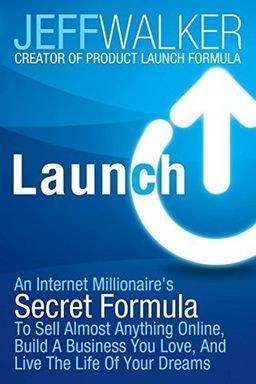
Launch cover

Launch

by Jeff Walker

In ''Launch,'' Jeff Walker reveals his secret formula for online success, providing a step-by-step guide to creating excitement and ensuring product launches achieve maximum impact. Learn to build a business you love, leveraging the internet''s power to reach millions and generate significant sales.

Launch: Turning Ideas into Profitable Movements

What if you could introduce your product or idea to the world and have people waiting, wallets in hand, eager to buy before it even goes live? In Launch, Jeff Walker argues that this isn’t a pipe dream—it’s a formula. After going from a stay-at-home dad with no marketing experience to a multimillion-dollar business owner, Walker reverse-engineered his success into what he calls the Product Launch Formula (PLF). This book is both a how-to manual and a mindset shift, showing that with the right sequence of engagement, storytelling, and anticipation, anyone can turn their idea into a thriving business.

Walker contends that the old way of doing business—creating a product, releasing it cold, and hoping sales come—is obsolete. Instead, he introduces a modern, relationship-driven approach to marketing that blends psychology with online communication. His core belief is clear: launches aren’t just for Silicon Valley tech giants or Hollywood studios; they’re for solo entrepreneurs, coaches, teachers, and creators of any kind. By combining story, timing, and strategy, you can engineer excitement and build momentum long before your product ever hits the market.

From Basement to Breakthrough

Walker opens with his origin story—sitting in a cluttered Colorado basement, clicking the send button on an email that changed his life. That first email led to $34,000 in sales in a week, far surpassing the salary from his old corporate job. What started as a simple experiment in selling a newsletter became the seed of a larger discovery: launches could be systematized. Over the next eighteen years, he refined this system through hundreds of launches—his own and his clients’—resulting in billions of dollars in revenue across niches from dog training to herbal medicine.

A Formula, Not a Gamble

What makes PLF distinctive is that it removes the guesswork from entrepreneurship. Instead of relying on hope, Walker gives entrepreneurs a tested roadmap built around three interconnected pillars: sequences, stories, and mental triggers. Borrowing from behavioral psychology (as popularized by Robert Cialdini in Influence), he demonstrates how authority, reciprocity, anticipation, and scarcity can ethically move people to take action. But he insists this isn’t manipulation—it’s education wrapped in storytelling.

Walker’s framework helps readers attract enthusiastic audiences, craft high-value prelaunch content, and orchestrate a launch “event” that builds community, trust, and urgency. Each chapter unfolds like a backstage pass to major launches, showing that every business, regardless of size, moves through the same rhythm: the pre-prelaunch (planting seeds), the prelaunch (building momentum), the launch (open cart moment), and the post-launch (delivering delight and preparing for the next round).

Hope Marketing vs. Launch Marketing

Walker contrasts his method with what he calls “hope marketing”—the naïve strategy of creating something and praying people buy it. Through real stories like John Gallagher’s leap from food stamps to six figures with a board game, he shows how removing hope and replacing it with deliberate, customer-driven engagement makes small entrepreneurs unstoppable. The book’s case studies—dog trainers, musicians, massage therapists, and even doctors—prove that the formula’s success doesn’t depend on luck or budgets but on understanding human connection and timing.

Launching Is a Mindset

Beyond strategy, Walker presents launching as a philosophy of service. Entrepreneurship, he argues, isn’t simply about making money—it’s about building movements, helping others, and living freely. “Every successful business,” he writes, “is a succession of launches.” Whether you’re unveiling a new product, campaign, or book, mastering this cycle keeps your business alive and your audience passionate. In this sense, Launch functions as both a tactical guide and a motivational manifesto.

“You can’t afford to show up slowly,” Walker insists. “Momentum and cash flow are the lifeblood of every successful business.”

In the pages that follow, Walker unpacks the mechanics behind that momentum—from building email lists to scripting story-driven launches, activating psychological triggers, and turning modest beginnings into empires. By the end, you’ll see why launches are not just business events, but opportunities to rewrite your story, serve with integrity, and create a life—and legacy—you love.


Sequences, Stories, and Triggers: The Core Framework

At the heart of Jeff Walker’s Product Launch Formula lies a triad that turns ordinary marketing into unforgettable events: sequences, stories, and triggers. Every element of a launch flows through this structure. Get these three components right, and your products will almost sell themselves; get them wrong, and even the best idea might go unnoticed.

Sequences: Building Trust Over Time

A sequence is simply a series of communications that build interest and trust over time. Instead of “one and done” advertisements, Walker promotes progressive engagement—like a conversation that unfolds naturally. His four primary sequences are the pre-prelaunch (the teaser), the prelaunch (education and excitement), the launch (open cart or sales period), and the post-launch (follow-up and nurturing).

The magic of sequences lies in timing. Each communication builds on the one before it, overcoming objections and deepening connection. It’s a lesson that echoes Seth Godin’s idea from Permission Marketing: by earning trust through gradual engagement, you make buying feel like the next natural step rather than a hard sell.

Stories: The Emotional Engine

Walker emphasizes that humans remember stories, not statistics. Stories give context, create empathy, and translate abstract benefits into emotional experiences. In each of his case studies, storytelling is the secret glue. His own transformation—from desperate “Mr. Mom” to six figures in seven days—serves as the guiding mythos of the book. For his student John Gallagher, it was the story of going from food stamps to success through purpose. The takeaway: every brand needs a hero, a challenge, and a triumph.

Walker even structures his prelaunch content like a “three-act play”: introduce the opportunity (Act 1), demonstrate transformation (Act 2), and show the path (Act 3). This serial storytelling format mirrors the emotional pacing of movies or TV series, triggering anticipation and connection along the way.

Triggers: The Psychology of Buying

Finally, mental triggers are the psychological levers that guide decision-making. Drawing on behavioral science, Walker outlines nine major triggers—including authority, reciprocity, trust, anticipation, likability, community, events, scarcity, and social proof. These are the invisible undercurrents behind why people act. (Robert Cialdini’s Influence famously identified many of the same patterns.)

For example, when Susan Garrett used PLF to teach dog agility training online, she activated reciprocity (by giving tons of free value upfront), authority (as a decorated champion), and scarcity (limited enrollment). The result: $27,000 in her first launch from a $14.97 ebook. Triggers, when used responsibly, amplify a genuine message rather than manipulate behavior.

Walker warns: “With great power comes great responsibility.” Influence should serve people’s dreams, not prey on their fears.

When you weave triggers into compelling stories across a well-timed sequence, you transform mere marketing into a social event. That’s the core of his formula: take human psychology, deliver genuine value, and build anticipation—until your audience feels they’re part of something bigger than a purchase.


The Sideways Sales Letter: Selling Without Selling

One of Jeff Walker’s most impactful concepts is the Sideways Sales Letter. Instead of relying on a single, lengthy pitch like traditional direct marketing, he turns that sales letter on its side—transforming it into a series of short, engaging conversations stretched across several days. Each message delivers real value while subtly leading prospects toward the final purchase.

From Monologue to Dialogue

Traditional sales pages talk at people. The Sideways Sales Letter involves them in a conversation. Using a sequence of prelaunch content—usually three videos or posts—Walker helps readers learn, reflect, and build trust before any pitch is made. By the time the offer appears, buyers already feel “pre-sold.”

Entertainer Barry Friedman’s story brings this alive. After years of performing as a juggler, an injury forced him to rethink his career. Using the Sideways Sales Letter, he launched an online course helping entertainers get more corporate gigs. With a small list of under 1,000 subscribers, he sold all 15 $2,000 spots in his first program, grossing almost $30,000. His secret? A warm narrative arc instead of a cold pitch.

The Three Acts of Natural Conversion

  • Act 1 — The Opportunity: Show the possibility of transformation. Help your audience imagine what’s possible.
  • Act 2 — The Transformation: Teach a valuable concept that lets them experience a small win. This builds trust and reciprocity.
  • Act 3 — The Ownership Experience: Reveal how they can achieve the full change—your product becomes the natural next step.

By using this formula, Barry’s prospects didn’t feel “sold.” They felt invited. Each video deepened their belief that success was possible—and achievable through his mentorship. This is the psychology of gentle conversion, echoing Donald Miller’s StoryBrand approach: position the customer as the hero and yourself as the guide.

Authenticity as Advantage

In a noisy digital world full of “buy now” ads, authenticity becomes the differentiator. Walker teaches that when you focus on delivering results in advance—giving away real, usable knowledge—you trigger reciprocity and establish moral authority. It’s not about tricking people into buying, but letting them convince themselves. This is why PLF students often hear comments like, “I got so much value for free, I couldn’t wait to pay.”

“If you show people what’s possible and guide them to win before they pay, they’ll trust you forever.” — Jeff Walker

The Sideways Sales Letter flips selling into teaching, replaces pressure with curiosity, and creates long-term relationships instead of one-time transactions. It’s not just ethical—it’s effective, redefining what selling looks and feels like in the modern age.


Weapons of Mass Influence: The Psychology Behind PLF

Walker calls mental triggers “weapons of mass influence” because they are universal principles that shape how people act and decide. When woven into a launch sequence, these triggers turn marketing from a mechanical act into an experience that feels magnetic. Each trigger taps into a timeless human behavior—trust, belonging, scarcity, authority—and together they create unstoppable momentum.

Nine Psychological Triggers

  • Authority: People follow experts. Display credentials or credibility (like Susan Garrett’s world championships in dog training).
  • Reciprocity: Giving value first—free training, tools, or advice—creates obligation and goodwill.
  • Trust and Likability: Be authentic. Share personal struggles and wins so people root for you.
  • Anticipation: Build excitement. Tease what’s coming to focus attention on your next message.
  • Community and Events: Create shared moments that make buyers feel part of something larger.
  • Scarcity: Limit availability, bonuses, or time frames to encourage immediate action.
  • Social Proof: Showcase testimonials, comments, and case studies to reassure undecided buyers.

Ethics of Influence

Walker insists influence must be exercised ethically. This isn’t about manipulation; it’s about alignment. When what you sell truly improves lives, activating these triggers becomes a service, not a scheme. He warns readers against using them deceptively: buyers can feel dishonesty faster than ever online. Integrity builds sustainability, manipulation breeds collapse.

Layering and Sequencing

The real potency emerges when triggers combine. For instance, scarcity amplifies social proof (people rush to buy what others want). Authority reinforces trust. Each prelaunch video can introduce one or two triggers organically—an effortless way to layer persuasion into education. This is why Product Launch Formula keeps working, even as tactics evolve. As Walker puts it, “The human brain hasn’t updated its marketing software in 10,000 years.”

Cialdini proved the power of triggers; Walker built them into a repeatable entrepreneurial system.

When you understand these triggers, you stop relying on hype. Instead, you design launches that feel human, helpful, and irresistibly engaging. It’s psychology in service of authenticity—and it’s why Walker’s students keep defying the odds.


The Seed Launch: Start Before You’re Ready

If you don’t yet have a list, a product, or even clarity on your offer, Walker’s Seed Launch is your entry point. It’s the simplest version of his formula, designed to help you start selling before you’ve even built the product by using direct interaction and feedback from your earliest customers. It’s where small beginnings lead to big empires.

Create, Don’t Wait

Walker emphasizes momentum over perfection. You build a micro-list—30 to 300 people from your personal contacts or social media—and offer a small, interactive course or service. Once people buy, you create the product in “real time,” adjusting based on their responses. Teaching live through calls or webinars makes delivery effortless and organic.

Tara and Dave Marino’s story captures this spirit. After personal tragedy and with no existing audience, they launched a six-week program called “You’re Perfect” to a list of just 200 contacts. They sold five spots, earning $3,000. Those first customers shaped the content, which later evolved into multiple six-figure products. The key? They didn’t wait—they launched.

Validation, Not Guesswork

A Seed Launch validates ideas before you invest months in creation. It’s the lean-startup version of marketing. Each session doubles as a focus group, eliminating the “curse of knowledge” that blinds experts. Surveys between calls identify client needs, ensuring your product perfectly fits your market. (Comparable to Eric Ries’s Build-Measure-Learn feedback loop.)

The Circle of Growth

Walker illustrates how a Seed Launch naturally evolves into a larger Internal Launch and then a Joint Venture Launch. He calls this cycle the “Circle of Awesome.” Each launch builds income and audience, compounding momentum. The first launch tests; the second scales; the third transforms your business. This iterative approach continually increases value and reach.

“Don’t wait for the perfect list or the perfect product. Your business will never outgrow your willingness to take imperfect action.” — Jeff Walker

The Seed Launch turns uncertainty into fuel. It replaces theory with feedback, fear with real progress, and doubt with data. It’s how beginners prove their concept, gain confidence, and start earning—all before they think they’re “ready.”


The Business Launch Formula: Scaling with Purpose

Once you’ve mastered individual launches, Walker invites you to apply the same principles to your entire business. He calls this the Business Launch Formula (BLF)—a blueprint for scaling from product launches to a self-sustaining ecosystem that continually grows impact and income. It’s about turning momentum into mastery.

From Product to Platform

Walker shows how entrepreneurs like John Gallagher and Susan Garrett used serial launches to evolve from single products into thriving brands. Gallagher went from selling 12 herbal board games to running a global membership site, while Garrett scaled a $27,000 ebook launch into an international dog-training empire. Each product built audience trust and primed the next offer—a living demonstration of compounding influence.

The Six Keys to Ongoing Success

  • Keep delivering high-value prelaunch content to nurture trust and visibility.
  • Continuously build and engage your list; your email base is a money-printing asset.
  • Make more than one offer a year—at least two to four launches maintain energy and income.
  • Follow the Circle of Awesome: Seed to Internal to JV Launch, each feeding the next.
  • Refine through Relaunches or Evergreen models for passive scalability.
  • Delight your buyers with overdelivery and surprise bonuses—they’ll become advocates.

Case Study: A Business Born Again

Psychologist Ruth Buczynski applied BLF to reinvent her entire company after 9/11 devastated her live-conference business. By moving to virtual online summits using PLF principles, she built a thriving educational enterprise serving tens of thousands of practitioners. Today, her digital “Brain Science” and “Mindfulness” events attract global audiences and even the U.S. Army’s Surgeon General. That’s BLF in action: using launches not just for revenue but resilience.

Walker’s point is clear: commerce is communication. When you build a launch-based business, you move beyond transactions—you create transformation. Each launch is both a revenue event and a trust-building ritual. BLF gives you not just a business strategy but a philosophy for sustainable success.


Creating a Business and Life You Love

Beyond tactics, Walker emphasizes that true success means more than sales—it’s about freedom, fulfillment, and contribution. He urges entrepreneurs to build businesses they actually love running. His own journey from debt to designing a life in Durango, Colorado—with ample time for family, skiing, and kayaking—shows that entrepreneurship should serve life, not consume it.

The Power of Purpose

The starting point is your “Big Why.” Money buys freedom, but purpose adds meaning. Whether your mission is helping people heal, teach, or grow, aligning your business to that mission magnifies energy and endurance. Like Simon Sinek’s idea in Start with Why, clarity of purpose drives attraction—for both customers and collaborators.

Lifestyle Design and Boundaries

Walker teaches that you run your business—it doesn’t run you. He encourages designing lifestyles intentionally: setting boundaries, saying “no” to distractions, and staying focused on what he calls your genius zone—the few activities that energize and elevate your impact. Everything else can be hired out or automated. Success, he notes, isn’t about working more but creating systems that buy back your time.

Relationships, Not Isolation

No entrepreneur thrives alone. Walker credits his circle of mentors—figures like Dan Sullivan, Tony Robbins, and Yanik Silver—and his own mastermind groups for multiplying success. He calls this the rising-tide effect: when you surround yourself with ambitious, giving peers, everyone’s boat lifts. He advises readers to join or form masterminds, stay teachable, and continually “sharpen the saw” (borrowing from Stephen Covey).

Abundance Over Scarcity

Perhaps most inspiring is his lesson about Abundance Juice—a phrase born from an early encounter with a competitor. Instead of guarding trade secrets, Walker helped his rival with technical advice, only to receive mentorship and opportunity in return. That decision, he says, changed his life. “There’s enough for everyone,” he teaches. “When you operate from abundance, you attract allies, not enemies.”

“You can’t build greatness alone—and you can’t build it from fear.” — Jeff Walker

Walker’s closing chapters feel less like a manual and more like a life philosophy. Entrepreneurship, he argues, is the fastest path to personal growth—if you stay grounded in service, mastery, and gratitude. Your business becomes a reflection of who you are becoming, and each launch, a mirror showing how much further you can grow.

Dig Deeper

Get personalized prompts to apply these lessons to your life and deepen your understanding.

Go Deeper

Get the Full Experience

Download Insight Books for AI-powered reflections, quizzes, and more.