
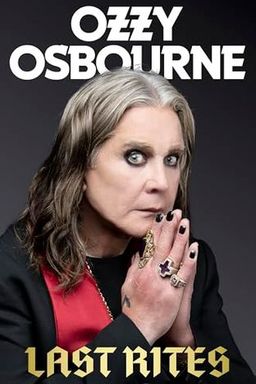
Last Rites cover

Last Rites

by Ozzy Osbourne,Chris Ayres

The late heavy metal icon charts his health difficulties and his return for the Back to the Beginning concert.

From Aston to Icon: Survival, Sound, Reinvention

How does a kid from a bomb-scarred, soot-stained neighborhood become the godfather of heavy metal, then a reality-TV patriarch, and still live to tell the tale? In this memoir, Ozzy Osbourne argues—mostly by showing, not preaching—that survival skills forged in poverty, stigma, and chaos can morph into stagecraft and business leverage, but they also carry a self-destructive charge. He contends that if you want to understand the music, the mayhem, and the redemption, you must start at 14 Lodge Road, Aston: cramped rooms, shift-work parents, undiagnosed dyslexia/ADHD, and a chronic feeling of not fitting in.

You watch Ozzy escape factory life and petty crime by leaning into performance—the same humor that soothed bullies in school later disarms prison guards at Winson Green, and then audiences in clubs. The Beatles crack open the portal: if Lennon and McCartney can do it, maybe a kid from Birmingham can, too. He scrawls “OZZY ZIG NEEDS GIG” and, with a fifty-watt Vox PA (bought with his dad’s help), draws in the people who matter: Geezer Butler, Tony Iommi, and Bill Ward. The chemistry becomes Earth, then Black Sabbath, and together they mint a darker, heavier language of rock built on Tony’s tritone riff and Geezer’s apocalyptic lyrics, with Ozzy’s haunted tenor out front.

Sound, image, and a moral panic

Black Sabbath is both art and atmosphere. The self-titled song channels the so-called “Devil’s interval,” horror-film energy, and working-class dread into something new. Vertigo Records packages it with eerie cover art (the Mapledurham watermill image), and a brand forms almost accidentally. Audiences read literal Satanism; the band leans into theater. Critics scoff (Lester Bangs famously does), but live shows, residencies, and U.S. tours convert fans. A pattern emerges you can use in any creative field: when sound and story align—name, imagery, timing—you ignite a movement, even if outrage shadows the ascent.

Success with a cost

Fame magnifies vulnerabilities. Substances move from curiosity to dependency: from degreasing chemicals at the plant to amphetamines, booze, and cocaine binges in Bel Air (773 Stradella Road). Management deals go sideways. Jim Simpson gives way to Patrick Meehan, limos replace vans, but “in perpetuity” publishing clauses and opaque royalty streams drain wealth. The home that should heal—Bulrush, nicknamed Atrocity Cottage—becomes a theater of excess: stuffed bears, mannequins, shotguns, and escalating pranks. Domestic life frays; Ozzy marries Thelma Riley, welcomes Jessica (January 20, 1972), then disappears into tours and drugs, a pattern he later owns with shame. His father dies on January 20, 1978, and grief collides with guilt—a hinge moment that deepens the spiral.

A rupture and a rebuild

By 1979 the band fractures; Sabbath fires Ozzy and hires Ronnie James Dio. What looks like an ending becomes a second beginning. Sharon (Arden) steps in as manager and partner, treating Ozzy’s career like a startup: headline smaller venues to sell out, craft a distinctive image, grind media relentlessly, and—crucially—buy back autonomy from Don Arden for $1.5 million. Creative salvation arrives with Randy Rhoads, a disciplined, curious guitarist who coaxes melodies into anthems: “Crazy Train,” “Goodbye to Romance,” “Suicide Solution,” and the Mozart-tinged “Diary of a Madman.”

Brilliance beside catastrophe

Tour theatrics escalate (kabuki curtains, flame-fingered God-hand, midgets on stage) while controversy multiplies. The CBS dove stunt backfires into iconic photos and a building ban; the Des Moines bat bite triggers rabies shots and global headlines; the “Suicide Solution” lawsuit tests First Amendment ground. Then tragedy strikes in Leesburg: a drug-impaired pilot clips the tour bus; the crash kills Randy Rhoads and Rachel Youngblood. Ozzy staggers forward with Bernie Tormé and Brad Gillis, carrying survivor’s guilt and renewed dependence.

The long road of recovery

Rehab (Betty Ford, Hazelden, Huntercombe) becomes a recurring checkpoint, not a cure. Near-fatal overdoses, public meltdowns, and finally a 2003 quad-bike crash force medical clarity. Neurologist Dr. Allan Ropper cuts through the fog of over-prescription, diagnoses a rare Parkinsonian syndrome, and sets hard conditions for treatment: sobriety, accountability, and fewer pills.

A different kind of fame

The Osbournes reframes Ozzy for a new generation. What starts with a Cribs segment becomes a reality-TV phenomenon: cameras in the garage (“Fort Apache”), a “safe room” with a hidden lens, airport mobs after episode two. Visibility explodes; privacy shatters. Sharon builds a television empire, Jack and Kelly come of age on camera, and Ozzy becomes both brand and dad, grateful yet exhausted. If Sabbath proved sound and myth could create a movement, The Osbournes proves domestic authenticity can reboot a legacy—at a price.

Across it all, you see patterns you can use: environments shape appetites; showmanship can be both shield and sword; business literacy matters as much as riffs; and recovery is maintenance, not a miracle. Ozzy’s life is noisy, messy, and unheroic in all the honest ways—yet it models how reinvention, the right partners, and relentless small choices can turn chaos into a second act.


Aston Roots and Survival Wiring

To grasp Ozzy’s choices, you start in postwar Aston, Birmingham, where scarcity is the curriculum. Six kids in a tiny terrace, a backyard loo at first, parents rotating shifts—Jack at GEC nights, Lillian at Lucas by day. Bomb sites are playgrounds, soot is décor, and every shilling counts (he loses ten after buying a flashlight and spends hours hunting ditches to find it). That parsing of pennies trains a risk appetite: when the world gives you little, you improvise to get more.

School offers humiliation more than help. Dyslexia and ADHD (unnamed back then) turn reading into torment at Prince Albert and Birchfield Road. Teachers label him clown and failure; Ozzy learns to perform before he’s punished, buying social protection with laughs. The nickname sticks. That coping mechanism—steal attention before it steals you—becomes a life skill on stage. (Note: many artists, from Richard Branson to Will.i.am, later connect undiagnosed learning differences to entrepreneurial or creative traits.)

Crime as belonging, not career

Petty crime arrives not as a calling but a club. With Patrick Murphy, Ozzy scrumps apples, fiddles parking meters, and botches burglaries (a thumbless glove gives him away). Winson Green—three months for an unpaid fine—feels like the real world’s cold slap. He learns the daily rhythms: Block H, showers, guards’ taunts, Rule 43, and ways to survive with humor and alliances. He picks up small trades (tattooing, splitting matches) and a bigger lesson: factory life isn’t the only path, but neither is criminality. He walks out sharper about power, vulnerability, and performance.

The Beatles as portal

Music starts at home—sing-alongs, his dad’s polished radiogram—and explodes with With the Beatles, Please Please Me, and A Hard Day’s Night. Those records don’t just sound good; they redraw what’s possible. If working-class lads from Liverpool can do it, a Birmingham kid can too. The aspiration is both personal and practical: save for gear, learn a song, face fear, repeat. Ozzy’s first Fire Station Christmas party gig comes with near-panic and almost-soiled trousers—yet he survives. The principle becomes habit: anxiety can ravage you, but repetition and a captive audience can transform terror into thrill.

Tools, ads, and doors

The path out is DIY. Ozzy saves and—crucially—his dad stakes him for a fifty-watt Vox PA. He posts an audacious ad at Ringway Music: “Experienced front man, owns own PA system.” That line is both truth and theater; it gets Geezer Butler knocking and later reconnects Tony Iommi and Bill Ward from Mythology. Small tools create big leverage. You might not be “ready,” but signaling readiness draws collaborators. (Parenthetical note: in startup lore, this mirrors how early customers respond to clear, tangible signals of capability—hardware, demos, prototype.)

Showmanship as shield

What protects a dyslexic, anxious boy in hostile rooms? The same thing that later commands arenas: showmanship. Making people laugh, shocking them, playing the fool—these tricks buy time and safety before they sell tickets.

Work worlds that teach escape

Before music pays, factories and a slaughterhouse do. They teach stamina, trauma tolerance, and—dangerously—the chemistry of escape. Methylene chloride at the degreasing vat gets you high fast; Dexedrine extends nightclub nights; shift work numbs daylight. The environment doesn’t cause addiction, but it normalizes altered states as problem-solvers. When later success arrives, that muscle memory—reach for a stronger switch—comes roaring back with cocaine and pills.

So when you see Ozzy later bite a bat, front lawsuits, and survive near-death crashes, remember the origin story. A boy who felt broken learns to seize attention, to numb pain, and to treat risk like oxygen. Those strengths help him escape Aston and power a new sound; they also set traps he will spend decades trying to escape. The Aston chapter doesn’t excuse the havoc to come; it explains its fuel mix: poverty’s improvisation, schoolyard theater, factory chemistry, and a father’s quiet bet on his son’s PA and potential.


Forging Black Sabbath’s Sound and Myth

The Black Sabbath origin story doubles as a blueprint for building a genre: assemble complementary misfits, align sound with story, and let the culture do some of your marketing—whether you want it to or not. Ozzy’s ad pulls in Geezer Butler; Tony Iommi returns from Mythology with Bill Ward; Geezer switches to bass. Roles harden quickly: Tony the riff architect, Geezer the lyricist, Bill the rhythmic engine, Ozzy the volatile frontman. Rehearsals in Six Ways and Carlisle gigs turn a ragged lineup into a working organism.

The tritone and a mood called fear

They don’t set out to worship devils; they set out to sound scary. The self-titled track “Black Sabbath” uses the tritone—the so-called “Devil’s interval”—as a mood machine. Tony drops a monolithic riff; Ozzy’s vocal hangs like fog; Geezer’s lyrics tilt toward the apocalyptic. The result isn’t just a song; it’s a template. When fans and press conflate theater with theology, the band doesn’t correct too loudly. A little ambiguity sells tickets. (Compare Alice Cooper’s shock theatrics or KISS’s face paint; shock and myth often out-earn exposition.)

From Earth to Sabbath: the name that fit

The name change—sparked by a Boris Karloff film reference—snaps sound and signifier together. It’s an accidental branding masterstroke that dovetails with late-60s/early-70s zeitgeist: Hammer horror, occult paperbacks, and Manson-inflected headlines. Vertigo Records wants underground credibility; Sabbath delivers it. The Mapledurham watermill cover becomes an eerie tactile object that fans display like a talisman. If you’re building a creative product, note how packaging, timing, and social mood can compound the core invention.

Polarizing press, accelerating demand

Critics famously sneer—Lester Bangs calls them blunt instruments—yet the public votes with volume. A British Top Ten debut contradicts reviews; U.S. tours and Star Club stints turn them into a live force. Onstage chaos (purple paint on Ozzy’s nose, a blizzard of tossed trash) becomes part of the lore. Early radio flops (like “Evil Woman”) teach a practical lesson: keep showing up at odd hours; a 6 a.m. Radio 1 play can flip the switch.

Image vs. intent

They aren’t satanists; they’re theater kids with factory calluses. The mismatch between audience projection and artist intention becomes a career-long echo—and a revenue driver.

Systems behind the sound

Under the gloom sits a disciplined division of labor. Tony hoards riffs and tones, Geezer frames a lyrical worldview, Bill gives heft, and Ozzy sells it with voice and mischief. The band survives early chaos by gigging relentlessly and learning logistics: vans that start, gear that works, road managers who keep the lights on. The lesson for you: great creative teams pair differentiated talent with shared stamina. Sabbath’s alchemy works because roles are clear even when relationships aren’t.

The seeds of strain

The same factors that fuel momentum—controversy, touring, sudden money—also plant tension. Management shifts from Jim Simpson to Patrick Meehan bring limos and legal landmines. Substance use scales with venues. What starts as image bleeds into identity; what starts as a band of brothers ossifies into competing priorities. The sonic blueprint they invent becomes heavy metal’s DNA; the interpersonal blueprint—creative control without business literacy—becomes a cautionary tale.

If you’re building anything audacious, Sabbath’s rise offers a simple matrix: find a mood the culture wants but can’t name, give it a sound and a story, and then survive the reaction you provoke. Get the first three right and the fourth becomes your full-time job.


Fame’s Hidden Bill: Drugs, Deals, Fractures

Early triumph made Sabbath rich in demand but poor in defenses. The management handoff from Jim Simpson to Patrick Meehan adds polish (limos, allowances) and removes transparency. Royalties lag, checks bounce, and “in perpetuity” publishing deals siphon future wealth. Lawsuits pile up—Jim sues Meehan for enticement; the band fights for their own catalog—while tax liabilities (IRS and UK) loom. The lesson is brutal: musical control without business literacy exposes you to predatory contracts and endless legal bleed.

Addiction turns from accessory to engine

Meanwhile, the Bel Air house at 773 Stradella Road turns into a 24/7 supply chain. Coke arrives in wax-sealed vials via discreet vans; paranoia sends Ozzy and friends snorting everything in sight when sirens wail. Bandmates collapse (Tony at the Hollywood Bowl), fall ill (Bill’s hepatitis, Geezer’s kidney issues), or rack up injuries (Ozzy’s torn epiglottis). The spiral turns professional: shows wobble, recordings crawl, and relationships snap.

Atrocity Cottage: toys as symptoms

Bulrush Cottage—nicknamed Atrocity Cottage—becomes a museum of misdirected desire: a seven-foot stuffed bear, a gypsy caravan, a shotgun collection, mannequins “executed” at dawn. These aren’t just rock trinkets; they’re coping mechanisms. They escalate pranks into cruelty and turn a home into a hazard zone. Domestic life deteriorates: marriage to Thelma Riley, the birth of Jessica (Jan 20, 1972), and then a pattern of absence, infidelity, and violence that Ozzy later recounts with unflinching regret.

Grief on a clock

His father’s death on January 20, 1978—the same date as Jessica’s birth six years prior—compresses love and loss into a single page on the calendar. Hospital scenes, undertakers’ botched makeup, and an unfinished father-son conversation haunt Ozzy. Grief doesn’t sober him; it deepens the search for chemical relief. When you see later meltdowns, factor this wound into the mix—grief plus guilt plus access can be lethal.

Creative control vs. survival

Tony Iommi’s perfectionism pulls Sabbath forward musically as Ozzy’s reliability fades. Dedication on one side and disintegration on the other become irreconcilable. The band that invented a sound can’t protect its chemistry.

The break

By 1979, tensions crest. Ozzy walks, returns, and is ultimately fired. Ronnie James Dio arrives; Sabbath continues. For Ozzy, the firing reads like betrayal—Aston brothers turning corporate—but it’s also a forced reboot. If the first act taught him how craft plus charisma can move a culture, the end of that act teaches a harsher rule: without personal stability and fair deals, even a world-changing band can implode from the inside.

For you, this chapter compresses three takeaways. First, read and renegotiate contracts early; “in perpetuity” means exactly what it says. Second, compound stressors—tax, legal, touring—are accelerants for addiction. Third, if leadership and contribution drift apart, the team will pick structure over sentiment. Sabbath chooses function over fraternity; Ozzy, carrying grief and rage, now has to choose life over legend.


Reinvention Engine: Sharon and Randy

Ozzy’s second act starts with two catalysts: Sharon (manager, strategist, partner) and Randy Rhoads (a patient virtuoso who reshapes the music). Sharon turns free fall into a campaign. She rejects support slots in favor of headlining smaller venues—better to sell out 2,000 seats than get ignored in 15,000. She treats every interview and in-store signing as compounding interest, manages money and logistics with ferocity, and ultimately buys Ozzy’s contracts back from Don Arden for $1.5 million—hard-won autonomy that later enables Ozzfest and TV ventures.

A teacher with a Les Paul

Randy Rhoads doesn’t just play; he coaxes. He hears Ozzy humming half-songs and sits him down to finish them. “Crazy Train” begins with a rail of a riff and Ozzy’s top-line; “Goodbye to Romance” recasts grief as melody; “Suicide Solution” sparks when Randy tosses off a “Dah, Dah, D’La-Dah” at a party and Ozzy drops, “Wine is fine, but whiskey’s quicker…” Randy’s classical curiosity (inspired by his mother’s school) shows up in “Diary of a Madman,” whose intro lifts a Mozart motif into metal. He reads and writes music, teaches kids on tour, and seeks lessons wherever he lands. The band levels up because one member treats excellence as a daily habit.

Building a new team

Sharon orchestrates personnel like a GM: Bob Daisley and Lee Kerslake write and record, then legal conflicts prompt ruthless replacement; Tommy Aldridge and Rudy Sarzo step in to tour; even stage theatrics get cast, down to hiring John Allen (the midget) for shock set-pieces. Image flips from Sabbath grime to eighties glam; hair, wardrobe, and staging become assets. Sharon will risk PR gambits (the CBS dove stunt that ends in a bird bite and instant infamy) if they might move the needle.

Tragedy in Leesburg

The tour that cements Ozzy’s solo bona fides also delivers a mortal wound. In Leesburg, Florida, a joyride ends when a small plane—piloted by a drug-impaired driver—clips the band’s bus and explodes, killing Randy and Rachel Youngblood. Ozzy is shattered. He carries an image of Randy’s T-shirt logo, recovered intact from the wreckage, like a relic. Survivor’s guilt (“If he hadn’t been in my band, he wouldn’t have died”) becomes a refrain. Bernie Tormé and Brad Gillis step in to keep dates, but the music now sounds like a memorial in motion.

Discipline meets devotion

Randy’s legacy is technical and moral: practice like a craftsman, stay curious, be generous. Ozzy honors him annually with flowers and publicly with riffs that still ring off arena rafters.

Lessons in partnership

If Aston taught improvisation, Sharon and Randy teach structure: strategy, routines, rehearsals, and contracts that protect the art. Sharon’s willingness to feud with her father, fight labels, and swap out bandmates preserves the venture. Randy’s patience turns Ozzy’s melodic instincts into finished songs. For you, the takeaway is clear: pair a visionary with a systems-builder and a teacher, and you can engineer a comeback that outlasts the initial spark.

The cost is real—lawsuits with former players, public outrage at stunts, and grief that doesn’t fade—but the engine works. Two albums and a tour later, Ozzy is no longer “ex-Sabbath”; he’s a solo institution with a sound that marries hooks and virtuosity. That blend, built on Sharon’s chessboard and Randy’s fretboard, underwrites everything that follows.


Spectacle, Outrage, And Risk Management

Ozzy turns shock into a business model—then spends years managing its blowback. Stagecraft becomes engineering: kabuki curtains; a mechanical God-hand whose fingers spit flame; chain-mail suits that cut the wearer; and a foot-pedal meat catapult that sometimes misfires entrails into Ozzy’s own neck. Theatrical consistency builds a brand, but complexity multiplies failure points. You learn a simple showbiz truth: if it can go wrong in the dark, it will—unless you over-invest in safety, rehearsal, and crew.

PR by accident—and design

The CBS dove stunt—meant to charm executives—ends with Ozzy biting a live bird and getting banned from the building. It’s a disaster that prints as legend. The Des Moines bat incident triggers emergency rabies shots—and international infamy. The “Suicide Solution” lawsuit tests whether lyrics can be blamed for tragedy; courts uphold First Amendment protection. Protests by “Jesus freaks” and ASPCA scrutiny spark venue bans and, perversely, bump record sales. (Note: This is classic “Streisand effect” mechanics; suppression often amplifies message reach.)

Audience feedback loops

Throw meat into a crowd and the crowd throws back carcasses. What starts as a gag turns into butcher’s alley: dead cats, ox heads, and a janitorial horror show. Risk isn’t only pyro and hydraulics; it’s human escalation. Venues add security, authorities loom, and the team scrambles to contain a spectacle that audiences now co-produce.

Operations behind chaos

Sharon’s crew treats chaos like logistics: staging rehearsals, hiring specialized roadies, managing security (Tony Dennis), and scripting beats so improvisation doesn’t turn lethal. When errors happen—the New Year’s Eve LA event where the mechanical arm nearly collapses or the catapult’s elastic goes limp—the show must go on, but the postmortem is clinical: fix the system, not the performer’s bravado. For you, this is production 101: make spectacle the output of process, not the substitute for it.

Controversy as currency

Parents’ warnings, lawsuits, and bans function like free ads. The trick is to bank the attention without letting the liabilities sink you.

Brand longevity vs. burnout

Spectacle keeps the brand hot, but it also chews through performers and crews. Injuries accumulate; adrenaline demands chemical help; and the line between “Ozzy the act” and “Ozzy the person” blurs. The long game requires a counterweight—operations, medical guardrails, and a manager who can say no. That, more than any single stunt, explains why Ozzy’s second act survives.

If you design experiences—concerts, launches, media moments—steal these rules: safety-first systems, rehearsal-heavy execution, legal foresight, and crisis plans. And remember the paradox: the more you master risk, the more daring you can appear. Ozzy’s shows look chaotic because a small army keeps them from truly becoming so.


Addiction, Consequences, Recovery-in-Progress

The book’s hardest truth is that success never cures addiction. It fattens it. Ozzy chronicles a ladder of substances—booze, coke, Quaaludes, heroin (briefly), Rohypnol, Vicodin—and shows you how tolerance invites stacking, blackouts, seizures, and near-fatal overdoses. He’s candid about costs you can’t glamorize: domestic violence (including the 1989 attempted strangulation of Sharon that lands him in a cell), lost time with kids, public humiliations, medical crises, and the moral disgust he says he’ll carry to the grave.

Rehab as a tool, not a cure

Betty Ford, Hazelden, Huntercombe—these places provide language, structure, and peers. They don’t erase cravings. Ozzy learns he has an addictive personality, dyslexia, OCD tendencies—the wiring that once made him relentless onstage also makes him vulnerable off it. Each detox lowers tolerance, making relapses deadlier (a medical point many miss). Sponsors, therapy, and routine become the replacement rituals for substances; the fix is daily and dull, not dramatic and done.

Body bills come due

The bat bite forces rabies shots; the Leesburg crash claims Randy’s life; repeated overdoses and hospitalizations stack up; and then the 2003 quad-bike crash shatters vertebrae and ribs, puts Ozzy in a coma, and forces a medical reckoning. Neurologist Dr. Allan Ropper cuts through years of over-prescription, diagnoses a rare Parkinsonian syndrome, and sets hard rules: sober up, strip the meds, accept disciplined care or he won’t treat you. That boundary, more than any rehab sermon, resets the path.

Family fallout and repair

Divorce from Thelma brings legal wrangling and distance from kids; tabloids chew on every misstep. With Sharon, love coexists with terror; after the 1989 assault, courts and clinics intervene. Over time, you see quieter repairs: frantic hunts for Jack’s comfort bear (Baby) during tours, making it to family milestones, and creating boundaries around work. Some damage remains unhealed; some trust is rebuilt by routine, not drama.

A second kind of fame

The Osbournes turns private mess into public commodity. Cribs leads to a series; cameras go everywhere (“Fort Apache,” then a “safe room” with a hidden camera). Fame multiplies opportunities and anxieties. It also humanizes the myth; Ozzy becomes not just a howling frontman but a dad muttering through the kitchen.

The maintenance mindset

Post-2003, change looks like subtraction: cold-turkey cigarettes, fewer prescriptions, mornings without booze, therapy sessions you don’t skip. Sobriety is unglamorous project management: schedule, accountability, relapse plans. The reward isn’t sainthood; it’s clarity to enjoy work, grandkids, and a legacy that includes music and TV. If you or someone you love wrestles with addiction, this book refuses both the myth of the tortured genius and the fantasy of easy redemption. What’s left is harder—and more hopeful.

Ozzy’s arc ends where it began: with survival. But now the survival skill isn’t grabbing attention or outdrinking pain; it’s choosing boring safeguards over exciting disasters, one day at a time. That choice, he suggests, is the loudest note he’s learned to hold.

Dig Deeper

Get personalized prompts to apply these lessons to your life and deepen your understanding.

Go Deeper

Get the Full Experience

Download Insight Books for AI-powered reflections, quizzes, and more.