
Idea 1
The Extraordinary Journey of How We Became Human
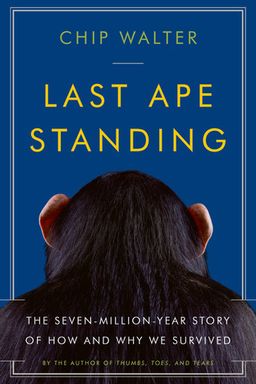
Have you ever wondered why you are the last of your kind? Why, among 27 known species of humans that once walked the Earth, only one—Homo sapiens—remains? In Last Ape Standing, science writer William “Chip” Walter takes readers on a sweeping, deeply humanistic tour through 7 million years of evolution to reveal how chance, biology, and creativity made us unique. He argues that our survival—and our domination—were not inevitable outcomes, but the result of a fragile chain of extraordinary adaptations: the invention of childhood, the explosion of creativity, our moral sense, and our endlessly flexible brains.
Chip Walter contends that we are not the pinnacle of evolution but the latest experiment in a chaotic, ongoing process. Over 99% of all humans who ever lived are extinct. The key to understanding why we’re still here, Walter says, lies not just in our anatomy or intelligence, but in the unlikely confluence of adaptation and curiosity that made us the “learning ape.” This book unpacks how our ancestors fought against environmental chaos, how bipedalism and big brains reshaped birth and childhood, how morality and cooperation evolved from necessity, and how symbolic thought and creativity turned our species into world-shapers. It’s a story equal parts survival tale, detective mystery, and meditation on what it means to be human.
The Fragile Tree of Humanity
Walter opens with a humbling realization: we are the last branch of a wildly diverse family tree. Over the past 7 million years, twenty-seven kinds of humans—Australopithecus afarensis, Homo habilis, Neanderthals, Denisovans, and many others—have lived, loved, and perished. Some had bigger brains or stronger bodies than ours. Yet only we survived. He debunks the traditional “Great Chain of Being” myth that suggests a smooth, linear ascent from primitive to perfect human, revealing instead a chaotic bush of species who coexisted, competed, mated, and sometimes annihilated one another. He reminds us that evolution is not progress—it’s adaptation.
From Chance to Consciousness
Walter weaves this scientific tapestry with a novelist’s flair, chronicling how small accidents—like a straightened big toe or a changing African climate—cascaded into evolutionary revolutions. A shift toward upright walking freed our hands, altering everything from diet to brain growth. And when the narrowing of the birth canal made childbirth excruciating, nature improvised a solution: babies would be born earlier and helpless. That premature infancy—our lengthy, dependent childhood—turned out to be the engine of humanity’s success. It allowed our brains to stay plastic, our learning to remain open, and our hearts to stay playful and curious far longer than any other animal’s.
From there, Walter traces how extended childhood birthed flexible intelligence; how language, empathy, and art emerged from the same evolutionary currents; and how we became social creatures who form tribes, develop morals, and use stories to bind communities. He moves beyond fossils to explore consciousness itself, arguing in later chapters that self-awareness—the “voice in your head”—is the ultimate evolutionary masterpiece, a recursive feedback loop created by the very brains that imagined it.
Why This Story Matters
Understanding our improbable origins, Walter insists, isn’t an academic exercise—it’s moral and urgent. In a time when we manipulate DNA, overpopulate the planet, and reshape the biosphere, we’ve become, in his words, “a medusa devouring its own snail.” To survive our own inventions, we must grasp how we got here and what forces shaped our compassion, imagination, and destructiveness. Last Ape Standing thus becomes more than an evolutionary history—it’s a mirror held up to our species, inviting you to recognize the ancient instincts behind every love, fear, and dream you have. It’s a reminder that every step you take, every thought you think, rests upon the shoulders of apes who once stood, trembled, and reached for the unknown.