
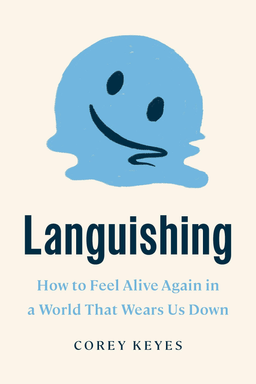
Languishing cover

Languishing

by Corey Keyes

Languishing (2024) explores the often-ignored state between mental health and illness, providing a guide to overcoming stagnation and emptiness. Discover strategies to transform your mental health landscape and embrace flourishing, a state of meaning, growth, and resilience.

From Languishing to Flourishing

What if the dullness you feel isn’t depression but something quieter and more widespread? In Flourish, Corey Keyes argues that millions live in a middle ground between illness and wellness—a state he calls languishing. It’s not sadness or despair so much as the sense that life is running on autopilot, your goals blurred, and your energy fading. Understanding languishing allows you to name it, trace its causes, and reclaim your path toward flourishing, a life of connection, meaning, and vitality.

Keyes introduces a powerful framework: mental health isn’t a single line from sick to well but a dual-continua model. Mental illness and mental health are separate dimensions—you can suffer from anxiety yet still flourish through purpose and relationships, or you can be symptom-free but empty of joy. His message moves beyond pathology toward salutogenesis: the creation of health rather than the mere treatment of disease.

The Anatomy of Languishing

Languishing feels like fog. You get through the day but feel disengaged from life’s texture. Adam Grant famously described it as “the blah you’re feeling,” bringing language to what many experienced during the pandemic. Keyes’s research distinguishes languishing from major depression or burnout: there’s no clinical despair, just the absence of thriving. Symptoms include flat emotions, distraction, procrastination, and a fading sense of self-worth. The crucial insight is that naming your state is the start of recovery—it validates your experience and opens targeted ways forward.

Life-Course Patterns

Languishing ebbs and flows across life. Childhood flourishing depends on social support and family stability; adolescents languish when rites of passage collapse or friendships fragment. Young adults often wrestle with identity paralysis—college students report soaring anxiety and plummeting purpose. Midlife brings stress, especially postpartum or caregiving burdens. Flourishing peaks near retirement, but loneliness and physical decline can trigger languishing again in old age. Across all stages, Keyes urges building connection, purpose, and mastery as preventive medicine.

Eudaimonia: Functioning Well

The book turns to ancient wisdom: Aristotle’s idea of eudaimonia, or “functioning well,” as the foundation of flourishing. Happiness, Keyes warns, is fleeting. To thrive, orient toward becoming capable, purposeful, and connected. Flourishing involves six core capacities—acceptance, autonomy, connection, competence, mastery, and mattering. Enhancing these domains builds both psychological resilience and biological health, lowering stress inflammation and improving immune responses. (Psychologist Carol Ryff’s studies complement this framework, showing these domains predict longevity and well-being.)

Systemic and Social Roots

Keyes broadens the conversation from the personal to the systemic. Languishing isn’t only in our minds but in our institutions—overloaded workplaces, structural inequality, discriminatory cultures, and eroded social trust. The loneliness epidemic, worsened by technology and fractured communities, is both symptom and cause. Building flourishing societies means rebuilding the systems—schools, families, workplaces—that provide safety, belonging, and dignity.

The Practical Path Forward

The cure for languishing, Keyes argues, lies not in single leaps but in sustained practices. His Five VitaminsLearn, Connect, Accept, Play, and Help—are daily habits that rebuild vitality. Learning reanimates curiosity and competence. Connection restores empathy and belonging. Acceptance and kind attention calm inner critics. Play reignites imagination. Helping others transforms consumption into contribution. Repeatedly practicing these habits moves you from surviving to flourishing.

Flourishing isn’t a prize you earn once—it’s a practice. Cultivating acceptance, connection, play, and contribution day after day transforms dull existence into a meaningful life that matters to you and those around you.

In essence, Flourish is both diagnosis and map. It names the vague fog of modern disconnection and guides you through evidence-backed ways to clear it—by restoring attention, strengthening social bonds, deepening purpose, and aligning your daily actions with what truly helps you and others live well.


Naming and Measuring Mental Health

The book’s first step toward transformation is awareness. You can’t heal from what you can’t name, and for Keyes, naming “languishing” was a scientific and cultural breakthrough. He developed the Mental Health Continuum, a fourteen-question measure that evaluates emotional, psychological, and social well-being. This tool reveals mental health exists on a spectrum, not merely as illness or the absence of it.

Understanding Dual Continua

The model proposes two axes: one for mental illness (presence or absence of symptoms) and one for mental health (presence of flourishing traits). You can occupy any coordinate—a depressed but purposeful artist, a burnout-free yet apathetic accountant. This dual-continua approach fills what medicine overlooks: the science of thriving, or salutogenesis.

The Biology of Flourishing

Flourishing’s advantages show up at the cellular level. Social connection and positive emotion boost telomerase (which repairs DNA damage), reduce inflammatory gene expression, and foster neuroplasticity. Even when brain pathology exists, meaningful engagement sustains cognitive function (as seen in the “Nun Study,” where active elderly sisters maintained clarity despite Alzheimer’s pathology). In brief, flourishing is physiologically protective.

Limitations of Medicalization

Keyes critiques the overreliance on medication and the “chemical imbalance” narrative. Psychiatric drugs alleviate symptoms but rarely create flourishing. Dr. Thomas Insel’s own reflections echo this: medicine has reduced suffering but not built positive well-being. That’s why Keyes insists that society must invest in building health—valuing prevention, connection, and meaning as much as curing pathology.

In naming languishing, Keyes democratized psychological insight. Knowing where you are on the continuum empowers you to act—not as a patient waiting for rescue but as a participant in your own rebuilding.


Loneliness, Disconnection, and the Social Cure

You flourish not alone but together. Keyes places loneliness—defined as distress from lacking warm, trusting connections—at the heart of languishing. The pandemic revealed this vividly: over a third of adults reported severe loneliness. Young adults suffered most, with over 60 percent feeling chronically alone. Technology promises connection but often delivers the opposite—distraction without intimacy.

The Body Keeps the Score

Loneliness doesn’t just hurt emotionally; it’s biologically painful. Studies by John Cacioppo show that social pain activates the same brain regions as physical pain. Chronic isolation raises inflammation and weakens immunity. The body does not distinguish between a wound of exclusion and a pinprick—it responds with stress. Restoring social ties thus becomes not a luxury but a form of biological healing.

Trust and Belonging in a Fractured Era

Decades of cultural change eroded civic trust. Social media amplifies polarization, leaving people socially connected but emotionally detached. Keyes contrasts destructive belonging, such as gangs or extremist groups, with constructive belonging—clubs, teams, and communities that provide identity without harm. When legitimate structures of care decline, unhealthy substitutes fill the gap. The antidote is to rebuild trust and reciprocity in safe, inclusive spaces.

Connection as Daily Practice

Keyes’s practical advice begins small: call one friend weekly, participate in a neighborhood group, share vulnerability. Connection means reciprocity, not dependency—giving and receiving care in balance. Over time, small consistent presence creates the emotional safety net that sustains flourishing.

You build your mental health in every warm conversation, every act of listening, every moment you choose presence over performance. Human flourishing begins in relationship.


The Eudaimonic Turn

Keyes reframes happiness as the wrong goal. Chasing pleasure keeps you stuck in the feelings trap—temporary highs that fade, leaving emptiness. Instead, he invites you toward eudaimonia: a life oriented toward growth, purpose, and contribution. This shift turns fleeting enjoyment into durable well-being.

Functioning vs. Feeling Good

In his classroom exercise, students tried to design an “afternoon of happiness.” Almost all failed—pleasure peaks then vanishes. But when they created afternoons of learning, creativity, or service, satisfaction lasted longer. The takeaway: focus on functioning well, not just feeling good. Functioning well means developing capacities—self-acceptance, autonomy, competence, connection, mastery, and mattering—that anchor identity and resilience.

Growth as an Immune System

People who orient around growth show biological and emotional advantages—lower inflammation, steadier moods, and stronger recovery after adversity. (Research by Carol Ryff and Sonja Lyubomirsky supports this: eudaimonic well-being predicts health differences more powerfully than momentary happiness.) The lesson: what you practice becomes your internal immune system.

Five Vitamins for Flourishing

Keyes’s framework for practice echoes this philosophical turn: Learn, Connect, Accept, Play, and Help. Each vitamin builds capacities rather than moods. Learning restores curiosity and mastery. Connection deepens belonging. Acceptance builds calm resilience. Play invites joy and flexibility. Helping others transforms meaning into action. They’re daily nutrients for a sustained mental ecosystem.

Eudaimonia asks for patience and repetition. Every day you practice growth over gratification, you nourish the roots of flourishing.


Learn and Connect: The First Steps

When you’re languishing, the smallest steps count most. Keyes begins his practical path with the first two vitamins: Learn and Connect. These cultivate competence and belonging—your two deepest psychological nutrients.

Learning as Identity Repair

Learning reignites purpose by rewriting your self-story. Ethan’s pandemic gardening hobby does more than fill time—it rebuilds mastery and agency. Similarly, Sheila’s decision to take violin lessons at fifty-five revives her sense of voice. Learning that is self-chosen and purposeful changes how you see yourself and your capabilities. Keyes advises choosing manageable goals that matter to you, not to others’ approval.

Connection as Reciprocal Presence

True connection requires emotional reciprocity, not network size. Carl and Aaron, newcomers in a town where neighbors avoid them, slowly rebuild belonging through persistence and service. Emotional intimacy grows from small, reliable participation—helping at school, listening actively, or saying yes to a coffee invite. Studies confirm: emotional closeness, not sheer contact volume, predicts flourishing.

Start with one weekly act—a call, a shared meal, a note of gratitude. Each gesture, repeated, becomes part of your social architecture. As Keyes notes, the return on these small investments compounds: connection multiplies flourishing for everyone involved.

Learn and Connect are twin engines of recovery: one repairs your sense of competence; the other restores your sense of belonging. Together they form the essential foundation for escaping languishing.


Acceptance, Attention, and the Quiet Mind

After connection, flourishing demands an inner posture—acceptance and kind attention. Acceptance doesn’t mean resignation; it means meeting reality without wasting energy on futile resistance. Kind attention, cultivated through mindfulness or prayer, steadies the mind so you can respond rather than react.

Self-Compassion as Practice

Shauna Shapiro’s “Good morning, I love you” ritual illustrates how small acts of self-compassion rewire shame. By greeting herself kindly each day, she softened her inner critic and gained flexibility. Acceptance lets you study difficult feelings like anxiety or guilt instead of being hijacked by them. It’s not indulgence—it’s maintenance for mental energy.

Attention as Gatekeeper, Intention as Gateway

What you notice grows stronger. Attention is the doorman of your mind; intention decides who enters. Through repetition—whether meditation, prayer, or rehearsal—you train the brain to favor calm and kindness. Neuroscience confirms that mental rehearsal activates similar neural pathways as physical practice. That means compassion and serenity are trainable skills.

Create Your Base Camp

Yoga, meditation, or prayer become “base camps,” inner refuges you can return to when stress spikes. The transplant surgeon who meditated before operations demonstrated this: her calmer attention literally improved surgical precision. Practice transforms attention into steady intention.

Every breath, every deliberate pause, is a rehearsal for the self you want to become. Flourishing begins inside, with the mind you train daily.

By turning acceptance into a habit and refining your attention, you gain calm resilience—an antidote to the restless mind that fuels languishing.


Purpose, Play, and Contribution

The later chapters weave three final vitamins—Purpose, Play, and Help—into a larger philosophy of contribution. Purpose provides direction, play rekindles vitality, and contribution converts private meaning into public value. Together they form the outer expression of flourishing.

Finding Purpose in the Ordinary

Purpose isn’t a mystical calling; it’s a pattern of helping others with what you have. Meghan rediscovers maternal joy when mentoring her niece; Tanya finds late-career fulfillment arranging flowers for her community. Keyes defines authentic purpose as the overlap between personal direction and social usefulness—where your deep gladness meets the world’s deep need (a phrase from theologian Frederick Buechner).

Rediscovering Play

Play, often dismissed as childish, is in fact adult necessity. When you play, your ego loosens and creativity flows. Whether dancing in the living room, gardening whimsically, or joining a band, play rebalances the stress-hardened adult mind. It shifts you from consumption to participation and restores spontaneous joy. Neuroscience and education studies show play builds lifelong social and emotional resilience.

From Consumption to Contribution

Flourishing grows when you give. The “consumption model” of happiness—buy more, scroll more—promises pleasure but deepens emptiness. The “contribution model” asks what you can offer. Research on volunteering shows lasting boosts in well-being when acts of kindness extend beyond the self. Three small weekly acts of service—helping a neighbor, mentoring, cleaning a park—can reorient your life toward durable meaning.

Flourish Together

Ultimately, flourishing is collective. Scott, a former prison guard, transforms his son’s trust and his professional ethos by shifting from punishment to compassion. Nicole chooses friendship and community over prestige and thrives. As Keyes writes, you need a tribe—a “sangha” of people who remind you who you want to be. Together, shared purpose becomes a public health strategy.

Flourishing, then, is contagious: when you play, give, and belong, you light paths for others out of languishing into shared vitality.

Dig Deeper

Get personalized prompts to apply these lessons to your life and deepen your understanding.

Go Deeper

Get the Full Experience

Download Insight Books for AI-powered reflections, quizzes, and more.