
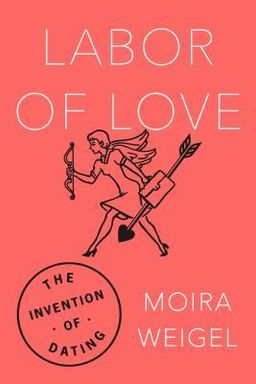
Labor of Love cover

Labor of Love

by Moira Weigel

Labor of Love by Moira Weigel uncovers the fascinating evolution of dating across generations. From the Industrial Revolution''s impact to the sexual liberation of the 1960s, explore how societal changes have shaped modern romance. Gain valuable insights into the historical and economic forces influencing our pursuit of love today.

Dating as the Mirror of Modern Love and Labor

Why does dating feel like both a performance and a full‑time job? In Labor of Love, Moira Weigel poses this deceptively simple question to reveal how our most personal desires reflect the social and economic systems surrounding us. She argues that dating is not timeless, natural, or private—it is a modern invention shaped by capitalism, gender roles, and changing labor patterns. What you feel, how you flirt, when you marry, and even why you text someone back are all influenced by historical forces larger than individual emotion.

The Central Argument: Love as Work

Weigel contends that dating evolved alongside wage labor. When women entered the public workforce in the late 19th and early 20th centuries, they also entered the public sphere of romance. The traditional system of supervised courtship—“calling,” where men visited women at home under parental eyes—gave way to a freer but more commercial ritual: meeting someone outside, paying for drinks and amusements, cultivating charm. This new landscape demanded effort, strategy, and self‑presentation. Dating, she writes, became work: emotional labor devoted to making oneself desirable, marketable, and productive in love. The title Labor of Love therefore cuts two ways—it honors the effort people expend on intimacy while exposing how that effort has been undervalued and gendered.

From the Parlor to the Marketplace

Weigel traces the origins of dating to the moment women began leaving farms and domestic service to join city employment. Factory workers and shopgirls suddenly encountered men outside supervision. The police initially arrested these couples, confusing dating with prostitution—after all, if a man paid for a woman’s company, wasn’t that a transaction? But as modern consumer culture grew, buying food, movie tickets, or makeup became integral to love itself. The act of going out signaled freedom, while simultaneously tethering romance to money and class. Over time, dating’s economic dimension intensified through restaurants, amusement parks, and eventually online platforms that literally monetize desire.

Gender, Desire, and the Unpaid Internship of Love

Though dating liberated women from parental control, it imposed new constraints. Weigel observes that working women remained underpaid in jobs and overworked in romance: they had to look feminine, stay charming, and seem effortless. The culture taught them that their worth lay in being loved, not in wanting love. “Marriage,” Weigel quips, “is the long‑term contract that many daters still hope to land—while dating often feels like the worst, most precarious form of contemporary labor: an unpaid internship.” The metaphor captures the exhaustion and vulnerability many feel while performing desirability in a competitive market.

How Work Shapes Wanting

Across industrialization, the Great Depression, the postwar boom, and the gig economy, Weigel shows that every economic shift rewrites dating conventions. Where factory hours once dictated “I’ll pick you up at six,” today’s 24/7 connectivity prompts a 2 a.m. text: “u up?” Work and love merge not only linguistically (“emotional labor”) but structurally. The advice industry—from The Rules to self‑help books and dating apps—teaches people to treat intimacy as a productivity challenge or marketing problem. You optimize your profile, perform “The Travis Show” on a first date, and calculate your return on romantic investment.

Freedom, Technology, and Fragmented Desire

As Weigel guides you through the eras of courtship—from the shopgirls of the 1910s to the hookup culture of campus life, the yuppie singles bars of the 1980s, and the digital matches of Tinder—she emphasizes that each stage promises liberation but ends up replicating inequality. The sexual revolutions of the 1960s granted “freedom” to love whom you want, but they often traded genuine emotional connection for market logic: free love became laissez‑faire love. Later, the AIDS crisis enforced candid conversation about sex and consent, while the Internet turned desire into data. The more platforms promise efficiency, the more love resembles consumer choice, each profile an advertisement in a vast romantic marketplace.

Why This History Matters

Understanding the invention of dating helps you question the invisible “rules” that govern your own relationships. Why do you feel pressure to be easygoing, productive, or endlessly available? Why does attraction often mirror class, race, and gender hierarchies? Weigel’s historical lens makes visible what self‑help books obscure: our struggles in love arise from social structures, not just personal flaws. To change love, we must also change labor, time, and power. As Weigel concludes, recognizing the work of love—its creative, world‑shaping potential—allows us not simply to complain about dating but to reclaim it as an act of mutual transformation. Love, she insists, can be collective, political, and revolutionary if we dare to see it as such.


The Birth of Dating as Public Labor

Weigel begins her historical excavation with the late 19th and early 20th centuries, when American cities transformed work and courtship. Before 1900, young people met through chaperoned visits and family arrangements—'calling.' But as women entered wage labor, they also entered urban public life. Department stores and factories became stages for new romantic interactions. Encountering strangers outside supervision felt thrilling and dangerous. Authorities mistook early dates for prostitution, arresting women who accepted food or gifts from men. The word 'date' first appeared in 1896 in the Chicago Record, describing a clerk’s complaint that another boy was 'filling all my dates.'

A Marketplace of Desire

Dating mirrored industrial capitalism: interactions between men and women turned into transactions. Paying for a drink or movie symbolized both generosity and power. Working-class women, often underpaid, accepted 'treats'—meals, tickets, gifts—as partial compensation for companionship. Social reformers condemned them as 'Charity Girls,' blurring boundaries between romance and sex work. Yet for these women, treating was survival and pleasure intertwined, not shame. Dating therefore exposed how economic vulnerability shaped emotional life—a theme Weigel repeats across centuries.

From Calling to Going Out

The middle classes practiced 'calling' under strict gender hierarchy: men acted, women waited. The home was both sanctuary and cage. Dating dismantled these walls, moving love into the marketplace. Couples met in dance halls, cinemas, and amusement parks—public spaces fueled by consumer culture. This mobility transferred control from elders to youth, and from women to men. Going out blurred leisure and work: to be dateable, women had to earn money to buy clothes and cosmetics, then spend precious time performing attractiveness. Emotional labor entered the picture as they learned, like salesgirls on the job, to sell themselves through charm.

Economic Cycles, Emotional Costs

Weigel shows that every shift in the economy—industrial recessions, wars, booms—reshaped dating rituals. In the 1910s, police raids on dance halls revealed how anxious elites were about 'public women.' When middle-class reformers equated dating with prostitution, they exposed deep fears that female independence threatened patriarchal order. The irony, Weigel notes, is that dating’s transactional nature persists today in our language of 'emotional investment,' 'playing hard to get,' and 'shopping around.' The legacy of the shopgirl’s flirtations survives in every modern app’s interface, reminding users that love still operates within the logic of exchange.

Key Reflection

Dating’s origins as women’s public labor unsettle romantic myths. Freedom to flirt in the streets was bought with new forms of work: maintaining appearances, managing emotions, and performing charm. The first daters weren’t just inventing love—they were inventing visibility, fighting for space where desire could exist outside control.


Taste, Personality, and Selling Yourself

Chapter 2, “Likes,” explores how courtship became tied to aesthetics and consumer preference. Weigel links the rise of dating and advertising: when women joined the retail workforce, they learned to judge and display taste. A shopgirl studied her wealthy customers’ fashions to mimic them, demonstrating aspiration through appearance. Like the modern Instagram user curating her feed, she sold herself through style. Over time, taste replaced virtue as a marker of desirability—the lover who likes the right music, books, and clothes became appealing because of what those choices signified about class and culture.

The Invention of Personality

In earlier centuries, people spoke of 'character,' a moral quality revealed by deeds. The 20th century rebranded this as 'personality,' a surface performance. Influenced by emerging psychology and marketing, personality referred to visible charisma—'it,' as Elinor Glyn called it. Actresses and salesgirls learned to project warmth and confidence while appearing effortless, launching an arms race of self‑presentation. Frances Donovan’s The Saleslady and O. Henry’s stories illustrate how working women refined gestures and smiles like brands. Emotional labor at work became romantic labor off the clock.

From Shopgirl to Influencer

Weigel’s historical parallels are striking. Where 1920s shopgirls invested wages in makeup, hair, and poise, modern daters invest time in digital grooming: curating profiles, selecting filters, balancing “pie and jam” with “savory foods” on OkCupid. Both aim to attract through authenticity manufactured as effortlessness. The Shopgirl’s smile prefigures the influencer’s selfie. Emotional labor has simply migrated to new platforms, but the principle remains: attraction is a brand campaign.

Economic Consumption and Emotional Exhaustion

By 1925, consumer spending surpassed production as America’s main economic measure. Women’s desire was mobilized to sustain this economy, making them engines of consumption. Weigel notes that even self‑help advice about dating served business interests by encouraging women to buy beauty products, clothes, and confidence. The feedback loop between romantic longing and economic productivity still flourishes when dating apps sell hope through algorithms. The cost of love, she concludes, has always been measured in work—the work of maintaining the self others will desire.


Going Out, Coming Out, and Claiming Space

In “Outs,” Weigel expands dating beyond heterosexual norms to include queer and interracial love, emphasizing how going out meant claiming public space. From the clandestine walks of immigrants on New York’s Lower East Side to Harlem’s drag balls, going out was an act of courage and visibility. Queer codes like colored ties or performance slang allowed men and women to recognize each other under hostile scrutiny. Dating thus became political: every flirtation challenged who was allowed to desire whom.

Out in Public, Private in Freedom

For marginalized groups, privacy was virtually nonexistent at home. Samuel Chotzinoff recalled crowded apartments where young couples had to meet outside because 'privacy in the home was practically unknown; privacy could be had only in public.' Harlem rent parties, lesbian bars in postwar San Francisco, and gay cafés like the Black Cat became sanctuaries where affection could unfold without surveillance. Each new venue expanded the geography of desire while revealing society’s boundaries.

From Queer Bars to Singles Bars

Weigel fascinatingly connects gay liberation to straight commercial innovation. Alan Stillman’s establishment of T.G.I. Friday’s in 1965—'a gay bar for straight people'—translated queer social models into mainstream hetero dating. The singles bar, and later disco clubs like Studio 54, commodified the concept of open mixing once radical in gay spaces. Soon, 'going out' signified networking and consumption as much as romance. In capitalist culture, even freedom could be franchised.

The Risks of Visibility

Going out always carried risk, especially for those outside normative categories: women walking alone, queer lovers daring public affection, or trans women facing violence. Yet Weigel insists that going out remains a creative act of community-building. Whether in drag or on dating apps, to appear before others as you are—or as you want to be—is labor toward recognition. Each 'we' formed across a crowded room helps produce social change.


Hookups and the Education of Desire

Weigel’s chapter “School” examines how campus life turned dating into both experimentation and emotional training. The hookup culture of late‑20th‑century universities, she argues, didn’t kill romance—it reflected new work ethics learned through education. From petting parties of the 1920s to online campus hookups, students practiced scripts of attraction shaped by peer norms and institutional schedules. College provided not only degrees but rehearsal space for adulthood.

Learning by Living

Historically, coeducation introduced the “College Man” and “Coed” as new romantic types. In 1930s novels like Town and Gown or The Plastic Age, dances and dorm parlors replaced parental oversight. These rituals trained students to manage impressions, compete for status, and perform charm—skills later required in professional offices. Dating was literally pedagogy, teaching emotional versatility for capitalist life. Modern versions of these scripts endure when students swipe, hook up, and conduct 'cost‑benefit analyses' of relationships (as sociologist Kathleen Bogle observed).

Hookup Culture as Career Training

Weigel contrasts two interpretations of hookup culture: moral panic versus feminist pragmatism. Critics like Susan Patton (“Princeton Mom”) urged women to husband‑hunt in college before their value declined, while writers like Hanna Rosin and Kate Taylor praised emotion‑free hookups as strategy for ambitious careers. Weigel sees both as symptomatic of educational systems that equate intimacy with efficiency. Students learn flexibility—the same adaptability demanded in an economy where 30% of the workforce is freelance. Hookups teach emotional multitasking as survival skill.

Lessons Unlearned

Yet, Weigel warns, dating-as-training erodes the capacity for genuine connection. As Margaret Mead pointed out in her Stanford lectures, competitive courtship teaches consumption, not care. When you treat every liaison as résumé line, you risk losing intimacy’s creative dimension. Education may produce professionals, but love requires apprentices willing to feel uncertainty. Weigel’s history of campus romance exposes how even desire can become homework.


Freedom and Its Market Failure

In “Freedom,” Weigel reexamines the sexual revolution to show how liberation often replicated economic inequality. The 1960s hailed 'free love' as rebellion against repression, but underneath, freedom became a market commodity. The second sexual revolution, she observes, coincided with free‑market ideology: laissez‑faire capitalism and laissez‑faire sex shared vocabulary—choices, transactions, deregulation. Playboy and Cosmopolitan turned pleasure into brand identity; Hugh Hefner’s bachelor dream and Helen Gurley Brown’s 'Single Girl' both sold autonomy packaged with products.

The Working Woman’s Freedom

Betty Friedan’s The Feminine Mystique diagnosed housewife despair and prescribed careers as cure. But Brown’s Sex and the Single Girl turned that ethos into lifestyle marketing, teaching women to labor for liberation—'You have to work like a son of a bitch.' Beauty routines, office flirtations, and economic striving replaced domestic drudgery but preserved gender hierarchy. Fun Fearless Feminism told women to treat desire as productivity metric and self‑worth as market value.

When Freedom Costs Too Much

Weigel contrasts white middle‑class feminism with black and working‑class critiques. Writers like bell hooks and Angela Davis saw economic independence as insufficient without dismantling racial and class exploitation. For many women of color, domestic space offered refuge from racism rather than imprisonment. The ideology of choice that Cosmo promoted excluded those who had always worked because they had no choice.

The Free Love Paradox

Meanwhile, hippie free lovers promised equality through openness but often reproduced patriarchy. Communes and countercultures relied on women’s unpaid emotional labor—the Diggers cooked, cared, and mediated while men preached utopia. Sexual freedom without structural change, Weigel concludes, left many women exploited. True freedom requires resources and respect, not just permission to sleep around. The revolution didn’t fail because it was scandalous; it failed because it wasn’t radical enough.


From Yuppies to Algorithms: The Commodification of Love

“Niches” traces how the 1980s transformed intimacy into a business model. As Ronald Reagan’s neoliberal policies celebrated individuality and greed, courtship mirrored market segmentation. Singles bars, video dating, and later online platforms functioned as databases of desire. The mantra 'Greed is good' became 'specificity is sexy.' You learned to find your niche—your dating demographic—like a product seeking its proper market.

Yuppies and Assortative Mating

Young Urban Professionals (yuppies) symbolized love as networking: Jerry Rubin’s Business Networking Salon at Studio 54 rebranded mingling as corporate strategy. People who 'did what they loved' worked nonstop, leaving little leisure except to date versions of themselves. Economically, assortative mating—college‑educated professionals marrying each other—widened class divides. Emotionally, it turned romance into résumé checking. Compatibility meant matching salaries.

Technology as Matchmaker

Video‑dating franchises like Great Expectations and IntroLens let busy professionals outsource flirtation to counselors and tapes. Clients described themselves in terms of 'stock' and 'return on investment.' When the Internet arrived, algorithms promised even greater efficiency. Wired’s 2002 prophecy that online love would become universal enshrined romance as data science. Love, Weigel notes, was no longer serendipity—it was search optimization.

The Service Economy of Emotion

In films like Risky Business and Pretty Woman, entrepreneurs and sex workers merge as icons of the new service economy. Both 'screw people for money,' selling the same product—attention. When Julia Roberts climbs her client’s fire escape, the fantasy is that emotional labor itself becomes capital. Meanwhile, yuppie stress spawned 'inhibited sexual desire,' a 1980s epidemic of burnout that proved intimacy under capitalism exhausts rather than fulfills. Weigel shows how today’s dating apps extend this logic: profiles as advertisements, messages as transactions, affection as productivity metric.


Protocols of Safety and Communication

“Protocol” moves into the AIDS era, when fear reshaped the rules of intimacy. Weigel details how gay communities facing government neglect invented unprecedented systems of care and language for sex. Manuals like How to Have Sex in an Epidemic turned desire into procedure—listing safe acts from 'mutual masturbation' to 'closed circle of fuck buddies.' Activists reframed communication as survival: talking about health and consent became erotic responsibility. Surgeon General C. Everett Koop’s national campaign later brought explicit discourse to mainstream America, insisting that if you know someone well enough to have sex, you should be able to talk about AIDS.

Safe Sex and Shared Labor

This chapter emphasizes how communities created emotional infrastructure when states failed. Organizations like the Gay Men’s Health Crisis and Sisters of Perpetual Indulgence performed literal and symbolic care. Making condoms and conversation public redistributed the labor of love across networks—friends, nurses, activists, lovers. The AIDS crisis thus produced linguistic precision that persists in modern dating apps’ checkboxes for sexuality, gender, and status.

Digital Connection and Emotional Protocols

With the Internet, communication became both safer and more abstract. Early cyberspace romances substituted text for touch: 'The Naked Lady' in Wired’s 1993 article found power through online flirting. Esther Gwinnell’s Online Seductions showed that digital love cultivated unique intimacy—meeting 'souls first.' But this new freedom risked addiction and fragmentation. Conversations replaced relationships; emotions became data exchange. The protocols designed to save lives during AIDS evolved into algorithms managing desires online.


Planning, Timing, and the Biological Clock

“Plans” examines how late‑20th‑century discourse about time and reproduction disciplined women’s dating lives. Weigel revisits the media obsession with the 'biological clock,' showing how it reduced complex socio‑economic pressures into personal failure. Starting with Richard Cohen’s 1978 Washington Post article, headlines warned career women that fertility was expiring. This anxiety merged romantic planning with professional ambition: women were told to treat love like project management, scheduling husbands and children between promotions.

The Clock as Cultural Control

Weigel argues that the clock myth served to reassert patriarchal authority after feminism’s gains. It portrayed men as timeless and women as perishable, making responsibility for reproduction exclusively female. Assisted reproductive technologies—from sperm banks to IVF—monetized this fear, turning biology into investment. Clinics marketed egg freezing as 'hedging against risk,' extending neoliberal logic into the womb. Freedom became another form of labor—the privilege to work longer before motherhood.

Double Standards and Reproductive Labor

While middle‑class women were scolded for delaying childbirth, poor women and teens were shamed for having babies too soon. Life‑planning programs like Choices (1983) taught girls to avoid pregnancy by cultivating 'decision‑making skills,' positioning them as managers of moral risk. Both groups bore the same burden: to plan perfectly within impossible constraints. Reproduction, Weigel emphasizes, mirrors labor inequality—care work privatized and feminized while society shirks collective responsibility.

Time, Work, and Disappointment

In a world of precarious jobs and no maternity support, the obsession with timing makes love exhausting. The Career Woman who 'wasted years' with a partner embodies capitalism’s cruelty: seeing life itself as investment loss. Weigel concludes that true empowerment would mean restructuring time—valuing care and interdependence rather than productivity. Until then, even the biological clock ticks to the rhythm of the capitalist workday.


Self‑Help and the Emotional Marketplace

Weigel ends with “Help,” a dissection of the self‑help industry that profits from loneliness it perpetuates. From Elinor Glyn’s Philosophy of Love to The Rules and Neil Strauss’s The Game, advice manuals transform dating into psychological labor. Women are told to repress desire ('Don’t talk too much; don’t see him twice a week'), while men are trained to manipulate emotion ('neg her'). Both perform emotional work that enriches publishers, not partners.

The Cult of Emotional Labor

Drawing on sociologist Arlie Hochschild’s concept of emotional labor, Weigel argues that romance has become an industry where individuals manage feelings like employees manage clients. Airlines once instructed flight attendants that their smile was their “greatest asset”; dating advice tells women exactly the same. The labor of love, distorted by consumer culture, converts authenticity into performance. When 'effortlessness' is expectation, exhaustion follows.

Gendered Scripts and Exploitation

Weigel juxtaposes The Rules with Strauss’s pickup‑artist manuals, revealing mirrored sexism. Women learn to disappear; men learn to dominate. Both treat intimacy as strategy, not connection. The outcome is alienation: everyone works hard at love without feeling loved. Like Marx’s alienated worker, daters produce emotions for profit or validation they never own. Self‑help turns emancipation into obedience—earning affection by optimizing the self.

Toward a Collective Cure

Weigel’s concluding argument, expanded in her Afterword: Love, is hopeful. She invites readers to see their frustrations as social, not personal failures. Love, she says, is labor—but creative, communal labor that can remake the world. Instead of endless self‑optimization, we might practice solidarity: sharing care work, revising institutions, designing time for connection. The real self‑help is collective help.

Dig Deeper

Get personalized prompts to apply these lessons to your life and deepen your understanding.

Go Deeper

Get the Full Experience

Download Insight Books for AI-powered reflections, quizzes, and more.