
Idea 1
Building Private Power: The Koch Model of Control and Growth
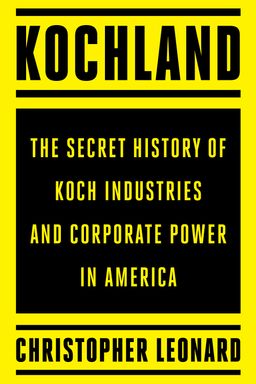
How does a single private company grow into one of the most powerful industrial and political forces in America without the scrutiny of public markets? Kochland by Christopher Leonard answers that question through the story of Charles Koch’s deliberate construction of a long-horizon business model built on secrecy, reinvestment, and ideology. Koch Industries, headquartered in Wichita, remained private even when Wall Street tempted Charles Koch to sell shares and pocket millions. He refused—a choice that revealed the essence of his long game: preserve control, avoid transparency, and compound capital internally over decades.
Long Horizons and Private Secrecy
Charles Koch’s 1981 refusal to go public was more than stubbornness—it was the architectural foundation of his empire. Staying private allowed Koch Industries to reinvest roughly 90% of its profits yearly, avoid quarterly earnings pressures, and maintain operational secrecy. The company’s private status kept traders’ profits, salaries, and strategies hidden from competitors and regulators. That informational opacity became an enduring competitive advantage, particularly in commodity markets where transparency can kill an edge.
This long horizon strategy financed transformative acquisitions like Pine Bend refinery, which became an internal cash cow. By focusing on long-term returns rather than quarterly analyst calls, Koch could make countercyclical plays—buying when others retreated and compounding quietly. (Note: Warren Buffett’s reinvestment philosophy mirrors this patience, though executed within public confines.)
Ideology as Operating System: Market‑Based Management
Inside the company, Koch embedded Market‑Based Management (MBM), a hybrid of Austrian economics and Deming’s continuous improvement. Employees trained in MBM language—decision rights, process ownership, experimental discovery—and learned to act like entrepreneurs within their domains. Rewards were tied to value creation, not hierarchy. MBM became a kind of internal doctrine, taught at Koch University and printed on walls, that fused market philosophy with corporate governance.
However, this ideology has two edges. While MBM accelerated learning and efficiency, it sometimes blurred ethical boundaries. Pressure to improve metrics led to safety incidents or compliance lapses, as seen in Pine Bend controversies and the later warehouse labor conflicts. The system’s success relied on marrying freedom with moral restraint—a balance that not all managers achieved.
Politics as Corporate Insurance
Koch didn’t stop at markets. Beginning in the 1970s, Charles Koch crafted a generational plan to shape the intellectual and legal climate—building think tanks, funding university programs, and supporting litigation efforts. His political architecture extended to lobbying networks and third‑party groups like Americans for Prosperity, which became decisive forces in national policy battles on energy and regulation. In essence, Koch turned ideology into political infrastructure that insulated his business from external threats.
This blend—long-term private capital, embedded ideology, and political engineering—made Kochland more than a company. It became a self-sustaining system: autonomous, secretive, and adaptable across economic and political cycles. Leonard’s narrative shows how operational decisions, from oil gauging to refinery upgrades, connected to broader power strategies encompassing data, regulation, and even the judiciary.
The Core Insight
Kochland is less a portrait of one company and more a blueprint of modern capitalism: an ecosystem where private capital, information asymmetry, and ideological conviction generate enduring, scalable power.
Koch’s story reminds you that control in business isn’t just about owning assets—it’s about mastering information, incentives, and time. Leonard’s account suggests that the true frontier of capitalism lies not merely in innovation, but in the careful balance between secrecy and influence, efficiency and accountability—a paradox Charles Koch navigated with relentless precision.