
Idea 1
Why You Handle Money the Way You Do
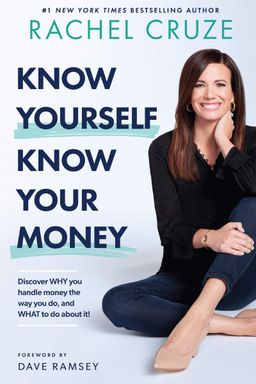
Why do you keep making the same financial decisions over and over—even when you know better? In Know Yourself, Know Your Money, Rachel Cruze argues that true financial peace begins not with budgets, but with behavior. Money isn’t just math—it’s emotion, history, and habit. Your upbringing, personality, fears, and relationships determine how you handle money, and unless you uncover those influences, you’ll repeat the same patterns no matter how good your intentions are.
Cruze, the daughter of financial expert Dave Ramsey, brings decades of teaching from Ramsey Solutions into a deeply personal exploration of how understanding yourself transforms your financial life. She believes most personal finance advice fails because it starts with how—how to budget, how to save, how to invest—without ever addressing why. By tracing the emotional experiences that shaped our money mindsets, we can uncover blind spots, build healthier habits, and finally gain control over our finances.
Your Money Story Begins in Childhood
Cruze introduces the concept of the four “Money Classrooms,” showing that everyone grows up in a household with two kinds of communication about money: emotional (stressed vs. calm) and verbal (open vs. closed). These combinations create four unique environments—Anxious, Unstable, Unaware, and Secure—that shape your beliefs about saving, spending, and conflict. Whether your parents never mentioned bills or fought about them daily, those early cues taught you what was normal. The first step in change, she says, is knowing which Money Classroom you came from.
The Habits You Inherited and The Ones You Choose
Through revealing stories—like families who lived in blissful ignorance of hidden debt or children raised amid constant money fights—Cruze helps readers recognize their formative lessons. She argues that empathy for your parents, balanced with personal responsibility, sets you free. Your childhood explains your tendencies, but it does not define your destiny. You can move from anxiety, chaos, or avoidance into a healthier quadrant by learning new communication and accountability patterns. As researcher Marcus Buckingham tells her, “Childhood either enables you or stunts you; it doesn’t create you.”
Money Fears and the Stories We Tell Ourselves
Once you understand your background, Cruze guides you through another layer of self-awareness: your financial fears. She identifies six common fears—from not having enough to repeating your parents’ mistakes—and teaches readers to confront them by naming the fear, focusing on truth, and asking for help. Using biblical principles and psychology from experts like Dr. Henry Cloud and Dr. Chip Dodd, she reframes fear not as sin but as a signal that we need help, connection, and courage. Hope, not helplessness, becomes the fuel for change.
Your Money Tendencies and Motivations
Beyond fear, Cruze maps out seven “money tendencies” that reveal how your personality interacts with finances: Saver or Spender, Nerd or Free Spirit, Experiences or Things, Quality or Quantity, Safety or Status, Abundance or Scarcity, and Planned or Spontaneous Giver. None are good or bad—they’re neutral traits. What matters is awareness. For example, a spender married to a saver needs open communication, not shame. Like personality frameworks such as the Enneagram or Myers-Briggs (which Cruze references in the introduction), money tendencies deepen empathy within couples and families, leading to balance and fewer fights.
Grace, Truth, and Growth
Cruze also explores how we respond when money mistakes happen—our own or others’. Her “Grace Scale” illustrates two extremes: enabling (too much grace) and legalism (too little grace). Real transformation, she insists, lies in the middle—combining compassion with accountability. Through heartfelt stories about parents, spouses, and even humorous personal blunders (like accidentally renting a political documentary called Weiner), she shows how humility, empathy, and boundaries heal financial and emotional wounds alike.
From Awareness to Action
Finally, Cruze transitions from mindset to movement. She connects self-knowledge to the classic Ramsey “Baby Steps,” showing how understanding your motives sustains change. Lasting transformation is built on belief and hope. Quoting studies on resilience and Dr. Curt Richter’s research on hope, she reminds readers that people don’t persist because they’re perfect—they persist because they believe rescue is possible. By combining emotional insight with practical financial systems, Cruze offers a roadmap where managing money becomes managing life.
“When you understand why you handle money the way you do, you can build on your strengths and change your bad habits for good—so you can do the things that matter most.”
This book blends financial education, psychology, and faith with empathy and humor. It invites you to stop asking, “What am I doing wrong with money?” and start asking, “Why do I do it this way, and how can I grow?” Once you know yourself, Cruze promises, you can finally know your money.