
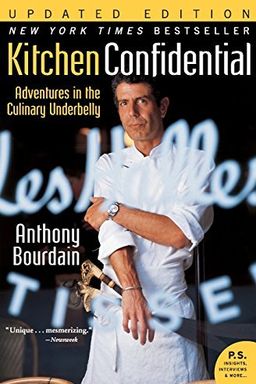
Kitchen Confidential cover

Kitchen Confidential

by Anthony Bourdain

Dive into the chaotic yet captivating world of culinary arts with Anthony Bourdain''s ''Kitchen Confidential.'' Discover the passion, pressures, and peculiarities of life in a professional kitchen through Bourdain''s vibrant stories and practical advice for aspiring chefs.

The World Behind the Kitchen Door

What happens when you cross the threshold into a professional kitchen? In Kitchen Confidential, Anthony Bourdain reveals not just recipes or restaurant gossip, but a full social world governed by its own codes, hierarchies, and adrenaline-fueled rituals. He argues that the kitchen isn’t simply a workplace—it’s a tribal subculture that turns outsiders into insiders through shared hardship, language, and discipline. Understanding this hidden world is the key to understanding chefs themselves: their humor, addictions, camaraderie, and relentless pursuit of craft.

Food as Revelation and Identity

Bourdain’s story begins with two taste epiphanies: a cold bowl of vichyssoise on the Queen Mary and a raw oyster on the Bassin d’Arcachon. These aren’t mere meals—they’re awakenings. The sensations of brine and cream awaken his curiosity, proving that food can trigger transformation. From that moment, risk and taste become inseparable; the oyster symbolizes adventure, while vichyssoise marks elegance. You learn that for a chef, food is identity. It’s how they measure creativity, courage and belonging. (Note: this theme parallels M.F.K. Fisher’s portrayal of sensuality in eating—both authors see food as an existential mirror.)

Structure, Language, and Loyalty

The professional kitchen functions like a miniature military, complete with rank, ritual and jargon. Orders flow downward from chef to commis, and you earn respect through flawless timing and precision. You'll memorize curses, nicknames and coded humor as if learning a dialect. These aren’t random obscenities—they’re survival tactics used to test toughness and bind crews together. The etiquette is spartan: be early, stay clean, protect your knives, and never touch another cook’s setup. This discipline is the glue holding chaos together during service, and the bonds run deeper than friendship. “If I need a favor at 4 a.m., I’m calling my sous-chef, not a writer,” Bourdain says—emphasizing loyalty above all.

Work, Risk, and Belonging

Cooking professionally means trading normal life for an all-consuming tribe. You work weekends when others rest, and holidays become just another shift. Yet this very isolation creates a fierce sense of belonging. Inside the kitchen, everyone shares the same stakes: finish the service or fail together. The rhythm—mise-en-place, prep, rush, cleanup—becomes a daily ritual that gives structure to chaotic lives. Many cooks come from exile, recovery or escape; for them, the kitchen is sanctuary and home.

From Addiction to Discipline

Bourdain’s narrative tracks the high and low tides of this culture: cocaine-fueled nights, collapsed businesses, and eventual redemption through rigor. He shows that the kitchen can destroy or save you depending on how you relate to its discipline. At places like Provincetown’s Dreadnaught and later under Bigfoot’s tough-love system, he learns that professionalism—punctuality, inventory control, obsessive cleanliness—can counterbalance the chaos. In Bigfoot’s world, fifteen minutes early is on time, and survival depends on systems rather than ego. The contrast between reckless early years and the structured mentorships echoes a military learning curve from conscript to commander.

Craft, Leadership, and Evolution

As he evolves, Bourdain moves through phases—student at the CIA, line cook, executive chef, and global emissary. Each stage reveals a different aspect of leadership: authority born of scars, empathy shaped by loss, humor as a form of endurance. Under Pino Luongo, he learns the theater of management: recruitment raids, public scrutiny, and pressure that can crush or refine. Later, he discovers what real simplicity means through Italian kitchens—Gianni Scappin’s lessons in fresh pasta, four-ingredient clarity and efficiency rooted in taste. This apprenticeship arc mirrors growth in any craft: from imitation to mastery, and from excitement to composure.

Life Lessons Beyond the Line

Ultimately, Bourdain’s world becomes a metaphor for work itself: how to endure pressure, honor systems, and find meaning in repetition. He teaches that craft matters more than glamour. A clean station, loyal sous-chef, disciplined ordering routine—these are the quiet practices that produce artistry under stress. His global adventures, like the mission to Tokyo, reveal humility: even mastery must adapt to new contexts. Whether mentoring staff, firing ethically, or negotiating purveyors, the chef’s life is moral labor as much as technical labor.

Core message

The kitchen is both crucible and family—an arena where identity, discipline, loyalty and craft converge. If you understand its subculture, you understand the heartbeat of the culinary world: relentless, imperfect, and always human.

In Bourdain’s telling, becoming a chef is not about stardom but survival. Food awakens you; service transforms you; leadership tests you. When you master those layers, the kitchen stops being just work—it becomes the language through which you understand life itself.


Mise-en-Place and Precision

If the kitchen has a religion, mise-en-place is its gospel. Bourdain treats it as a philosophy: order, readiness, and respect for detail. Your station reflects your mind; a cluttered prep area means a scattered chef. Before service begins, every component—salt, shallots, parsley, sauces—must be perfectly aligned, ready for command. You don’t improvise mid-rush; you engineer the calm before chaos.

Architecture of Efficiency

Every pan and ingredient has its logic. Side-towels are currency, knives sacred property, and backups mandatory. Cooks in Bourdain’s world hoard towels in ceiling tiles and rebuild setups when stressed. The rituals may seem eccentric, but they make split-second response possible during the dinner rush. A good line cook moves with the muscle memory of a dancer, anticipating every fire order and timing each sauce without consulting notes.

Team Choreography

Stations work like interlocking circuits. The sauté cook and grill specialist synchronize like pilots in formation. The expediter becomes conductor, ensuring that Dover sole and rack of lamb hit the pass simultaneously. Fail at rhythm and the dining room falters. Success requires not only skill but empathy—an intuitive sense of how your colleague moves and when they're sinking into the weeds.

Professional mantra

“Work clean.” It captures a moral and operational truth: respect your tools, your colleagues, and your craft. A clean board equals a disciplined mind.

Cooks as Professions and Archetypes

Bourdain divides cooks into Artists, Exiles, and Mercenaries—categories defined not by talent but by motivation. Artists crave creative control; Exiles cook to survive; Mercenaries pursue excellence for pay. The kitchen values dependability over genius. Bourdain favors immigrants—Ecuadorians, Mexicans—who possess humility and precision born of necessity. The implicit lesson: technique can be taught, but character cannot. The best kitchens build systems that filter ego and reward follow-through.

Learn the station as a craft, not a temporary job. Honor mise-en-place, teamwork, and cleanliness as philosophies. If you can maintain grace under pressure, you transform routine into artistry—the quiet kind that outlasts showy innovation.


The Highs and Lows of the Culinary Life

Bourdain’s career swings between triumph and ruin, exposing how chefs flirt constantly with burnout, addiction, and redemption. In Provincetown, his first real kitchen feels intoxicating: sex, coke, and fried food. Cooks are pirates—rebellious, hard-living, and proud. The drug-fueled bravado masks insecurity and exhaustion, yet it also forms a bonding ritual. The paradox defines his world: creation and destruction share the same heat.

Provincetown and the Making of a Cook

The Dreadnaught’s wild environment introduces him to the kitchen as fraternity and rebellion. You work blistered, laugh through pain, and collect battle scars. The romance of that early period—moonlight catering gigs full of cocaine and chaos—captures why young cooks fall in love with the trade even as it ruins them. Later, Work Progress and Gino’s magnify the same dynamic: ambition overtaking structure, money bleeding through hubris, and exhaustion leading to collapse.

Bigfoot and Redemption through Systems

After years of runaway kitchens, Bourdain finds sanity under Bigfoot, a pragmatic restaurateur. Bigfoot’s world worships discipline—punctuality, yield tracking, zero waste—and restores order to chaos. The partnership between authoritarian clarity and street-level empathy changes Bourdain’s perspective. Bigfoot proves that running a kitchen is engineering more than charisma: inventory one day, emotional triage the next. This system-focused lens becomes the foundation of Bourdain’s leadership style later at Les Halles.

The lesson carries across professions: learn from failure but never self-romanticize collapse. Bourdain’s story reminds you that burnout isn’t heroic—it’s a signal to rebuild structure before the job consumes you.


Leadership and the Sous-Chef Alliance

Leadership in Bourdain’s world isn’t glamorous; it’s maintenance under siege. Your closest ally is the sous-chef—the person who translates vision into machinery. Steven Tempel exemplifies this role: he fixes compressors, recruits staff from rival restaurants, charms angry cooks, and even returns to the line after slicing his hand open. He demonstrates what real loyalty looks like—the kind you measure not in words, but in action.

Operational Intelligence

A great sous anticipates crises. Steven performs logistics miracles: securing equipment overnight, finding lost staff, managing political fallout. He functions as fixer and diplomat. The sous-chef’s skillset merges technical ability with human management—part engineer, part psychologist. You learn why every chef needs one: the kitchen’s rhythm depends on trust and capability shared between two commanders.

Emotional Glue and Culture

Steven keeps morale alive. His charm neutralizes tension, his humor strengthens teams, and his work ethic inspires loyalty. This emotional intelligence is as valuable as any recipe. Bourdain treats that partnership like kinship; it shows that leadership starts with empathy, not ego. (Note: this echoes corporate management theories emphasizing psychological safety—the kitchen proves those theories in fire.)

Hiring advice

Hire resourcefulness, not just résumé polish. The sous who can recruit, repair, and calm chaos is worth ten technicians.

Leadership in kitchens happens through trust, endurance, and co-dependence. The sous-chef mirrors and multiplies your effectiveness; treat them as partner, not employee.


The Art of Simplicity and Taste

At Le Madri and Coco Pazzo Teatro, Bourdain discovers the ethos of Tuscan simplicity—a style that values restraint and purity over spectacle. Under Gianni Scappin and Pino Luongo, he learns that great cooking hides behind few ingredients and perfect timing. Simplicity is both aesthetic and tactical: fewer garnishes mean faster service and deeper flavor.

Technique through Discipline

Cooking pasta becomes revelation. You blanch small batches, finish them in pans with sauce, and aim for balance where you taste the pasta itself. Fresh tomato pomodoro made from peeled fruit replaces canned shortcuts. Stocks and basic oils matter as much as premium truffles. Italian kitchens teach you to honor the elemental and discard decoration. The four-ingredient doctrine—olive oil, garlic, produce, and heat—outperforms complexity.

Culinary Minimalism and Efficiency

The lesson isn’t nostalgia; it’s operational efficiency. Simpler plates reduce labor, error and waste. Owners love this philosophy because clean, honest food earns loyalty without exhausting staff. You learn how craftsmanship scales when it’s stripped to essentials. (Note: Bourdain’s reverence here recalls Alice Waters but his tone is grittier—less pastoral, more battlefield.)

Taste insight

Simplicity is intelligence. When you remove distraction, ingredients speak louder—and discipline becomes flavor.

Understanding Tuscan simplicity reshapes how you cook and manage: chase freshness, respect timing, and let each ingredient carry its weight. The art is restraint.


Global Adaptation and Professional Ethics

Later chapters shift from local kitchens to international scale. Bourdain’s mission to open Les Halles Tokyo teaches humility—a reminder that recipe replication fails without cultural understanding. Exporting cuisine means deciphering new supply chains, etiquette, and expectations.

Learning Abroad

Tokyo exposes differences in ingredient sourcing, pricing and presentation. Filets cost triple; potatoes cook differently; peanut oil is luxury. Translators and patience become tools equal to knives. Visiting Tsukiji market redefines his sense of freshness and discipline—Japanese fishmongers embody perfectionism he aspires to. You learn adaptability: quality depends on understanding local textures and customs, not blindly imposing your own menu.

Ethics and Human Consequences

Parallel to technical challenges are the moral ones. Bourdain confronts leadership dilemmas—firing unstable cooks, balancing compassion and safety. The “lifeboat” ethic captures harsh truth: you must preserve the ship even if someone falls overboard. Yet empathy still matters—offering help, resources and dignity during dismissal. Firing becomes moral labor, not just procedure.

Global lesson

Adaptation and empathy are the twin pillars of sustainable professionalism. Without them, competence turns to arrogance.

In sum, mastery means constant adjustment—geographically and ethically. A chef must be both technical artist and moral actor, shaping not just meals but lives in motion across cultures.


The Chef’s Code of Survival

In his final chapters, Bourdain distills his philosophy into a set of survival commandments. They read less like advice columns and more like wartime protocols: commitment, punctuality, honesty, and humor. Becoming a chef means accepting endless struggle and still showing up. You’re judged less by brilliance than by reliability.

Commitment and Language

You must be all in—no half-measures. Learn Spanish, the lingua franca of professional kitchens, to bridge class and culture. Understand that communication fuels teamwork. Every insult on the line doubles as camaraderie, every joke hides respect. Humor keeps sanity alive when physical exhaustion creeps in.

Ethics and Integrity

Never steal or take kickbacks. Corruption poisons kitchens faster than spoiled meat. When offered bribes by purveyors, Bourdain declines, reinforcing trust as currency. Leadership demands moral stamina: keep records, respect purveyors, and return favors honestly. You survive by reputation built plate by plate.

Final philosophy

If you can tolerate pressure, serve honestly, and keep humor intact, the kitchen becomes not just a job but a way of understanding endurance itself.

When you internalize this code, you stop chasing glamour and start mastering persistence. And that, Bourdain insists, is what separates real chefs from tourists in whites.

Dig Deeper

Get personalized prompts to apply these lessons to your life and deepen your understanding.

Go Deeper

Get the Full Experience

Download Insight Books for AI-powered reflections, quizzes, and more.