
Idea 1
Empire, Illusion, and the Congo System
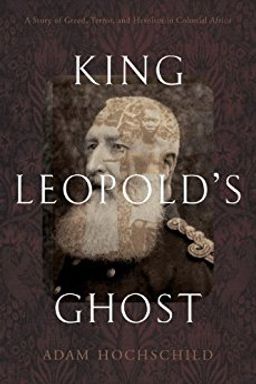
What happens when humanitarian rhetoric becomes a mask for empire? In this book, you follow the extraordinary and chilling story of King Leopold II’s Congo Free State—a privately owned colony disguised as a philanthropic enterprise. The narrative unfolds as both history and anatomy of deception: how a European monarch built a personal empire using the language of civilization, mapped territory through explorers, legalized theft through treaties, enriched himself through rubber, and ultimately faced exposure through journalism and moral protest. The Congo, between 1885 and 1908, becomes both metaphor and mechanism for modern imperialism: a case study in how paper, publicity, and bullets convert land and life into profit.
Two faces of empire: the monarch and the mask
You meet Leopold as a paradox. Publicly, he presides as a constitutional monarch of a small European country; privately, he owns an African state nearly eighty times larger. His method is theater. He convenes the 1876 Geographical Conference in Brussels under the banner of science and anti-slavery; he sponsors expeditions while presenting himself as a benefactor. But beneath the flags and medals, every association he forms—the International African Association, the International Association of the Congo—is a shell concealing one man’s control. (Note: this form of moral disguise anticipates later corporate charities and façade NGOs used to mask resource extraction.)
Exploration as performance and power
Explorers such as Henry Morton Stanley provide Leopold the instruments of conquest. Stanley’s dramatic persona—a blend of journalist, hero, and scout—transforms maps into claims and celebrity into diplomacy. Every mountain or pool he names bonds geography to European patronage. His treaties with hundreds of chiefs, written in alien legal terms, cede sovereignty for trinkets and gin. Exploration, you now see, is not curiosity but choreography: publicity and possession intertwined. Stanley’s violence and naming rights become the pilot project for empire’s grammar—discover, declare, and domesticate.
The architecture of seizure
After the Berlin Conference (1884–85), Leopold’s Congo Free State achieves international recognition. Behind the humanitarian façade lies a corporate state run on treaties and concessions. Chiefs’ signatures justify monopolies; concessions grant companies vast fiefdoms; the king himself holds 50% of shares. The result is bureaucratized plunder. Dividends flow to Brussels; records of 'vacant land' allow seizure; and the Force Publique—armed with rifles, led by European officers—enforces quotas and portage. This fusion of legal fiction and coercive power turns Africa into a business ledger. You recognize here the prototype of later extractive economies where state and corporation merge for profit.
Rubber, ivory, and the economy of blood
Ivory begins the plunder; rubber perfects it. As rubber prices soar globally in the 1890s, Leopold’s agents impose quotas tied to commissions. Villages unable to meet them face hostage-taking, beatings, or massacre. Every ton of rubber represents human flesh and ecological exhaustion. Records show staggering profit margins (A.B.I.R. purchases at 1.35 francs per kilo and sells for ten). Such arithmetic makes brutality systemic: torture and terror become management tools. In this context, hands severed from corpses serve as accounting evidence of bullets honestly used—a grotesque bureaucracy of violence that dehumanizes everyone involved.
Public deception and manufactured consent
While terror dominates in the Congo, spectacle seduces Europe. Leopold mounts exhibitions such as Tervuren (1897), displaying Congolese people as living exhibits and exporting the illusion of benevolent empire. Missionaries, explorers, and journalists are invited to witness sanitized stations. Paid propagandists publish praise in major newspapers; museums and maps illustrate 'progress.' This sophisticated media campaign prefigures modern information warfare—where narrative control matters as much as fact. The irony is acute: a man enriching himself with forced labor markets 'civilization' to his consumers.
The moral countercurrent
Yet against this machinery rise witnesses who reclaim truth. George Washington Williams writes the first public indictment in 1890, calling Leopold’s rule a crime against humanity. Missionary William Sheppard documents atrocities among the Kasai tribes, and his photographs of severed hands become moral icons. Journalist E.D. Morel uncovers the trade imbalance proving forced labor, while consul Roger Casement’s methodical 1903 report to the British Parliament adds legal authority. Together, they show how activism evolves from moral outrage to evidence-driven movement—a pattern still vital for human rights advocacy today.
Exposure, downfall, and legacy
The campaign culminates in global protest, forcing Belgium to annex the Congo in 1908. Leopold dies amid scandal, his fortune hidden in secret foundations. Reforms come slowly; forced labor persists under other names. Yet the reformers’ success lies in precedent: they pioneer transnational activism—photographs, petitions, parliamentary pressure—that will later inform Greenpeace, Amnesty International, and investigative NGOs. The Congo thus becomes both tragedy and template: a warning of what happens when moral theater justifies greed, and how truth, however belated, can still puncture power’s mask.
Core insight
Leopold’s Congo shows that empire rests as much on stories and signatures as on soldiers and guns. The moral of this book is not only the exposure of one king’s deceit but a recognition that political systems built on illusion and greed can endure until facts—and witnesses—turn private shame into public law.