
Idea 1
America’s War Against Organized Crime
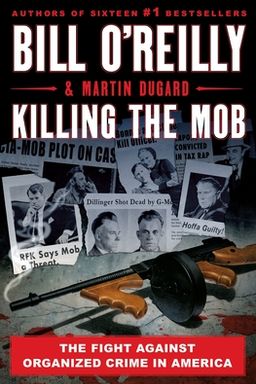
Have you ever wondered how the romanticized image of gangsters—from Al Capone’s swagger to Bonnie and Clyde’s doomed love—became part of America’s cultural identity? In Killing the Mob, Bill O’Reilly and Martin Dugard take readers deep into the bloody, power-driven history of organized crime in America, showing how a network of bank robbers, bootleggers, hit men, and mob bosses shaped the twentieth century. At its heart, the book argues that organized crime is not just a criminal phenomenon—it’s a mirror for America’s obsession with freedom, power, and rebellion against authority.
O’Reilly contends that the evolution of the Mob—from Depression-era bandits like John Dillinger and Bonnie and Clyde to global kingpins like Lucky Luciano and Sam Giancana—reflects a dark underside of American ambition. The nation’s fight against these figures, led by obsessive lawmen such as J. Edgar Hoover and Robert Kennedy, was as much about defining moral order as enforcing the law. Yet their war often blurred the line between justice and politics, exposing America’s willingness to glamorize violence even while condemning it.
From Bank Robbers to Syndicate Lords
The book opens in the chaos of the Great Depression, when economic despair turned some criminals into folk heroes. Figures like John Dillinger and Pretty Boy Floyd exploited public hatred for banks, while Hoover’s fledgling Bureau of Investigation (later the FBI) transferred that anger into a national campaign against “Public Enemies.” What begins as a war on individual bandits soon morphs into a complex struggle against organized syndicates—criminal families like those of Luciano and Genovese—who bring discipline and strategy to their corruption.
Politics and Power
O’Reilly traces how the fight against crime intertwined with America’s political evolution. Hoover’s obsession with fame and control created the myth of the feds as America’s moral saviors. Later, as the Kennedys rose to power, the political stage and the underworld collided. The book reveals shocking connections between Mafia bosses and politicians—including the Kennedys’ alleged reliance on Mob-backed favors during the 1960 election. The lesson is clear: in America, crime and politics have often danced together, each manipulating the other for survival.
The Mob Goes Global
Beyond the streets of New York and Chicago, Killing the Mob explores how organized crime expanded into international conspiracy. World War II’s alliances between the U.S. Navy and Sicilian gangsters, the CIA’s recruitment of mobsters to assassinate Fidel Castro, and the spread of narcotics through global networks show that the fight against crime was never confined to American soil. O’Reilly exposes how mafia leaders raided not only national institutions but also wartime morality—trading secrets with governments that once vowed to destroy them.
The Cultural Paradox
Finally, the book examines how Americans transformed these outlaws into icons. Films like The Godfather and real-life legends of gangsters shaped our view of rebellion, success, and power. O’Reilly reminds you that the allure of crime—its glamour and danger—never truly disappeared. The Mob’s story is the story of modern America: a nation that respects law, idolizes freedom, and yet remains fascinated by the men who break every rule to seize it. In tracing this paradox, the authors invite readers to consider how moral compromise, national ambition, and the hunger for notoriety turned the crime wars into one of the defining dramas of the American century.