
Idea 1
The Karma Mechanism: Becoming the Architect of Your Destiny
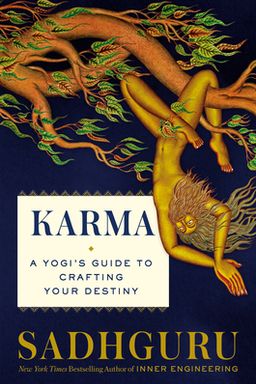
When you reflect on your life, do you ever wonder who's actually driving the car—your choices or something deeper beneath the surface? In Karma: A Yogi's Guide to Crafting Your Destiny, Sadhguru contends that everything about your experience—your joy, suffering, patterns, and destiny—is not imposed by any divine hand but by you. He insists that karma is not punishment or reward but the simple, self-regulating mechanism through which you create the blueprint of your own life.
Sadhguru defines karma not as destiny but as action—every physical, mental, and energetic activity that leaves an imprint. These imprints accumulate to form tendencies, which harden into personality, and eventually dictate how you see and respond to life. The book unveils a powerful possibility: karma is not a trap, but a tool. If you can act consciously rather than compulsively, you can rewrite your inner software and shape your destiny deliberately.
From Victimhood to Responsibility
The core message in Sadhguru’s teaching is radical personal responsibility. In shifting accountability from heaven to oneself, you realize that your life is your own creation. The universe is not making moral judgments; it’s responding to the mechanics of action and consequence. Karma becomes the vehicle for awareness rather than guilt. You don’t carry good or bad deeds; you carry actions that shape tendencies. Whether these inclinations turn into joy or misery depends on how consciously you live.
This insight dissolves fatalism—the notion that everything is predetermined. You may carry past actions like old software, but every moment offers a chance to rewrite the code. Life, therefore, is not something happening to you; it is something happening through you.
Karma as Memory: The Invisible Archive of Your Being
A central idea Sadhguru elaborates is that karma is memory—an enormous, multi-layered archive operating within every cell of your body and thought of your mind. Through vivid stories, he illustrates how this memory shapes physical, emotional, and psychological realities. Every sensation, chemical reaction, and mental fluctuation leaves a trace that accumulates as karmic memory. Over time, this transforms into behavioral patterns. You become a puppet of your own past until awareness severs the strings.
Drawing from yogic science, Sadhguru describes eight types of memory: elemental, atomic, evolutionary, genetic, karmic, sensory, articulate, and inarticulate. These act as invisible layers that define not only your personality but also your perception of existence. The everyday experiences, ancestral traits, even the Earth’s elements you absorb, are all repositories of karma. Yet, this accumulation does not mean damnation—it’s simply information.
Freedom Through Conscious Action
According to Sadhguru, freedom isn’t achieved by erasing karma but by transcending it. Attempting to destroy karma is like destroying the body that sustains existence. Karma is the glue that keeps life coherent. Liberation happens not by avoidance but through awareness. When you act consciously—without craving or aversion—you stop generating new karma. You start wearing it lightly rather than tightly. Every ordinary action, whether sweeping a floor or running a business, becomes yoga when performed with complete awareness.
In everyday terms, this means shifting your motive from outcome to involvement. You work, speak, and feel not for reward but as expressions of your inner clarity. This is karma yoga—the transformation of every action into liberation instead of bondage.
Why It Matters
Understanding karma as the mechanics of creation rather than divine accounting changes everything about how you live. Sadhguru argues that the modern epidemic of stress, anxiety, and repetitive suffering arises because we act compulsively, trapped in cycles of memory. To break free, you must switch from reaction to responsibility—from inheritance to creation. The purpose of yoga, meditation, and self-awareness, as described here, is not to fix life but to awaken you to the fact that you are life.
Throughout the book, Sadhguru weaves parables, humor, and ancient insights to show how karma governs body, mind, and energy—and how deliberate consciousness can dismantle the illusion of bondage. Whether he’s describing human beings as “bags of karma” or teaching “the art of pulling the courtesan’s pin” to free oneself from mental entanglement, his refrain remains consistent: Stop outsourcing your destiny. Everything—your pain, joy, and liberation—depends on how you handle the vast memory that is you. When you understand karma as creative architecture rather than punishment, you can finally design the life you long for.