
Idea 1
Stagger Onward, Rejoicing
When life keeps hurling losses at you, what can you build that won’t collapse? In So Far, Kelsey Grammer argues that you don’t outrun grief, betrayal, or addiction—you integrate them through craft, faith, and the stubborn decision to keep creating. He contends that the artist’s life is a paradoxical practice: you’re both participant and observer, wounded human and working storyteller. To live—and act—well, you learn to stand in that split and turn pain into meaning, scene after scene.
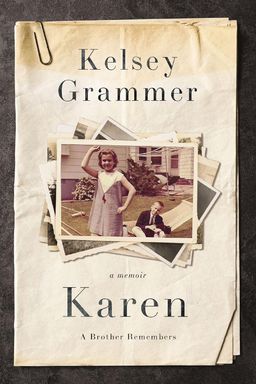
Across this unguarded memoir, Grammer revisits the crucibles that shaped him: his father’s murder, the death of his grandfather, the brutal rape and murder of his sister Karen, and later the drowning of his half-brothers. He describes the strange consolations that surfaced alongside the wreckage—Christian Science lessons in mind and spirit, recurring dreams of Atlantis, and a surfer’s epiphany inside a breaking wave. He shows you how early discipline (Juilliard, the Old Globe, Guthrie) and a lifelong reverence for language forged a professional identity stronger than fame’s temptations.
What the book claims
Grammer’s core claim is deceptively simple: art can be salvation if you accept its demands. Craft is a boundary when your life has none. Truth is the actor’s only currency. And growth requires telling the truth about your failures as clearly as your triumphs. He believes personal freedom isn’t “doing whatever you want,” but facing what you must—and still choosing dignity. That belief underwrites every chapter, from yellow-pants auditions and dog-eared Shakespeare to showdowns with titans and tabloid storms.
What you’ll learn in this summary
You’ll see how a faith-infused childhood and catastrophic losses seeded both a profound spirituality and a lifelong ache. You’ll trace the apprenticeship years—singing for Stephen Sondheim, being cut from Juilliard, rebuilding at San Diego’s Old Globe, and learning to “play up” to audiences (hat tip to Jack Benny). You’ll watch a young actor defend his characters (and himself) against powerful directors—culminating in a mid-performance line in Othello that both nearly ended and finally freed him. Then you’ll step into Cheers—a gig born from Mandy Patinkin’s lunch, yellow pants, and an insistence that Frasier must be ethical—and see how resistance (Shelley Long’s) ironically cemented Grammer’s place. Finally, you’ll see Frasier’s rebirth in Seattle with Grub Street’s David Angell, Peter Casey, and David Lee, casting alchemy (David Hyde Pierce, John Mahoney, Jane Leeves, Peri Gilpin), and a comic rhythm grounded in truth, not tricks (sorry, Moose).
Why it matters beyond celebrity
This isn’t a victory lap; it’s a lived map for anyone who has been knocked flat and still wants to build something beautiful. If you’ve ever wondered how to keep your soul intact when your public life explodes—or how to love differently after loving badly—Grammer’s specificity is your guide. He doesn’t glamorize addiction or tabloid chaos; he shows the paperwork, the CalTrans trash bags, the county-cell friendships, and the therapy that helped him name the pattern that kept picking his partners for him. Like Matthew Perry’s Friends, Lovers, and the Big Terrible Thing and Andre Agassi’s Open, this is a hard-won philosophy of endurance: you don’t get a new past, but you can give your future better lines.
The book’s leitmotif: Auden and Atlantis
Two touchstones organize Grammer’s inner life. First is a childhood dream of Atlantis—a place of thinking and equality—revisited years later when a book of W. H. Auden’s poems fell open to “Atlantis,” where he read the very words he’d once written as a boy: “Stagger onward rejoicing.” This becomes his refrain. Second is his belief that the universe leaves signs (a lightning strike on a motorcycle in an Alabama storm; a casting-room nudge to defend a character’s ethics) if you’re listening. Whether you interpret these as providence or pattern recognition, the point stands: meaning favors the watchful.
Key Idea
“Traveling and tormented… Stagger onward rejoicing.” Grammer frames his journey not as redemption on cue in the last chapter, but as an actor’s vow: keep showing up, keep telling the truth, keep choosing better scenes.
Expect a memoir that reads like a backstage seminar in survival: how to audition like a grown-up, how to stand up to geniuses (Mike Nichols, Christopher Plummer) without losing your job, how to write love letters to teachers (Edith Skinner, Pierre LeFevre), and how to tell your children the truth without making your hurt their inheritance. If you’re facing down your own plot twist, this book gives you language, moves, and, yes, heartwind.