
Idea 1
Building Just Work
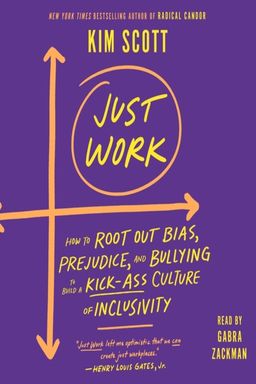
How can you build a workplace where people can do their best work—and do it justly? In Just Work, Kim Scott argues that fairness at work requires more than good intentions. It takes precise language, informed action, and designed systems that interrupt bias, expose prejudice, and stop bullying before they metastasize into harassment or discrimination. Her vision of 'just work' means creating environments where collaboration replaces coercion and where each person’s individuality can thrive without fear.
Scott blends personal experience as a Silicon Valley leader with research from behavioral science, psychology, and organizational design. She identifies three root causes of workplace injustice—bias, prejudice, and bullying—and connects them to four human roles we all play: the harmed, the upstander, the causer, and the leader. Each root cause demands a different kind of response; each role comes with its own responsibility. Together, these distinctions give you a toolkit for acting effectively rather than reactively.
Bias, Prejudice, and Bullying—Three Different Forces
Bias is unconscious and automatic: the brain’s fast 'not meaning it' response. Prejudice is conscious and defended: 'meaning it.' Bullying is deliberate meanness—using power or in‑group privilege to hurt or humiliate. Scott insists on naming each clearly because collapse breeds confusion: we can’t fix what we can’t define. Understanding where behavior comes from determines how to respond. You educate bias, draw boundaries around prejudice, and impose consequences for bullying.
For example, when a man at a conference assumes Kim is staff rather than a speaker, that’s bias—best met with an 'I' statement that invites correction: 'I think you confused me with the staff; I’m a presenter.' When someone defends a sexist stereotype, it’s prejudice, which calls for an 'It' statement: 'It’s inappropriate to suggest women aren’t suited to this job; that violates our policy.' And when someone acts aggressively, it’s bullying; respond with a firm 'You' statement and clear consequences. The right language protects dignity without escalating needlessly.
Roles and Responsibility—Four Perspectives on Workplace Harm
Every incident involves four potential perspectives: the harmed person, the upstander, the person who caused harm, and the leader. You may rotate roles across a career, and each demands clarity.
- The harmed person must protect their own safety and agency. Speak up if you can, document if you can’t, and forgive yourself for the choice you make.
- The upstander intervenes instead of freezing. Scott borrows the Hollaback! 5D model—Direct, Distract, Delegate, Delay, Document—to give you practical moves suitable for different risks.
- The person who caused harm must listen, apologize, and amend. Scott offers the AAA model—Acknowledge, Apologize, Amend—and urges humility rather than defense.
- The leader owns system‑level prevention: writing codes of conduct, distributing power, training bias interrupters, and applying consequences when needed.
Seeing through these lenses converts moral confusion into action plans. You can respond wisely instead of emotionally, repair trust faster, and prevent repetition.
Power and Systems—Why Injustice Persists
Scott goes beyond individual ethics to structural causes. Power, she explains, amplifies bias and enables discrimination. When unchecked, leaders become insulated, and workplace harm multiplies. To solve that, leaders must institute checks and balances: shared decision‑making for hiring and promotions, audit trails for pay and performance, and metric tracking across the employment funnel. Quantifying bias turns ethics into management discipline.
Systemic injustice also thrives because of two cultural dynamics—Conformity and Coercion. Conformity rewards sameness; coercion enforces control through fear. Both harm innovation and morale. The antidote is redesign: measure psychological safety, confront toxic incentives, and build cultures that reward collaboration, not domination.
From Principles to Practice
Scott embeds her framework in everyday tools. If you’re harmed, you document, build solidarity, and know your exit or BATNA (Best Alternative to a Negotiated Agreement) before escalating. If you lead, you design organizations that are bias‑resistant and safe by default: set up anonymous channels, protect interrupters, and measure psychological safety regularly. And at every level, build a culture of consent—because most workplace trauma connects to boundary violations fueled by power and alcohol. 'The toucher is responsible for consent,' she writes.
Finally, Scott distills her philosophy into two imperatives: collaborate, don’t coerce; respect individuality, don’t demand conformity. Organizations that follow these rules not only become fairer—they also perform better. Just work isn’t a utopian dream; it’s practical design. Fair systems and courageous conversations produce innovation, retention, and trust.
Core Equation
Bias + Power = Discrimination. Bullying + Power = Harassment. Design + Courage = Justice.
In short, Just Work teaches you how to see what’s happening, respond precisely, and redesign culture so accountability becomes natural. Justice at work, Scott shows, is built—one correction, one code, one conversation at a time.