
Idea 1
Building a Culture of Joy at Work
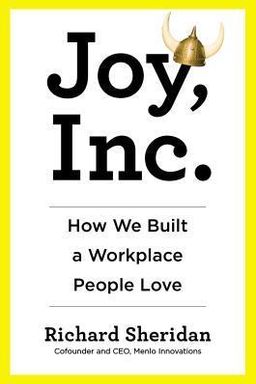
When was the last time you left work feeling energized rather than drained? In Joy, Inc., Rich Sheridan argues that work doesn’t have to be a place of fear, boredom, and burnout—it can be a place of purpose, teamwork, and joy. Through his company Menlo Innovations, Sheridan demonstrates that cultivating joy isn’t naïve or sentimental—it’s the most practical foundation for sustainable success and quality. The book is about reimagining management, design, and teamwork to make work both human and productive.
Sheridan contends that joy is not mere happiness. Happiness is fleeting, dependent on circumstance; joy is deeper, rooted in pride, connection, and meaningful results. Joy comes from working together on something that matters and seeing it shine in the world—whether it’s software, a business plan, or a product a customer truly loves. At Menlo, Sheridan and his team discovered that joy could emerge systematically, through intentional design of culture, space, process, and leadership. This isn’t accidental; it’s engineered through rituals, collaboration, rigor, and transparency.
Why Joy Matters
Sheridan opens with his own story—a journey from teenage software bliss to corporate despair. As a young programmer, he found joy in solving problems and creating worlds from code. But by midcareer, rising through the ranks to vice president at Interface Systems, he found himself trapped in an exhausting cycle of late-night coding, poor quality, and customer complaints. His team, though professional, was miserable. Vacations were impossible, quality was low, and every project felt like a death march. This experience mirrored thousands of others who believe “that’s just how work is.” Sheridan decided that staying the same was riskier than trying something radical.
Inspired by Kent Beck’s Extreme Programming and a Nightline episode on the design firm IDEO, Sheridan reimagined how his team could work. Instead of isolated heroes, they would collaborate openly in a shared space, use handwritten story cards instead of endless documentation, and work in pairs to build accountability and learning. When he tested this “Java Factory” experiment, skepticism turned into amazement. The first volunteers said they’d never learned or accomplished so much—and never had so much fun. From then on, Sheridan decided this new system would define Menlo’s future.
Core Argument
The book’s central claim is that joy can be built into every organization through intentional culture design. You don’t wait for joy to happen naturally—you architect it. Menlo operates as both a software lab and a social experiment: no hierarchy, no cubicles, constant conversation, and relentless attention to high-quality results. The team embraces transparency, collaboration, and rigorous testing to produce delightful outcomes for clients. Menlo proves that joy is not superficial—it’s measurable through quality, productivity, and customer delight.
Sheridan explores this through vivid chapters: how Menlo’s open workspace amplifies communication (“Space and Noise”), how pairing and learning foster resilience (“Freedom to Learn”), how rituals replace bureaucracy with structure (“Conversations, Rituals, and Artifacts”), and how discipline builds pride and quality (“Rigor, Discipline, Quality”). He shows that joy thrives in places where people feel safe to fail and experiment, echoing themes from Peter Senge’s The Fifth Discipline and Simon Sinek’s Start with Why.
A Practical Philosophy
Sheridan’s story also dismantles a common myth: that joy is incompatible with professionalism. Menlo’s culture is playful—Viking helmets, colorful walls, and “Make Mistakes Faster” posters—but it’s grounded in discipline and precision. Employees follow strict quality rituals and test-driven design while nurturing empathy for users through “High-Tech Anthropology.” Visitors see laughter and whimsy but discover beneath it a framework as rigorous as aviation or medicine. As Sheridan writes, “All anyone asks for is a chance to work with pride.” Joy comes from that pride.
Why does this matter to you? Because joy at work doesn’t emerge from perks, slogans, or corporate retreats. It emerges from systems where trust replaces fear, where collaboration replaces competition, and where learning replaces knowing. If you’ve ever felt stuck, alienated, or burned out by meaningless meetings, Sheridan offers hope—and a toolkit. Joy, he insists, is scalable, practical, and profitable.
What You'll Learn
Throughout Joy, Inc., you’ll explore how Menlo built a “factory for joy”: a place where transparency abolishes ambiguity, pairing spreads knowledge, and fear is replaced by curiosity. You’ll learn why rigid hierarchies kill creativity, why leaders must become humble teachers instead of bosses, and how to balance flexibility with disciplined structure. You’ll see how Menlo grew sustainable through clear rituals—daily standups, weekly planning games, and visible walls that speak the truth. Finally, Sheridan shows that joy isn’t escapism—it’s accountability, learning, and the courage to change.
By the end, you understand joy not as an emotion but as a system—a deliberate design that makes excellence humane. Sheridan’s vision is both revolutionary and deeply practical: a call to replace fear with purpose, silence with conversation, and burnout with pride. As he writes, “Humans aspire to a higher purpose. Teams desire to work on goals bigger than themselves.” For Sheridan, and for anyone seeking meaning in work, that higher purpose is joy.