
Idea 1
Sparking Joy at Work Through the KonMari Method
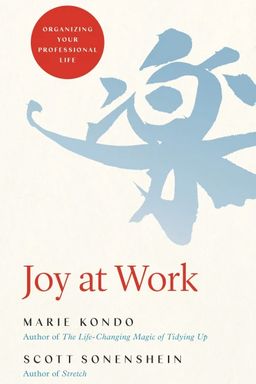
Have you ever walked into your office, stared at the piles of papers, the overflowing inbox, and felt a dull weight settle in your chest? Marie Kondo and organizational psychologist Scott Sonenshein start Joy at Work with that familiar feeling—and a bold promise: you can transform not just your desk, but your career, by tidying up.
They argue that most of us live amid physical, digital, and emotional messes that quietly drain our energy and purpose. The KonMari Method, first introduced in Kondo’s The Life-Changing Magic of Tidying Up, isn’t really about folding shirts—it’s about aligning your environment with what truly matters. In Joy at Work, that principle extends into your professional life: when you intentionally choose what to keep and what to discard, you rediscover meaning and spark joy in both work and life.
Tidying as a Mindset, Not a Chore
Kondo’s breakthrough idea is radical in its simplicity: joy should be your decision-making standard. When applied to work, tidying is not just cleaning—it’s a deliberate act of self-reflection. Each email, document, meeting, and relationship is evaluated by one question: does this spark joy or contribute to future joy? This criterion helps you filter noise from meaning, revealing what truly supports your professional purpose.
Sonenshein complements Kondo’s intuitive wisdom with evidence-based psychology. His research in organizational behavior shows that clutter—both physical and mental—saps motivation, increases stress, and reduces productivity. But tidying in a thoughtful, all-at-once way (what Kondo calls a “tidying festival”) can create lasting behavioral change. The brain loves order, and when we declutter systematically, we free up mental energy for creativity, focus, and joy.
From Desks to Decisions: The Scope of Work Tidying
The book moves far beyond the desktop. Each chapter expands KonMari’s philosophy into nonphysical domains of work: digital clutter, time clutter, decision clutter, relationship clutter, and more. Sonenshein and Kondo invite you to approach these like categories in your office cleanup: tackle them one at a time, completely, and never rebound.
- Physical tidying—Your desk, papers, books, and tools reflect your mind. Simplify them to regain clarity.
- Digital tidying—Streamline your files, emails, and apps to stop technology from running you.
- Time tidying—Purge your calendar of activities that don’t add value or joy.
- Decision tidying—Simplify choices so you spend energy only on what matters.
- Relationship and meeting tidying—Invest in high-quality connections and efficient, joyful collaboration.
Each area offers a framework for eliminating needless strain while cultivating mindfulness and purpose. For example, clearing email clutter isn’t just about fewer messages—it’s about regaining the freedom to do real, meaningful work without constant distraction.
Why This Matters More Than Ever
In a world of constant multitasking, digital overload, and blurred boundaries between work and home, many professionals feel disconnected from why they started their careers in the first place. The book argues that joy is the antidote. By confronting what overwhelms you—be it an unread inbox, endless meetings, or toxic colleagues—you reclaim sovereignty over your attention and spirit.
Kondo’s Japanese sensibility of gratitude also runs throughout: you thank your workspace, your tools, even your retired projects for their service. This ritual cultivates respect, mindfulness, and renewed motivation. As Sonenshein’s research confirms, gratitude itself fuels engagement, creativity, and wellbeing in organizations.
The deeper message, though, is that tidying is a mirror of self-discovery. As Kondo puts it, “To face the things we own is to confront our past.” At work, this means honoring your achievements and failures alike, clarifying your values, and choosing activities aligned with your authentic purpose. Once your space, data, schedule, and social web reflect who you want to be, your career begins to feel lighter, more focused, and joyful.
The Promise of Joy at Work
By combining the artistry of tidying with the science of stretching your resources (Sonenshein’s previous book, Stretch), the authors propose a new vision of professional success: not one driven by accumulation or constant busyness, but by clarity, gratitude, and joy. Just as minimalist thinkers like Cal Newport (Deep Work) and Greg McKeown (Essentialism) urge us to focus on what matters most, Kondo and Sonenshein show that this focus starts with tidying—both externally and internally.
Ultimately, Joy at Work challenges you to see your work life not as an endless series of tasks, but as a living reflection of your choices. Every cleaned drawer, streamlined inbox, or honest conversation about boundaries becomes an act of creativity, gratitude, and self-respect. When you let go of what clutters your attention, you create space—physically and emotionally—for the work that makes you come alive.