
Idea 1
Meditation as a Journey of Awakening
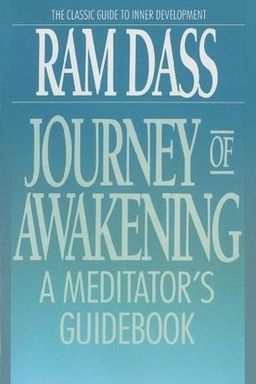
Have you ever achieved success and comfort only to feel an inexplicable emptiness inside? In Journey of Awakening, spiritual teacher Ram Dass—born Richard Alpert, the Harvard professor who became a global meditation guide—invites you to explore the vast inner landscape where true fulfillment resides. His central claim is powerful yet simple: meditation is not an escape from life but a way to become fully alive.
Ram Dass argues that our Western obsession with achievement, status, and self-definition leaves us fragmented and restless. Meditation, in contrast, is the practice of returning home—of tuning into awareness itself rather than the endless noise of thoughts and roles. It is both a discipline and an unfolding, a practice that can turn every moment—from washing the dishes to facing loss—into an opportunity for awakening.
From Harvard to the Himalayas
Ram Dass begins with his own story: a psychology professor at Harvard who, despite career success, felt deeply dissatisfied. His experiments with LSD (in collaboration with Timothy Leary) opened temporary portals beyond ordinary consciousness, but he realized that psychedelic highs could not offer lasting peace. His search led him to India, where he met the enigmatic guru Neem Karoli Baba, who revealed that the clarity and love Ram Dass sought were always within him. Meditation, not chemicals, became his true path.
This personal evolution mirrors a larger cultural shift—the movement from rational intellect to direct spiritual experience. For modern readers, Ram Dass’s story is a reminder that the hunger for meaning is universal, and that meditation can meet this hunger in a grounded, practical way. He speaks not as a monk removed from the world, but as a teacher who discovered wholeness through the messy, human process of waking up.
Why Meditation Matters
According to Ram Dass, most people live imprisoned by the mind’s chatter—a “thought prison” that separates us from the present moment. Meditation dissolves these walls. It is a technique for discovering what exists beyond ego: a vast field of awareness that is already peaceful and complete. Through regular practice, you shift from identifying with thoughts (“I am angry, I am sad, I am successful”) to identifying with the silent witness behind them.
“Why meditate?” Ram Dass asks. “To live in the moment. To dwell in harmony with the flow of the universe. To awaken.”
These are not abstract ideas. As he notes from experience, meditation can make daily life—anger, work, sex, even boredom—feel illuminated by joy. The challenge is to integrate moments of bliss into continuous, grounded awareness. The goal is not to abandon the ego but to use it as a “home base,” to navigate the world consciously rather than compulsively.
A Practical Guide to the Inner Path
Part instruction manual, part inner travelogue, Journey of Awakening is structured like a spiritual map. Ram Dass takes you from preparing for meditation (choosing a space, time, and method) through the common challenges (boredom, fear, doubt, distraction) to the deeper transformations of consciousness that unfold over time. Each section of the book corresponds to a stage along the path—getting your bearings, setting out, finding your way, getting stuck, losing your way, and, finally, getting free.
He explores a broad range of traditions: Hindu mantras, Buddhist mindfulness, Sufi dances, Christian contemplation, and even modern disciplines like biofeedback and yoga. Yet he insists the goal is not to belong to one tradition but to awaken through whichever door opens for you. Like his famous earlier book, Be Here Now, this text bridges East and West, offering timeless wisdom in accessible, down-to-earth language.
From Practice to Presence
Throughout the journey, Ram Dass insists that progress is not measured by mystical experiences or visions but by the ability to meet ordinary life with compassion, humor, and equanimity. Whether you encounter periods of bliss or despair, each is simply “grist for the mill” of awakening. He recounts humorous stories of aspirants seeking enlightenment only to realize their great task is learning how to wash dishes or pay taxes with awareness.
In the later sections, he addresses losing your way—succumbing to spiritual pride, clinging to ecstatic states, or confusing meditation with escapism. Real freedom, he says, is the capacity to live in the world untouched by its turbulence—to be, as Brother Lawrence put it, “at prayer in the clatter of the kitchen.”
Why This Book Endures
More than four decades after its publication, Journey of Awakening remains a definitive manual for Western seekers. It captures Ram Dass’s gift for blending intimate storytelling with rigorous spiritual psychology. Like Thich Nhat Hanh’s The Miracle of Mindfulness or Pema Chödrön’s When Things Fall Apart, it translates mystical experience into everyday language. What makes it unique is its combination of vulnerability—he admits his doubts and neuroses—with a transcendent vision of human potential.
If you’ve ever felt torn between success and meaning, or between spirituality and everyday life, Ram Dass’s invitation is clear: stop striving and start seeing. Awakening is not elsewhere—it’s now. The journey begins not on a mountaintop but in the moment you pause, breathe, and let yourself simply be.