
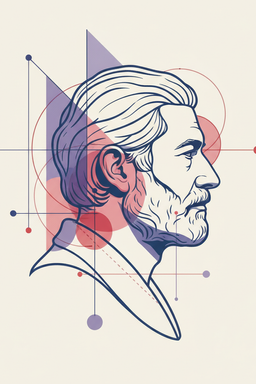
Idea 1
Designing a Fair Society: The Moral Imagination of John Rawls
What would fairness truly look like if you didn’t know who you were going to be — rich or poor, healthy or sick, privileged or marginalized? This is the haunting and transformative question at the heart of John Rawls’s A Theory of Justice. Rawls was not only one of the twentieth century’s preeminent political philosophers; he was a moral architect trying to rebuild society from first principles. He asked us to step outside ourselves, suspend our biases, and imagine fairness as if we were designing society before birth, without knowing our own position within it. The result is a philosophy that combines imagination, empathy, and reason to redefine justice for modern times.
The Problem of Unseen Injustice
Rawls begins with a striking observation: much of modern life is patently unfair, yet we struggle to say precisely why. Political arguments often devolve into partisan resentment — the rich defending meritocracy, the poor demanding redistribution — but beneath the noise lies something deeper: the arbitrary nature of moral luck. Your birthplace, parents, zip code, and health determine more about your fate than any amount of effort. Rawls saw this early in life — through the loss of his brothers to infections, the inequities of Maine’s poor communities, and the chaos of war. For him, justice wasn’t abstract theory; it was personal.
The Veil of Ignorance: A Radical Thought Experiment
Rawls’s genius lay in transforming that moral insight into a method of reasoning. He asked us to imagine that, before birth, we must choose the principles of a society — but from behind a veil of ignorance. We would have no idea whether we’d be born into privilege or poverty, which race, gender, or intelligence we’d possess, or what talents luck would give us. What rules would we then choose? The answer, he said, would form the basis of justice: we’d want to design a society where, no matter where we landed, our basic rights, dignity, and opportunities were protected.
“Justice is fairness,” Rawls wrote — meaning, fairness is not charity or luck, but a structure that people would rationally choose if none knew their fate.
This veil of ignorance breaks down our natural bias — the tendency to defend the status quo that benefits us — and forces us to see justice from a universal standpoint. It’s an experiment in moral imagination: fairness as a rational gamble for an unknown future self.
Why This Idea Matters
In an age of widening inequality and moral fatigue, Rawls’s thought experiment is more than philosophy — it’s a political tool that translates empathy into policy. It calls out the comforting myths of meritocracy and the folklore of the self-made millionaire. Rawls reminds us that society is not a fair race from the starting line if the lanes themselves are uneven. And unlike Karl Marx, who demanded a revolution, or Friedrich Hayek, who championed free markets, Rawls seeks balance: robust equality of opportunity within a system that still respects individual freedom.
Preview of What’s to Come
This summary explores how Rawls’s ideas help us diagnose unfairness, reimagine justice, and guide reform. You’ll discover why current societies fail the fairness test, how the veil of ignorance becomes a moral compass, and what a truly just system might look like — one that resembles Denmark more than a hyper-competitive United States. We’ll explore how Rawls makes fairness emotionally resonant and politically actionable, how imagination becomes the key to reform, and how these principles can challenge modern complacency about inequality.
Ultimately, Rawls’s work is both simple and revolutionary. He hands us a mental model powerful enough to cut through ideological noise: imagine justice without knowing who you are. It’s a challenge to rational self-interest, a rebuke to fatalism, and an invitation to rebuild society not for winners, but for everyone. In a world still struggling to balance freedom with fairness, Rawls’s philosophy endures as a map toward moral coherence — one that begins, paradoxically, in ignorance.