
Idea 1
Rethinking Success: Skills Over Degrees
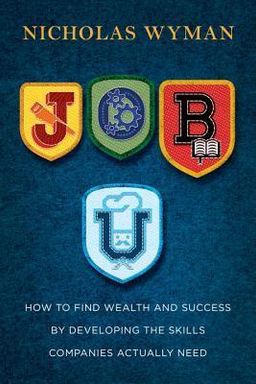
What if the path to a prosperous and fulfilling career doesn’t require a four-year college degree? In Job U: How to Find Wealth and Success by Developing the Skills Companies Actually Need, Nicholas Wyman delivers a refreshing—and persuasive—argument that challenges one of the most entrenched beliefs in modern education: that everyone must go to college to succeed. Wyman contends that the future belongs not to those with diplomas alone, but to those who possess marketable, practical skills. He argues that while millions of Americans remain unemployed or underemployed, millions of well-paying jobs go unfilled because of a crippling mismatch between what schools teach and what employers need.
Wyman’s central idea is simple yet revolutionary: skills-based education—through vocational training, technical schools, community colleges, and apprenticeships—can lead to stable, high-demand, and well-compensated careers. He offers a call to action for students and parents, for workers changing lanes midcareer, and even for policymakers who can influence the future of the American workforce. The author’s own story—from disinterested student to apprentice chef and ultimately to CEO and Harvard-educated executive—offers living proof that the nontraditional path can lead to extraordinary success.
The College Myth and the Skills Gap
Wyman begins by showing the hard truth behind the “college for everyone” myth. In recent decades, the price of higher education has skyrocketed while the real value of many degrees has plummeted. Student debt in the U.S. has ballooned to over a trillion dollars, and yet millions of recent graduates find themselves either unemployed or working jobs that don’t require their degrees. Meanwhile, industries such as manufacturing, healthcare, information technology, and advanced trades cry out for skilled workers.
This disconnect, often called the middle-skills gap, forms the backbone of Wyman’s argument. He points out that 61% of jobs in America require less than a bachelor’s degree but more than a high school education—skills that come from hands-on experience, certification programs, and two-year degrees rather than abstract academic study. The irony, Wyman notes, is that while millions of young Americans chase debt-fueled diplomas, employers struggle to fill positions for electricians, machinists, paramedics, and technicians that offer stable work, benefits, and often six-figure salaries.
Education Beyond the Lecture Hall
For Wyman, the solution begins in reshaping how we think about education itself. He challenges the rigid divide between “academic” and “vocational” tracks that has long stigmatized trade schooling as second-class. Instead, he argues for a broader vision of learning—where classrooms, workshops, laboratories, and workplaces all serve as legitimate venues for mastering meaningful skills. Whether through a community college, technical certification, or apprenticeship, these pathways provide the practical knowledge companies crave.
To make his case, the author weaves in examples from around the world. He highlights Germany’s dual education system, where vocational training is integrated into national education and results in low youth unemployment. In contrast, the United States eliminated “shop class” from most high schools decades ago. The result? A generation of graduates unprepared for real work, yet burdened by the expectation of attending college.
Stories That Redefine Success
Perhaps the most charming part of Job U is Wyman’s use of personal stories to humanize his message. We meet people like Douglas Gorenstein, a New York photographer without a college degree who built a thriving creative business through skill and hustle; or Lucas Griffin, a race-car crew chief who turned an associate degree in automotive technology into a globe-trotting career. These stories drive home the message that mastery—not a degree—is the real foundation of success.
“A job-ready skill,” Wyman writes, “can open the door to a world of opportunity—no matter who you are or where you start.”
A Blueprint for a New Workforce
Wyman closes by outlining how individuals, companies, and governments can bridge the gap between education and employment. For students and young adults, it means exploring skill-oriented learning and valuing mentorship over tuition. For employers, it means investing in training—shifting from a “find” to a “build” approach. For policymakers, it means pairing education reform with incentives that reward workforce development. Together, these steps can power what Wyman calls a “jobs revolution”—one that rebuilds the middle class and restores dignity to skilled work.
Ultimately, Job U isn’t just a critique of America’s education system—it’s a manual for remaking it. It speaks to anyone—student, worker, teacher, or parent—looking for practical alternatives in an economy where degrees no longer guarantee success. Wyman’s message is both hopeful and empowering: if you’re willing to learn by doing, there’s a respected, rewarding place for you in the future of work.