
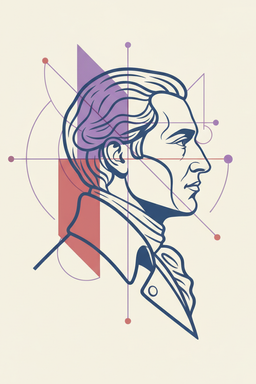
Idea 1
Rousseau and the Illusion of Progress
Are you truly happier today, surrounded by endless technological conveniences and social networks than someone living centuries ago with nothing but a small community and basic needs? Jean-Jacques Rousseau forces you to confront this uncomfortable question. In his groundbreaking critique of modern life, Rousseau argues that what we proudly call “progress” might actually be moral regression — that as civilization advances materially, human beings decline spiritually. His central contention is startling: humanity was once good, simple, and compassionate, but civilization has corrupted us, breeding vanity, competition, and misery.
Rousseau’s argument stands against the great intellectual current of his 18th-century milieu — the Enlightenment. Whereas thinkers like Voltaire and Diderot celebrated reason, science, and industrial progress as paths to collective improvement, Rousseau flipped the narrative on its head. He claimed that as humans moved away from the state of nature — that primordial condition of simplicity and self-sufficiency — they lost touch with essential virtues. Progress, in his view, hadn't liberated us; it had ensnared us in artificial desires, social hierarchies, and endless comparisons.
The State of Nature and Lost Innocence
Rousseau’s idea of the state of nature is more than a thought experiment — it’s a moral vision. In this original state, people lived simply, guided by natural compassion (which he called pitié) and a basic love for life. They worked to survive, not to compete. Families were close-knit, nature was revered, and self-worth didn’t depend on comparisons. Rousseau’s “natural man” felt sorrow when seeing others suffer, a reflex of empathy that civilization later muffled under layers of pride and greed.
But as people gathered into societies and cities, a new kind of consciousness emerged — one rooted in self-image and social rank. Rousseau believed that when we began looking to others for validation, mankind’s moral foundation cracked. The simplicity of natural life was replaced by amour-propre — a destructive kind of self-love fed by envy, vanity, and pride. Material abundance came hand in hand with emotional poverty.
The Poison of Civilization
Rousseau saw 18th-century Paris as a microcosm of moral decay. The opulence of the bourgeoisie — mimicking aristocratic fashion and indulgence — symbolized an emptiness at the heart of modern life. As people competed for recognition, they became alienated from their authentic selves. You can find echoes of Rousseau’s critique today in how we measure worth by followers, wealth, or status. The human tendency to compare — amplified by urbanization and technology — turns life's pleasures into performances.
“The civilized man is born free but everywhere he is in chains.”
This famous sentiment resonates beyond political oppression; it reflects Rousseau’s moral philosophy. Those “chains” are our dependence on social recognition, possessions, and comparison — things that seem to offer happiness but instead enslave us emotionally. He viewed civilization not as evolution but as estrangement from our nature.
Why Rousseau Still Speaks to Us
In our digital and globalized era, Rousseau’s message has regained urgency. We live surrounded by luxury and abundance, yet anxiety and loneliness persist. Modern life’s obsession with progress and competition mirrors the same illusions he exposed centuries ago. Rousseau invites us to pause — to ask if constant growth really equals moral improvement. Perhaps, like him, you’ve felt that chasing external success leaves you disconnected from what actually matters: empathy, simplicity, and self-understanding.
Throughout this summary, you’ll explore Rousseau’s core ideas — his concept of natural goodness, how amour-propre corrupts the soul, and why returning inward is vital for happiness. You’ll see how his reflections on Native American societies illustrated his thesis, how his own turbulent life embodied his quest for authenticity, and how his insights can guide you in resisting the pressures of modern comparison culture.
Rousseau’s philosophy isn’t merely pessimistic. Beneath his critique lies radical hope: the belief that natural goodness hasn’t vanished, only been buried. By looking within, you can rediscover the simple moral compass that civilization forgot. His call is neither to abandon progress nor reject society, but to redefine what real progress means — not accumulation, but integrity; not perfection, but authenticity.
In short, Rousseau teaches us to distinguish between the glitter of civilization and the glow of the inner moral life. His question — are we truly happier as we advance? — remains as challenging today as ever.