
Idea 1
Hustling as the Soul of American Genius
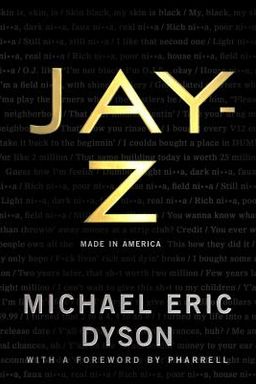
What does it mean to be a hustler in America? For most people, the word evokes danger, street life, or a desperate scramble for survival. Yet, in JAY-Z: Made in America, Michael Eric Dyson contends that hustling is far more than a street habit—it’s a deep expression of American identity itself. In Dyson’s hands, hustling becomes a lens for exploring capitalism, black resilience, creativity, and the moral contradictions that shape the nation.
Dyson argues that JAY-Z is America’s unofficial historian—not through academic essays, but through the art and narrative of his songs. The rapper’s journey from drug dealer in Brooklyn’s Marcy Projects to billionaire entrepreneur mirrors the ideals and betrayals of the American Dream. Hustling, Dyson writes, is “the magnificent obsession” that defines JAY-Z’s art and, by extension, America’s restless pursuit of self-made success.
Hustling as National Ethos
Dyson situates JAY-Z within a long lineage of American hustlers—from colonial entrepreneurs to Silicon Valley innovators. Drawing on historian Walter McDougall’s theory that the United States was built on hustling, Dyson connects the moral duality of the hustle—ambition mixed with exploitation—to the fabric of national identity. “Americans,” McDougall wrote, “are prone to be hustlers.” Dyson extends this: America praises white hustle as ingenuity but demonizes black hustle as criminality. JAY-Z’s story dismantles that hypocrisy by showing how black enterprise and brilliance have always existed under repression.
When you listen to JAY-Z’s voice, Dyson urges, you’re not just hearing a rapper; you’re hearing a cultural theorist arguing that hustling, in its purest form, is both survival and creation. Whether in slavery’s underground economies or modern entrepreneurship, black Americans have always hustled—not out of greed, but as a protest against exclusion.
The Three Faces of the Hustle
To make sense of the complexity, Dyson divides black hustling into three overlapping types:
- Bright hustling—the legitimate, aboveboard striving for progress: starting a business, earning degrees, or creating art. Figures like LeBron James embody this, using legal enterprise to elevate entire communities.
- Blight hustling—survival through the underground economy: selling drugs, bootlegging, or other forms of black market work. Jay’s early life fits here, shaped by a system that denied legitimate opportunities.
- Site hustling—the liminal zone between the two, where people scrape by collecting bottles, cutting lawns, or bartering skills outside formal work systems.
These modes, Dyson argues, are not moral judgments but social diagnoses. They reveal how the American system forces entire populations into hustling just to survive. Black hustlers, denied access to fair opportunity, had to build alternative economies as acts of resistance. When JAY-Z raps about “selling crack to survive,” it becomes both confession and critique—a political statement disguised as autobiography.
From Streets to Boardrooms
Dyson uses JAY-Z’s transformation—from blight hustler to billionaire philanthropist—to explore the redemptive potential of hustle. The same mental dexterity that once negotiated street survival now drives corporate innovation. Owning Roc Nation, TIDAL, and luxury brands, JAY-Z redefines hustling as strategic self-determination. His mantra “I’m not a businessman, I’m a business, man” becomes a modern twist on American individualism—embodying freedom through ownership and creative control.
At the same time, JAY-Z refuses to romanticize hustling. On songs like “Regrets” and “Izzo (H.O.V.A.),” he acknowledges the cost of that climb—the friends lost, the trauma endured. Dyson emphasizes this dual awareness: Jay glorifies the hustle’s ingenuity while mourning its price. His art models accountability within ambition, turning pain into profit without erasing its moral depth.
The Hustler as Philosopher
Ultimately, Dyson argues, JAY-Z is a philosopher of the black condition. Through his lyrics, he theorizes the politics of survival, love, capitalism, and race more powerfully than many scholars. By linking JAY-Z’s ethos to broader figures like Herman Melville’s “Confidence Man” or Martin Luther King Jr.’s dream, Dyson positions him in an intellectual lineage of those who study America’s contradictions from its edges. The black hustler, reviled by society, is revealed as its most insightful critic.
This opening idea reframes hustling as America’s truest language. Dyson invites you to see JAY-Z not simply as a rapper or mogul, but as a mirror reflecting the nation’s moral struggles: greed and generosity, freedom and foreclosure, aspiration and inequality. Understanding JAY-Z’s hustle, Dyson insists, means understanding the beating heart of American ambition—and how black genius has always hustled its way into history.