
Idea 1
Taking Responsibility for Your Self
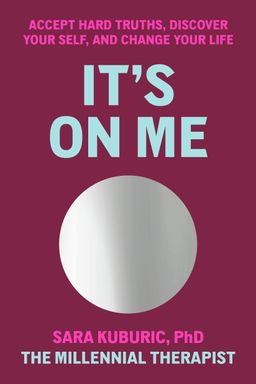
Who are you—really? Beneath the roles, labels, and expectations, do you know who you are when everything else falls away? In It’s On Me, existential psychotherapist Sara Kuburic challenges you to take radical responsibility for your life and the task of being your Self. She argues that most of our contemporary suffering—our anxiety, emptiness, indecision, and disconnection—stems from what she calls self-loss: the failure to embody and live as our authentic being. Kuburic contends that rediscovering and continually creating your Self is not just an act of healing, but the very essence of being human.
She shares her own story of existential crisis and transformation—from a young woman enduring the aftermath of war, a failed marriage, and a panic attack in an airport—to an existential therapist who teaches others how to reclaim themselves. Kuburic’s guiding insight is simple yet profound: you are responsible for your existence. Nobody else can or will do it for you. In every moment, you are faced with the task of choosing, reflecting, and acting in alignment with who you are. Her book is therefore a map for that ongoing journey of becoming your Self.
The Pain of Self-Loss
Kuburic paints a devastatingly familiar picture of self-loss, the condition of living a life that doesn’t feel like it belongs to you. Through a vivid metaphor—a person sitting in a burning room pretending everything is fine—she illustrates how we ignore inner alarm bells. We keep fulfilling roles, meeting obligations, and maintaining appearances, even as the flames of anxiety and emptiness creep closer. Self-loss is not just psychological; it’s existential. It’s a quiet, smothering disconnection from our essence, from meaning, and from inner alignment. Kuburic defines self-loss as estrangement from one’s true Self, a failure of responsibility and authenticity.
This pain echoes in her clinical work. Clients like Alex, whose days revolve around social media, work performance, and external validation, show how modern routines reinforce our estrangement. We live from the outside in—defined by what others want to see rather than who we feel we are. Self-loss, Kuburic warns, is not rare; it’s almost a universal human condition. Yet she insists that while it’s common, it’s not inevitable. Healing begins when we stop denying the fire and choose to stand up.
Freedom, Responsibility, and Choice
The philosophical foundation of Kuburic’s work rests in existentialism (drawing from thinkers like Kierkegaard, Sartre, Heidegger, and Frankl). She argues that human beings are condemned—and privileged—to be free. You exist first, and through your choices, you define what you are. Sartre described authenticity as owning the weight of freedom; Kuburic translates that concept into practical responsibility. Every decision, even inaction, shapes the Self you become. There are no external structures capable of defining your identity, meaning, or purpose for you. You must make those choices, again and again.
She distinguishes between essentialism—the idea that you were born with a fixed essence—and existentialism—the belief that you create your essence through living. Kuburic sides with the latter. You don’t find your Self like lost keys; you build your Self through awareness, intention, and responsibility. To live authentically is to create congruence between your thoughts, emotions, and actions. To live inauthentically, or to lose your Self, is to relinquish that responsibility and let life happen to you instead of through you.
The Existential Task of Meaning
Kuburic urges you not just to ask Who am I? but also Why am I here? Drawing on Viktor Frankl’s Man’s Search for Meaning, she frames meaning as the “why” that sustains every “how.” Meaning is both a gift and a task—to be discovered through creation, experience, and attitude. You don’t wait for meaning to find you; you create it through participation in life. This reframing—“What is life asking of me?”—changes the relationship between you and existence. Instead of viewing life as a question you must answer, you become the one asking the questions back: “How will I respond?”
Meaning connects to the Self because it invites commitment and direction. Without meaning, even privilege, success, or comfort feel empty. But when you live with purpose and inner consent, each experience—joy, grief, desire, or pain—adds depth to your being. Kuburic challenges readers to identify and face the truths of their lives that call for transformation: the choices that need to be made, the truths that need acknowledgment, and the boundaries that need strengthening.
Self as Ongoing Creation
Ultimately, Kuburic dismantles the idea that identity is something you find once and keep forever. She sees the Self as a painting continually in progress. With each brushstroke—a decision, loss, or revelation—the image evolves. You cannot return to who you were; you can only become more of who you are now. Even pain, she says, plays a generative role. It signals unmet truth and pushes transformation. In her own story, a panic attack was the catalyst for an existential awakening. Facing suffering, instead of resisting it, becomes the gateway to wholeness.
Kuburic’s philosophy carries both comfort and challenge: there is no quick fix or static end state of happiness. But there is a life of continuous freedom, meaning, and resonance—a life you can feel in every moment. The reward for daring to be your Self is, quite simply, you.
Core Message
To be your Self is to accept radical responsibility for existence—to stop enduring your life and start living it. Every choice is an act of creation. Every moment is an invitation to authenticity. And no one—not society, not family, not fate—can do it for you. It’s on you.