
Idea 1
Why It’s Okay That You’re Not Okay
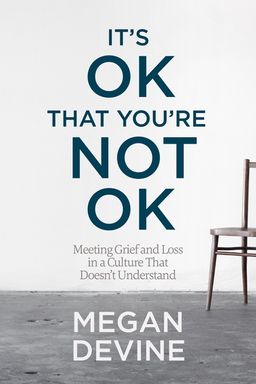
What if grief isn’t something to fix but something to live with? Megan Devine’s It’s OK That You’re Not OK begins with this radical question. As both a psychotherapist and a grieving partner who watched her beloved die in a drowning accident, Devine argues that our culture systematically fails people in grief by demanding they “move on.” She contends that grief is not a psychological disorder or a moral weakness—it’s a natural, love-infused response to loss. The problem isn’t our pain; it’s the world’s intolerance of it.
Drawing on her experience as both a clinician and a bereaved person, Devine exposes how society and even the helping professions misunderstand grief. She shows that “being okay” is not the goal. Instead, she maps out a new model of emotional literacy based on truth, compassion, and companionship—the idea that pain must be witnessed, not erased.
A Broken Cultural Story About Pain
Devine begins her exploration by pointing out that Western culture pathologizes normal human sorrow. When someone dies, our conversations quickly shift to healing, growth, or “finding meaning,” reflecting a deep discomfort with pain itself. We’ve been taught to believe that sad equals sick, that emotional intensity is evidence of instability. Grieving people are told they’re “stuck” if their sadness lasts longer than a few months—an attitude reinforced by the medicalization of grief, which now categorizes long-term mourning as a mental disorder. Devine argues this is not just incorrect; it’s cruel. It adds shame to sorrow.
Instead of acceptance, the bereaved encounter correction and dismissal. People say, “He’s in a better place” or “Everything happens for a reason,” hoping to bring comfort but instead invalidating the pain. Devine identifies the secret message behind those words: “Stop feeling so bad.” Her conclusion is both tender and defiant: pain needs acknowledgment, not advice.
From Fixing Pain to Tending Pain
The book dismantles what Devine calls our culture’s “mastery orientation”—the obsession with controlling emotions as if they were mechanical problems to solve. Instead, she urges readers to adopt a "mystery orientation": an attitude of reverence toward life’s complexities. Just as love can’t be solved, grief can’t be solved either. “Some things cannot be fixed,” she writes. “They can only be carried.” Her language directly recalls the paradoxical wisdom of Buddhist teacher Pema Chödrön and grief pioneer Francis Weller, who also view suffering as something to be tended with awareness rather than resisted with false positivity.
Through vivid examples—like her own first trip to the grocery store after her partner’s death, when even bananas triggered tears—Devine shows how grief inhabits every corner of life. Emotional survival, she suggests, begins with permission to tell the truth: “This really is as bad as you think it is.” When we stop gaslighting ourselves, we might start learning how to live here, in reality, however painful it is.
The Real Purpose of the Book
It’s OK That You’re Not OK unfolds in four parts: understanding the broken cultural narratives about grief, learning to live with pain, navigating relationships when others don’t understand, and finding a way forward that honors the person you’ve lost. Throughout, Devine pairs clinical insight with storytelling drawn from her online “Writing Your Grief” community—a space where hundreds of bereaved people share raw reflections. These voices, often unfiltered and stark, illuminate the courage of ordinary heartbreak. They also illustrate Devine’s central message: validation is medicine.
By the end of the introduction, she makes the book’s mission clear: it’s not about fixing grief but restoring humanity to it. The goal is collective transformation—a culture where tenderness replaces toughness, where we stop asking people to “be positive” and start asking how we can stand beside them when life shatters. “We’re not here to fix our pain,” she writes. “We’re here to tend to it.” This shift—from cure to compassion—is the revolution at the heart of her message.
Why This Matters
Every one of us will face loss. Whether it’s death, illness, estrangement, or the unraveling of a life we thought secure, grief is universal. Yet we live in a culture allergic to sadness and obsessed with productivity. Devine’s work challenges us to see pain not as failure, but as evidence of our capacity to love. Like Mark Nepo writes in his foreword, “Real safety is in entering each other’s pain, recognizing ourselves inside it.”
Ultimately, this is a book about love: not the sentimental kind that rescues or redeems, but the fierce, enduring love that stays. It acknowledges horror, holds beauty, and says, “Yes, you are broken, and you are still here.” Through that simple truth, Devine reframes grief from a personal breakdown into a profound act of resistance against a culture terrified of feeling. Her message is both permission and protest: you are not meant to be okay, and that’s okay.