
Idea 1
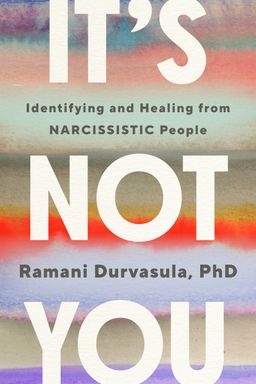
It's Not You: Healing from Narcissistic Abuse
Have you ever wondered why some relationships make you feel small, confused, or constantly apologetic—like you’re walking on eggshells even when you’ve done nothing wrong? In It’s Not You, Dr. Ramani Durvasula delivers a profound and compassionate guide for survivors of narcissistic and emotionally abusive relationships. Her central message is deceptively simple yet radically freeing: it’s not you. When someone drains your energy, turns your reality upside down, or manipulates your emotions, their behavior stems from narcissistic patterns that you did not create, cannot control, and will not change.
Rather than focusing on the narcissist—a common trap in both psychological literature and social discourse—Durvasula shifts the spotlight to you, the survivor. She argues that healing begins not by dissecting the narcissist’s mind, but by understanding the wounds, coping patterns, and reactions that arise in those who endure such relationships. Her framework moves through recognition (seeing the behavior clearly), recovery (freeing yourself from self-blame and denial), and growth (reclaiming your authentic identity).
The Hunter and the Lion: Reversing the Story
Dr. Ramani frames her mission through a powerful metaphor: until the lion tells the story of the hunt, the tale will always glorify the hunter. For too long, society has told the story from the narcissist’s perspective—the charming, successful, or misunderstood figure whose pain supposedly justifies their cruelty. This book tells the story of the lion, the person who was hunted, invalidated, and silenced. By reframing the narrative, Durvasula invites readers to stop searching for the narcissist’s backstory and start telling their own.
Understanding Narcissism (Without Losing Yourself)
Durvasula begins by clarifying what narcissism truly is—not just vanity or arrogance, but a deeply ingrained personality style built on insecurity, entitlement, and lack of empathy. Drawing on clinical examples, research, and decades of therapeutic practice, she describes how narcissistic people seek constant validation ("narcissistic supply"), oscillate between charm and cruelty, and manipulate others to maintain control. She distinguishes between grandiose, vulnerable, communal, and malignant narcissists, emphasizing that most people encounter those in the confusing middle—moderate narcissists who offer just enough good days to keep you hooked and enough bad ones to tear you apart.
The Cycle of Abuse and the Riptide
Narcissistic relationships often begin with a seductive phase known as love bombing—lavish attention, future faking, and emotional intensity that mimic real intimacy. This initial charm soon gives way to devaluation, discard, and hoovering (the manipulation designed to pull you back in when you try to leave). Survivors are often caught in trauma bonds, which Durvasula describes as a psychological riptide: you want to swim away, but the emotional undertow keeps pulling you back. She reframes this as an expected human response, not weakness. “If you spend enough time with sharp elbows,” she writes, “you will end up bleeding to death.”
What Narcissistic Relationships Do to You
The fallout of narcissistic abuse spans thought patterns, emotions, and physical health. Rumination, regret, shame, confusion, and self-blame replace clarity and confidence. Dr. Ramani illustrates this through vivid examples—Carolina, whose husband’s infidelity eroded her sense of worth; Rafael, who chased his father’s approval; and Jaya, a physician whose life unraveled under constant invalidation. Each story shows how survivors internalize blame because it’s psychologically safer than admitting someone you love is harming you. Yet Durvasula insists that seeing the abuse clearly is not cynicism—it’s liberation.
Radical Acceptance and Freedom
The heart of Durvasula’s method is radical acceptance: acknowledging that narcissistic patterns do not change and releasing the futile hope that they will. Acceptance is not surrender but self-protection. It frees you to stop chasing apologies, stop defending yourself, and redirect energy toward boundaries, self-care, and recovery. As one woman in her practice realized after decades of struggle, “I knew it was never going to change—and that’s when I changed.” By dismantling denial, survivors regain power over their expectations and reclaim their bandwidth for joy, authenticity, and meaningful relationships.
Healing, Growth, and Resistance
Healing from narcissistic abuse, Durvasula emphasizes, doesn’t require leaving all relationships. Many people stay—in marriages, workplaces, or families—with narcissistic individuals for practical or cultural reasons. The key, she says, is to become narcissist resistant. This means learning the art of detachment, avoiding “going DEEP” (defending, engaging, explaining, personalizing), and practicing techniques like “gray rocking” or “yellow rocking” to minimize emotional exposure. Survivors cultivate resilience through mindfulness, self-compassion, and deliberate joy. Healing is messy and nonlinear, but possible.
Rewriting Your Story
Ultimately, Durvasula invites readers to rewrite their narrative. In doing so, they transition from survivor to thriver—a person who no longer defines themselves by trauma but by transformation. She encourages introspection: What parts of you were silenced? What dreams were deferred? How can you create meaning and autonomy beyond the narcissist’s shadow? Healing means living into your authentic self, integrating grief without being controlled by it, and recognizing the universal truth she repeats like a mantra: you did not break yourself; you were broken by someone who could not love fully. Yet you can heal fully.
In the end, It’s Not You is more than a book—it’s a mirror held up to anyone who has ever wondered, “Am I the problem?” Durvasula answers resoundingly: no, you are not. You are the lion, and the time has come to tell your own story.