
Idea 1
Why Being Single Isn’t a Personal Failure
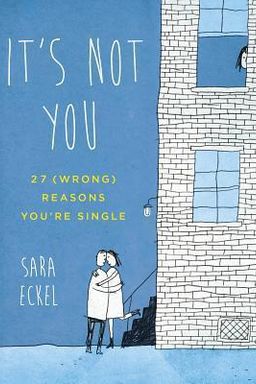
Why do so many smart, kind, capable people still find themselves single—and assume it must be their fault? In It’s Not You: 27 (Wrong) Reasons You’re Single, Sara Eckel tackles this persistent cultural myth with compassion and sharp wit. She argues that being single is not evidence of a character flaw or psychological deficiency—it’s simply a fact of circumstance, timing, and human unpredictability. The book dismantles the toxic narrative that love is a merit-based achievement. Instead, Eckel reframes singlehood as a valid and often powerful human experience.
For decades, self-help culture has insisted that if you’re single it must be because you’re doing something wrong: you’re too negative, too picky, too intimidating, not confident enough, or still battling old emotional issues. Eckel—drawing from her personal journey of being single into her late thirties—calls out this exhausting blame cycle. With humor and grounded compassion, she blends personal anecdotes, interviews with other singles, and research from psychology and Buddhism to show that romantic success is more about chance than about perfection.
The Myth of Control
Eckel opens with a deeply relatable story: a man on a date bluntly asks her, “What’s wrong with you?”—a question that mirrors the silent one so many singles ask themselves. Her realization is that this question springs from an American cultural obsession with personal control. We tell ourselves that if we work hard enough, self-improve enough, and stay positive, life will reward us with the things we want: the career, the house, the soulmate. But this belief, she argues, is both comforting and cruel. It leads people to mistake chance for destiny—and to assume that if love hasn’t come, it must be the individual’s failure to fix something within themselves.
Through this lens, single people are often treated as projects—urged to change their energy, “play the game,” visualize love, or be happier alone. These mantras sound empowering but often reinforce shame by suggesting one’s current state is inadequate. “If you were truly ready,” the culture says, “you’d already have a partner.” Eckel calls this nonsense. She insists that relationship status is not a moral report card, and that self-worth should never hinge on whether or not someone else chooses you.
From Self-Blame to Self-Compassion
The book’s central philosophy draws heavily from Eckel’s introduction to Buddhist thought. quoting Tibetan scholar Chögyam Trungpa’s idea that “everything is basically good,” she compares the human spirit to a golden statue buried under mud—the mud being self-judgment, fear, and cultural conditioning. Our task isn’t to replace ourselves with an improved version, but to gently reveal what’s already lovable underneath. This return to innate worthiness becomes the emotional spine of the book.
Eckel explores how much easier life becomes when singles stop treating every rejection or lonely evening as evidence of brokenness. Through mindfulness, self-compassion, and authenticity, you can shift from constant self-diagnosis to simple presence. This isn’t about giving up on love—it’s about reclaiming your peace while it takes its time arriving. The author’s story of meeting her husband Mark—after nearly a decade of being single—illustrates her thesis: she didn’t change who she was; she just met the right person. Nothing mystical or moralistic was required.
Why This Perspective Matters
In an age of podcasts, dating apps, and life-hacks promising to reveal “how to attract the one,” Eckel offers a radical counter-message: you don’t need to earn love. You’re already allowed to feel whole. Her work resonates deeply because she doesn’t sugarcoat loneliness or pretend singlehood is always easy—she simply decouples it from shame. This combination of realism and grace makes her book both comforting and liberating.
Readers come away not just with self-understanding but with practical emotional tools: self-compassion instead of self-critique, mindfulness instead of mental rumination, and community instead of comparison. More broadly, Eckel’s ideas invite a cultural reset. She challenges us to see singlehood as part of the full human story, not the waiting room for “real life.”
Throughout its 27 chapters, It’s Not You systematically debunks all the worn-out clichés—“You have issues,” “You’re too picky,” “You need to love yourself first”—and replaces them with wisdom about acceptance, agency, and humor. The result is part personal memoir, part philosophical guidebook, and part social critique—all aimed at one beautiful truth: You don’t need to fix yourself to deserve love. You already do.