
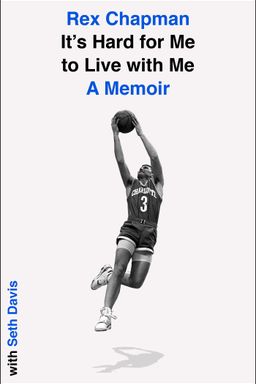
It's Hard For Me To Live With Me cover

It's Hard For Me To Live With Me

by Rex Chapman With Seth Davis

The former NBA player details his gambling and opioid addictions.

From Hoops Wonder To Human Recovery

What do you do when the very wiring that made you excellent also makes it hard to live with yourself? In It's Hard For Me To Live With Me, Rex Chapman (with Seth Davis) argues that talent and trauma often travel together—and that the same obsessive engine that drives achievement can also fuel addiction, secrecy, and collapse. Chapman contends that you can’t separate his highlight-reel dunks and Kentucky stardom from his lifelong anxiety, identity struggles around race, chronic pain, and a medical system that kept handing him pills. The book is a raw, funny, and unsparing memoir about getting great at basketball and getting lost as a person—then clawing back to purpose, honesty, and service.

Across 400+ pages, Chapman traces a Kentucky boyhood of relentless motion and catastrophic thinking; a combustible rise to UK royalty amid the racial politics of the 1980s South; a pro career defined by soaring athleticism, serial injuries, and learned numbness; a post-career spiral into OxyContin and Suboxone; a tabloid arrest that made him a national punchline; the hell of detox; the grace of mentors; and an improbable second act as a media voice and advocate using humor (“Block or charge?”) and candor to meet people where they are. If you’re navigating your own drive, pain, or shame—or loving someone who is—this is a field manual for staying honest when winning stops working.

The Book's Core Claim

Chapman’s core claim: greatness in one domain can camouflage deficits in others until a shock (injury, scandal, loss) tears the cover off. Addiction grows in those gaps—reinforced by culture (win at all costs), institutions (doctors, teams, boosters), and silence (around race, mental health, and finances). Recovery begins when you choose truth over image, community over performance, and service over self-protection.

What You'll Learn

You’ll see how a hyperactive six-year-old who hated being still became Sexy Rexy, the white guard who “played like a Black guy” in Kentucky gyms, adored and resented in the same breath. You’ll track the recruiting wars, the choice to spurn Louisville for UK, and the price of being a local god whose coaches and boosters told him whom he could love. You’ll live inside a locker room run by an alcoholic head coach, feel the medicalized glide path from cortisone and Novocain to Vicodin and OxyContin, and watch money and marriages unravel under the weight of gambling and pills (compare Andre Agassi’s Open for sports honesty; Matthew Perry’s memoir for the tone of addiction candor).

Why It Matters Now

The opioid crisis lives in families like Chapman’s in Kentucky, Ohio, and West Virginia. His arrest for Apple Store theft isn’t just a mugshot; it’s a map of how Oxy and Suboxone trap people who are trying to “do it right.” His subsequent activism (sober houses with John Lucas, op-eds on race, uplift videos on Twitter) test-drives a new masculinity where you can be a former NBA star and a man who laughs, apologizes, and names the thing—racism, anxiety, relapse risk—out loud. Recovery, he insists, isn’t just abstinence; it’s structure, humility, and the courage to be useful.

No feeling is final

Chapman threads Rilke’s line—“Let everything happen to you… No feeling is final”—through panic attacks at UK, a gurney ride after a grotesque ankle dislocation, and the quiet of a sober Houston house. It becomes the memoir’s North Star: your wiring is real; it isn’t destiny.

How The Story Unfolds

The chapters move chronologically but knit together four through-lines you can apply to your life: (1) Wiring: anxiety, ADD, and a competitor’s brain that can “hyperfocus” at crunch time and splinter in algebra class; (2) Context: race in Kentucky, the college sports economy, and a media machine that loves you until it doesn’t; (3) Chemistry: the physiology of injury, pain, and opioids (see Gabor Maté’s In the Realm of Hungry Ghosts for trauma-addiction links; Sam Quinones’s Dreamland for the opioid supply chain); (4) Repair: detox’s terror, daily structure, mentors (Pitino, John Lucas, Steve Nash), and choosing a voice that helps others.

By the end, Chapman hasn’t “won” so much as re-sorted his scoreboard. He still sleeps badly and misplaces things. He still carries grief about race, his ex-wife Bridget, and the people he disappointed. But he’s present for Zeke, Caley, Tatum, and Tyson. He trains kids, speaks in rehabs, hosts podcasts, and tweets dog videos. He holds the mugshot up as cover art and says: I’m not hiding anymore. If you’ve ever wondered whether you can outgrow the part of you that gets you in trouble, this book says, tenderly: you can’t outrun it—but you can re-route it.


Wired For Motion, Haunted By Panic

Chapman’s early life is a case study in how wiring becomes destiny unless you intervene. As a six-year-old in Kentucky, he realizes his parents—and he—are going to die. That existential dread fuses with a motor that never turns off. He breaks bones, busts casts, and binge-watches sitcoms, but the only thing that quiets the noise is movement and winning. You see the template: anxiety, attention issues, then the relief of competition. Later, the same template will make opioids feel like oxygen.

Anxious Brain, Competitive Body

By elementary school, he’s weaponizing energy. In PE “Bombardment” (dodgeball), he’s a head-hunting assassin who also cries when a teacher flips him with a throw. He pukes before big games from fourth grade through early NBA years—learned behavior from his coach-father, Wayne, who dry-heaves before tipoff. Yet those nerves also prime his gift: a hyperfocus in crunch time that makes him deadly late (a hallmark of ADD brains that “click in” under pressure).

([Context from other memoirs]: Andre Agassi’s Open frames tennis as a prison built by a father’s obsession; Chapman’s prison is his own wiring, with his dad’s love and standards adding pressure but also lessons.)

Home Gym, Fifth Street, And Identity

Chapman grows up in bleachers. He studies teenage bodies and pro moves years before he’s ready. Yet his real education happens on Fifth Street in Owensboro, the outdoor courts in the Black neighborhood where older, better players beat him up and then made him belong. He sees cramped apartments, empty fridges, and learns gratitude—and guilt. Basketball becomes not just an escape but a bridge across race lines Kentucky keeps policed.

His parents walk the walk on race—leaving parties when the jokes start—and his mom sharpens his grammar, humor, and empathy. Still, dad runs on the Bobby Knight fuel mix: fear plus love. Post-loss mornings mean silence, microwave bacon, and Coke. When young Rex shows up teammates, Wayne snaps, “Take the blame to take heat off them.” It’s an ethic that will supercharge him as a teammate in Phoenix and Miami—but it will also make him swallow his own needs.

Lessons That Stick (And Sting)

  • Pain Doesn’t Count If You Can Play: By 10, Chapman is sprinting on a torn Achilles in a plaster cast. As a teen he gets Novocain shots and cortisone to suit up. That normalization of numbing paves the runway for Vicodin and Oxy to feel like logical tools later.
  • ADD As Superpower And Snare: He bombs algebra but aces game theory. He cheats on a test, then reads Great Expectations overnight and earns an A under a teacher’s nose. In the clutch, he trusts his brain; in life admin, he drifts. That administrative drift (expired license, unpaid tickets, unbalanced books) becomes a slow landslide in adulthood.
  • Humor As Pressure Valve: His mother’s Lucille Ball shtick and his own pranks (Evel Knievel urinal “jumps,” syrup pranks on Reggie Hanson) are rehearsal dinners for a later truth: laughter connects and disarms. It’ll be key to his “Block or charge?” renaissance.

A coach’s brutal compliment

Early at Kentucky, Eddie Sutton halts practice after a simple ball fake into a post feed: “That’s why he’s the best player in here.” The same detail obsession that wins practice wins will later micro-plot pharmacy runs. Your gifts don’t switch off—they redirect.

How You Can Use This

If you (or your kid) are wired like Rex—big engine, anxious baseline—build lanes: predictable structure, movement as medicine, and mentors who love you enough to tell the truth. Name the numbing early—Novocain, “just one” Valium—before it becomes identity. Most of all, separate performance from person: clap the shot fake, care for the kid. (Compare Gabor Maté’s view that addictions are “adaptations” to pain; Chapman shows how well they work—until they don’t.)


Kentucky’s Paradox: Fame, Race, Love

Chapman becomes a state myth while discovering the myth’s cost. As a white kid who plays “like a Black guy,” he’s serenaded as King Rex and also used as a racial totem. At a rival gym, a man with a ZZ Top beard beams, “You play just like a nigger, but you get to be white.” In that sentence lives the wound that will shape his choices: adoration braided to bigotry; love weaponized to divide.

Stardom With Terms And Conditions

By sophomore year, Rex is skying for alley-oops from firebrand point guard Greg Baughn. Gyms burst at 5,500 and squeeze 6,000. He drops 40 at will, has his car keyed with “nigger lover” three times, and smiles at Shawn Higgs, the brilliant sprinter in Owensboro’s cheer uniform. Their love is real and risks everything. Anonymous callers ask his mom, “What’s white and comes in a black box?” Answer: “Your son.” Kentucky loves winning; it polices love.

Recruiting becomes theatre. Denny Crum of Louisville courts him with run-and-gun dreams; Dean Smith brings Michael Jordan to the phone; Joe B. Hall retires, Eddie Sutton arrives, and Kentucky’s gravity wins. On his campus visit, Wildcat Lodge—girls everywhere despite “no women” rules, eight-foot beds, full-time cook, Rupp Arena tours—seduces him more than any playbook. “If I come here, I’ll be a rock star,” he realizes. He will also be managed.

“We’re Not Saying You Can’t—Just Be Quiet”

At UK, assistant Dwane Casey brings heart; head coach Eddie Sutton brings wins and whiskey. The message from offices in suits: don’t be seen with Black girls. “We’re not saying you can’t, but people are talking.” Rex hears, sees Dwane’s pained nod, then must tell Shawn. Her tears—and his—launch an ache that never leaves. Silence keeps you playing; it also brands your soul.

Even as he’s Sports Illustrated cover-adjacent and outduels Steve Alford at Indiana, the paradox compounds. He rides a morning elevator into Louisville’s arena as Eddie, in a trench coat, rattles with Absolut. That afternoon, he scores 26 in an 85–51 rout. After the presser, Muhammad Ali waits to meet him. Performance and disillusion entwine: dreams on-court; damaged adults off.

What This Pattern Teaches You

  • Institutions Want Your Output, Not Your Wholeness: UK wanted Rex’s points far more than his peace. If you’re in a machine (sports, startups, medicine), expect this—and build your own community for the rest.
  • Silence Has A Body Count: The “just be careful” script about interracial dating costs Shawn and Rex years of happiness and self-trust. When you teach a 19-year-old to hide love, don’t be surprised when he learns to hide pain with pills later.
  • Paradox Doesn’t Resolve—You Carry It: Chapman returns to Kentucky decades later as a radio host and rehab speaker. He still hears callers who want Derek (white) to play more than Dominique (Black). He writes frankly about race for the Herald-Leader after George Floyd. He won’t pretend to “solve” it; he refuses to be quiet.

“You get to be white.”

That line becomes the memoir’s x-ray. It clarifies why fans loved him, why suits policed him, and why he now uses his platform to insist Kentucky can be better. (Compare to Ibram X. Kendi’s framing of racist policies shaping racist ideas; Chapman shows the policy in practice—from dorms to donor suites.)

For you, the takeaway is to notice where your workplace or town “loves” you on condition. If love demands you hide your partner, your panic, or your paycheck, it’s not love. Chapman’s regret isn’t choosing Kentucky; it’s delaying his voice. You can move faster.


The Price Of Pain And Numbing

Chapman’s body is built to fly and doomed to land. He wins a dunk contest in Vegas as a teen, then rides years of high-arch ankles, shin stress fractures, cortisone, Novocain, and back braces. In Washington, he dislocates his ankle so gruesomely that David Robinson has to hold him down. In Phoenix, a Morton’s neuroma makes every step feel like a marble jammed between toes. The medical fix becomes a mindset: numb whatever hurts to perform tonight. You can see what comes next.

A Culture That Hands You Pills

He starts with Valium for sleep at UK, then Vicodin for thumb shards and sprained ankles in the NBA. After an appendectomy in 2000—a garden-variety surgery—he’s sent home with OxyContin. “Within two days, I am in love.” Oxy is time-released optimism. Every thought glows. Pain and panic dim. Doctors in NBA cities refill by phone because he’s an All-Star and polite. Pharmacists don’t connect dots; there isn’t a system to connect them. (See Sam Quinones’s Dreamland for the broader pipeline that made this possible.)

When he finally detoxes at Sierra Tucson, nurses whisper, “It’s just like heroin.” He’s offended—“I’m not a heroin addict”—until the vomiting, sweating, shaking, and hot/cold waves turn a week into hell. He cleans up, then a minor wrist surgery gives him Vicodin, and a new spiral begins. This time, Suboxone enters: a medication-assisted treatment meant for months, not a decade. It quiets cravings and, disastrously, also masks the underlying cause of his abdominal pain—ulcers triggered by opioids—leaving him dependent and fogged.

When Numbing Takes The Wheel

Under the fog, Chapman still does life: he scouts for the Suns and Nuggets, helps bring Steve Nash back to Phoenix, and juggles work with family. But the quiet decay shows up everywhere. He drives on a license expired since 2004. He pays cash at OTBs, takes markers in Vegas, and sleeps in his El Camino when rent lapses. He tells his 8-year-old Zeke to lie to police at the door. He steals Apple Store gear in daylight, pawns it at the same shop for months, and is shocked when he’s finally surrounded by four cruisers outside his condo in 2014.

“Out one prison, back into another.”

After his release and first Suboxone under the tongue, Chapman feels instant relief—and horror. Jail bars replaced by a chemical cell. That line captures opioid logic: you chase freedom and wake up more caged.

What To Learn About Pain And Policy

  • Anesthetics Train Your Brain: Novocain on a teenage back normalizes disconnection. Be cautious about early exposure to pharmaceutical numbing in kids and athletes (compare to Goggins’s Can’t Hurt Me ethos; Chapman shows the hidden invoice of always pushing through).
  • Systems Reward Output: Trainers, owners, and even your own self-image favor tonight’s availability over tomorrow’s humanity. That’s not a villain’s choice; it’s the water we swim in. You need counterweights: second opinions, pain specialists, and advocates who can say “not tonight.”
  • MAT Requires Guardrails: Suboxone saves lives when structured. Chapman’s decade-long script without therapy or tapering shows how “harm reduction” becomes new harm if you remove the rest of the plan (group, counseling, sleep rehab, purpose).

Pain is honest; numbing is efficient; both have costs. Chapman’s story doesn’t demonize medicine; it indicts autopilot. The fix isn’t macho denial or blind compliance. It’s curiosity: What is this pain for? And boundaries: What am I not willing to trade for one more game?


Addiction’s Loop: Lies, Money, Fallout

Addiction, Chapman shows, is a logistics job. You lie to hold the schedule together—doctors, dealers, family—and you finance the lies with whatever’s nearest: blackjack tables, OTB windows, appearance checks, or the pawnshop down the street. Eventually the loop becomes your full-time gig, even if you still have a business card.

How The Loop Forms

It starts simple. A second flip phone so Bridget won’t see texts. A friendly dentist who’ll write a script. A Tucson pharmacist meeting in a Walgreens alley with two 500-count Oxy bottles. A Porsche 911 at 110 mph back to Phoenix, sweat pouring in Suboxone-hot flashes. Even his son becomes a prop: Zeke adds racing slips and innocently does the math that Dad lost $30,000 in a day. Shame registers; the loop hums louder.

Money is lubricant and gasoline. He made $40 million in NBA salary alone and thinks $10 million guaranteed will last forever. The more he earns, the higher his “across the board” bets climb, from $20 to $1,000. He wins $396,000 in a single blackjack rally after being down to his last four grand. He loses $400,000 in 45 minutes at the Bellagio. Advisors like Billy Wilcoxon warn, “You’ll be broke,” then help get markers because he’ll just find someone else.

Collateral Damage

Bridget, a brilliant teacher and hands-on mother, becomes an adversary and a lifeline. When she hires a PI and confronts him about infidelity, he flips the script and blames her. The kids feel the weather change. Caley keeps her distance; Tyson needs to hear “I’m sorry” years later at a Suns game; Zeke moves in to “guardrail” Dad. Friendships strain but don’t snap: Danny Ainge sits him down and says, “Look at you. You’re a mess.” That plain love sends Rex to Sierra Tucson the first time.

Even redemption tangles with reality. He loses the Nuggets job unexpectedly; the divorce turns into a billing war until mediation solves in days what months of lawyering couldn’t. He cashes NBA pension early, trading long-term security for short-term survival. He sleeps in his El Camino, parks under a lamp, and handicaps races as if it’s a job. He borrows from friends with the honesty of a drowning man.

What Breaks The Loop

Three things crack it. First, truth spoken hard by someone you respect (Danny Ainge; later, therapist Kim Peabody). Second, containment: the Brook Hospital’s locked room, no phone, hourly night checks, forced stillness. Third, a diagnosis that fits reality: his “withdrawal pain” is ulcers. Once treated, the false reason to keep dosing vanishes, and the Suboxone logjam can break.

“Do the next right thing.”

Rick Pitino’s counsel becomes a barometer: today’s mouthful of “shit” (his word) shrinks from beach ball to pebble as you string small rights together. Not a slogan—an operating system.

Apply This To Your Life

  • List your loop: trigger → behavior → cover → cost. See it on paper. If your loop requires lying, it will eventually require larceny (even if it’s just time).
  • Recruit a truth-teller who can survive your anger. (In recovery literature, this is a sponsor; in Chapman’s life: Ainge, John Lucas, Kim.)
  • Swap grand gestures for micros: daily drug tests, two meetings, a walk, one honest text. Big lives are rebuilt in tiny bricks.

(For broader context, Johann Hari’s Chasing the Scream argues connection—not punishment—is the antidote. Chapman’s story agrees: containment helps, but relationship heals.)


Rebuilding: Structure, Service, Voice

The comeback isn’t a montage; it’s a calendar. After the Brook, John Lucas meets Chapman at the Houston airport and installs him in a sober house. Daily drug tests. AA meetings twice a day. Gym time training kids and pros. Long walks. Cheap soup. Phone calls to Kim Peabody. He learns to do laundry at 47. The humility is the rehab.

Structure As Medicine

Lucas’s program gives body and brain a metronome. Chapman can’t sleep well (he never will), but exercise becomes religion—later, 100 pool laps plus push-ups and sit-ups as a daily minimum. He earns money scouting for Danny Ainge’s Celtics, moves to Manhattan Beach to house-sit for friend Mark Verge, then to a Santa Monica guesthouse, then to his buddy Josh Hopkins’s place in Sherman Oaks. Each move requires rituals: coffee, swim, hike, meetings, calls. The addiction voice hates routines; recovery depends on them.

Service As Antidote

He begins speaking in rehabs and rural Kentucky towns with Patrick Gaunce arranging gigs. Sometimes there’s a check; often there isn’t. A gym clerk tells him his talk helped the clerk’s dad stay clean six months. That single sentence rearranges shame chemistry. He volunteers for UK radio at $125 a game, consults for the Suns, guest-hosts at NBA TV, then signs on for a Kentucky-focused gig with JMI Sports. Being useful—not being famous—starts to feel like winning.

Voice As Responsibility

In January 2019, he tweets a dolphin shoulder-check with the caption “Block or charge?” The bit catches wind. DMs flood with pratfalls, dogs (“Dogs bruh”), and tear-jerkers he captions, “This is the Twitter content I’m here for.” Followers crest a million. He launches the Block or Charge? stream and two podcasts: The Rex Chapman Show (with Josh Hopkins) and Charges (produced by Steve Nash’s shop), whose cover art is his mugshot. He owns the image that once owned him.

Then George Floyd is murdered. Chapman writes in the Lexington Herald-Leader about race, policing, and his own complicity in years of silence. He appears on MSNBC with Stephanie Ruhle and nearly breaks recalling the man who told him, “You get to be white.” He aims heat at Mitch McConnell and Rand Paul, and pays a price with parts of Big Blue Nation. He’s fine with that. “When you got nothin’, you got nothin’ to lose,” he quotes Dylan—now with experience.

Fitness is religion

His old Suns strength coach’s mantra becomes a sobriety axiom. If he swims, he thinks straighter. If he doesn’t move, the old weather rolls in. Simple, not easy.

What You Can Steal

  • Codify A Morning: Coffee → movement → one human contact → one service act. Make it boring on purpose.
  • Turn Your Worst Photo Into A Tool: What image or story do you hide? Put it on your personal “cover.” That reduces shame’s leverage and signals safety to others.
  • Build A Purpose Portfolio: 1 job that pays a bill, 1 role that helps a kid, 1 truth you’ll say even if it costs you.

(Compare Phil Knight’s Shoe Dog for a later-life reframe; Chapman’s version is smaller, more local, and more durable.) The headline isn’t comeback; it’s congruence. His outer life now mostly matches his inner values, even on days he feels awful. That’s recovery.


Race, Responsibility, And Speaking Anyway

A through-line of the memoir is Chapman’s evolution from acceptance of “just be careful” to public refusal. He catalogs a lifetime of racial double standards: the Confederate flag on a Senate aide’s briefcase; the fan’s slur as compliment; UK callers preferring a white forward over a better Black guard; the team keying “nigger lover” into his car. He shows how success muted him then, and how a loss of everything unmuted him later.

When You’re The Exception

“You get to be white” made Chapman the safe vessel for transgressive joy: a white body dunking like David Thompson. It also made him the target of racist protectionism: don’t “lower yourself” by dating Shawn. That’s how white supremacy perpetuates—praise the exceptional, punish the integrated. He admits he benefited from every traffic stop and sentencing leniency money could buy. He’s alive partly because he’s white.

From Private Pain To Public Voice

The private cost was Shawn’s tears and the ache he carries to this day. The public cost was complicity. Post-2016, as he sees Trump mock Kaepernick and gas peaceful protesters for a Bible photo-op, Chapman’s restraint dissolves. He writes, tweets, goes on air, and accepts that fans will unfollow. He declines a White House opioids event after aides signal he’s unwelcome. He presses Kentucky audiences: if you burn UK jerseys because kids kneel, what recruits do you think you’ll draw?

Speaking Anyway

Kentucky hires him anyway—for radio, for proximity, for second chances. Calipari forgives a dumb Lakers tweet. Kenny Payne hugs him. He uses the platform to celebrate kids, honor Bill Keightley’s legacy, and still, sometimes, aim fire at electeds whose policy trail leads to pill mills and prisons. He chooses to be both a local son and a public irritant. That tension is the point.

“I can go back and live in my car.”

On MSNBC, he says the quiet part: fear of losing money kept him quiet; losing everything freed him. If the price of honesty is opportunities, he’ll pay it. That’s what integrity sounds like when you’ve already been humiliated.

Your Move

  • Name where you’ve been the “exception” and how it insulated you. Then choose a costed action—an op-ed, a call to a booster, a public stance.
  • If you lead kids (coach, manager, parent), write an explicit policy: we’ll protect your right to love and to kneel. Then enforce it.
  • Don’t wait to be perfect. Chapman still misplaces meds and sleeps crooked. Speak anyway.

(In memoir terms, this arc echoes James McBride’s insistence in The Color of Water that belonging is built, not granted—and Ta-Nehisi Coates’s call to face history. Chapman’s version is bluegrass-specific, and that’s its power.)

Dig Deeper

Get personalized prompts to apply these lessons to your life and deepen your understanding.

Go Deeper

Get the Full Experience

Download Insight Books for AI-powered reflections, quizzes, and more.