
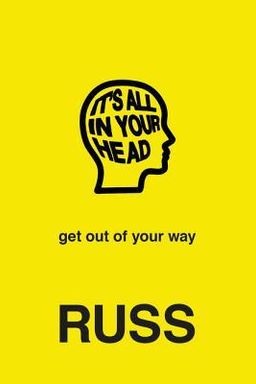
IT''S ALL IN YOUR HEAD cover

IT''S ALL IN YOUR HEAD

by Russ

In ''It''s All In Your Head'', Russ shares his remarkable journey from unknown musician to global sensation. He reveals the motivational techniques, self-belief, and strategic insights that fueled his success. Readers will find inspiration and practical guidance to pursue their own dreams, no matter the odds.

It’s All in Your Head: Turning Thought into Reality

Have you ever felt like your dreams are too big, too distant, or simply unrealistic? In It’s All in Your Head, rapper and self-made artist Russ argues that everything you want—from success to fulfillment to peace of mind—is created first inside your own head. He contends that reality bends to the will of self-belief, and that your thoughts, energy, and actions collectively manifest the life you live. But to do that, you must develop what he calls a mix of delusion, persistence, and gratitude—three qualities that transform internal imagination into external achievement.

Russ’s central argument is simple but radical: your outcomes depend on what you think and believe. He credits his phenomenal rise from a broke basement musician to chart-topping artist not to luck, but to a deliberate process of visualization, unwavering belief, and relentless action. This isn’t “wishful thinking”; it’s an intense form of alignment between thought, feeling, and work. In his words, “It’s all in your head.”

Part 1: Delusion—Believing Before Anyone Else Does

Russ begins by making a case for productive delusion. He insists that before anyone else can believe in you, you must first believe in you—even when every outer circumstance says otherwise. This kind of delusion fuels creativity and courage. Manifestation, he argues, is not just positive thinking; it’s an embodied belief. You visualize your goals with vivid emotional detail, imagine how success feels, and act as if it’s already real. Through his own story—writing proclamations like “I AM the best artist in the world” on his walls and tweeting them in public—Russ shows how making declarations in the present tense forces the universe to catch up with your vision.

He pairs manifestation with faith: faith in yourself, in the universe, and in your own power to create. Where most people are told to “be realistic,” Russ says realism kills dreams. Delusion isn’t insanity; it’s foresight.

Part 2: Persistence—Doing the Work Every Single Day

After staking your belief, persistence becomes the grind that keeps it alive. Russ reminds you that hard work always beats talent when talent fails to work hard (echoing Kevin Durant’s mantra). His decade-long music journey—from recording in bootleg basements to producing, mixing, and mastering his albums entirely alone—embodies this ethic. Persistence means continuous effort even when no one cares, and even when failure repeats.

Persistence also requires courage. Russ’s chapter “Pull the Trigger” urges you to jump off the figurative cliff of fear. He dropped out of college to make music full-time, surviving off twenty-dollar months while keeping belief intact. Fear, hesitation, and doubt are mental roadblocks you create; in his world, action dissolves all three. He lived by the creed “less think, more do.”

Part 3: Gratitude—Fuel for Continuous Growth

Finally, when success arrives, gratitude keeps it sustainable. Russ calls this the “Tornado Effect”: even after visualizing the storm of success for years, its arrival still leaves you awestruck. Gratitude acknowledges that your wins are not random—they are aligned rewards of belief and labor. The universe, he says, responds positively when you say “Thank you, I’ll have some more.” Gratitude amplifies abundance.

Russ intertwines gratitude with humility and self-reliance. While he rejects societal humility that suppresses confidence, he embraces awareness of the gifts life brings. Gratitude is not submission—it’s acknowledgment. It fuels continued creation rather than complacency.

Why It Matters

Russ’s philosophy is a modern synthesis of timeless self-help principles—from Napoleon Hill’s Think and Grow Rich to Paulo Coelho’s The Alchemist. His contribution lies in blending spiritual realism with practical hustle, showing how thought, emotion, and effort converge in creativity. You don’t change your life through luck or circumstances; you build it from the inside out. Delusional belief gives you vision, persistence turns vision into work, and gratitude attracts more to be grateful for.

Ultimately, It’s All in Your Head tells you that success begins not with opportunity, but with imagination—and that the most powerful studio, business plan, or philosophy is the one you carry between your ears. Your thoughts are the raw materials of reality. As Russ puts it, “Before I knew who I was, I knew who I was.”


Manifestation: Living Like It’s Already True

Russ’s concept of manifestation pushes beyond affirmations and visualization—it is full embodiment. He believes that to manifest your dream life, you must inhabit it emotionally and mentally before it materializes. You don’t say “I will be successful”; you say “I am successful.” Future tense keeps your dream forever in the future. Present tense pulls it into now.

Feel It First, Then See It

Manifestation starts by feeling what success feels like. Russ invites you to close your eyes and imagine walking into your dream house, or feeling gratitude as your loved ones celebrate your achievement. This emotional rehearsal conditions your subconscious to attract what matches that frequency. When you feel convinced before seeing proof, you align your mind with possibility.

His story of taping notes on his wall—“I HAVE A PLATINUM DEBUT ALBUM,” “I AM THE BIGGEST ARTIST IN THE WORLD”—is not motivational fluff. It’s spatial reinforcement of belief. He surrounded himself with his goals physically so that his environment echoed his vision. He treated his dreams as tangible realities waiting for time to catch up.

Speak It Into the Universe

Russ insists that manifestation requires expression. “Speak it into existence” means externalizing private conviction. Posting bold claims online or declaring them publicly risks ridicule—but also strengthens faith. In 2011, long before fame, he tweeted “Million dollars a beat.” A few years later, his music earned him platinum certifications. He documents his “before” phase to prove that spoken faith precedes reality.

This act mirrors philosophies from motivational thinkers like Neville Goddard, who taught that imagination and belief operate as creative laws. The universe responds to conviction, not caution.

Faith Plus Work

Manifestation is not just dreaming—it’s doing. Russ is clear that belief without work is fantasy. You must “poke at the universe” until it responds, as he and his best friend Bugus did when hustling to get their song on MTV. Through persistence, bold tweeting, and faith, it happened within six months. That success confirmed the manifesting process: faith, feeling, work.

Manifestation, Russ tells you, is practice for spiritual creation. Everything you now see started as someone’s internal conviction. Your imagination is the blueprint; your actions are the construction crew. Together, they build your reality.


The Formula: You vs. You

Success, in Russ’s worldview, is not competition—it’s alchemy. The enemy isn’t external but internal doubt. In his chapter “The Formula,” he argues that your path is a constant mental duel between the part of you that believes and the part that hesitates.

Self-Belief as the Magic Ingredient

Russ insists everyone needs something to believe in—and that something should be yourself. He compares belief to magic: turning nothing into something through conviction. The same particles that make up stars, he says, make up you, so you are already connected to universal power. Believing isn’t arrogance; it’s energy alignment.

He tells the story of performing a small show in Tampa for forty people. Only he showed up with no crew, staying excited just to live inside his dream—even at a three-star hotel. In that humble moment he found fulfillment because it was proof that his vision had begun to manifest. “Happy to be here” became his mantra for appreciating small beginnings.

The Art of Alchemy

Alchemy, in Russ’s language, is transmuting belief into action. In your creative or personal journey, belief alone isn’t enough—you must move, make, show up. Every step transforms invisible faith into tangible results. This is where energy becomes experience.

Through his hotel-room recording of “The Formula,” Russ reveals that inspiration often hides beneath surface discomfort. The ugly room, small audience, and low resources didn’t block creativity—they amplified it. He found beauty in the ugly, turning scarcity into substance. (This echoes Steven Pressfield’s The War of Art, which insists that discipline transforms resistance into creative power.)

Ultimately, Russ reminds you that “you vs. you” determines if your dreams drown or swim. If belief wins, even dirty motel rooms can turn into creative laboratories of transformation.


Hard Work Beats Talent

Russ’s journey proves that even extraordinary talent can’t replace extraordinary work. Quoting Kevin Durant, “Hard work beats talent when talent fails to work hard,” he builds an argument that persistence and effort—not natural gifts—create success.

Loving the Work

Russ admits he had a terrible work ethic in school and early jobs. He procrastinated and lost interest easily—because those tasks didn’t feel meaningful. But music changed everything. The moment he started creating beats in high school, he discovered that what feels like play is the truest indicator of passion. When the work doesn’t feel like work, you’ve found your purpose.

His first beats were awful, but he loved them intensely. He worked every day—not for acclaim but for joy. Through thousands of songs, he developed mastery that pure talent couldn’t. The practice itself became addictive.

Building Brick by Brick

When Russ formed DIEMON (Do It Everyday Music or Nothing) with Bugus, the motto defined his philosophy. Doing it daily wasn’t obligation—it was obsession. His friends who quit after not “blowing up instantly” showed the danger of conditional belief. Their cups leaked self-belief; his overflowed.

Russ writes that the world doesn’t bet on talent—it bets on those who bet on themselves. He kept climbing while others waited for shortcuts. That’s work: not the hours but the consistency when results are invisible. He reminds you that progress often disguises itself as repetition.

If your passion is genuine, your hours will turn to joy, and your persistence will turn into success. In the end, work is the canvas where belief paints itself visible.


Do It Myself: Radical Self-Sufficiency

To survive “in the wild,” Russ says, you must become your own ecosystem. His chapter “Do It Myself” celebrates independence—not arrogance. It’s freedom. When your success depends solely on you, you become unstoppable.

Owning Your Ship

Russ compares self-sufficiency to captaining your own ship. Too many people build ships then let someone else steer—music artists signing restrictive deals, entrepreneurs outsourcing their core vision. Then they’re surprised when the vessel veers off course. He insists you must stay in the cockpit. Ownership gives you direction and safety.

He learned this lesson early while mixing songs. Initially, he paid engineers to polish his music until he realized they couldn’t match the sound in his head. So he taught himself. By handling everything—production, engineering, mastering—Russ ensured his art reflected his vision exactly. That’s creative sovereignty.

Trial and Error as Education

Russ didn’t go to industry school—he learned by doing. Each failed mix or badly cut video served as a classroom. When he and Bugus tired of waiting for a filmmaker’s edits, they bought cameras and taught themselves to shoot. Their YouTube video “Goodbye” gained over ninety million views, becoming gold-certified. What once seemed technical or impossible became achievable through persistence.

This DIY mindset parallels thinkers like Seth Godin (Linchpin), who insists that becoming indispensable means owning your process. Independence gives you the power to act swiftly and authentically.

Russ’s refrain—“I’ll do it myself”—isn’t defiance; it’s self-trust. By learning every craft that fuels your dream, you build immunity to excuses. Freedom is power, and power is responsibility.


The Tornado Effect and Gratitude

When success finally arrives after years of anticipation, it can feel like stepping outside after a storm. Russ calls this sensation the Tornado Effect—the awe of witnessing a reality you created. You foresaw it, yet the aftermath still overwhelms you. This moment tests your ability to remain grateful and grounded while continuing to evolve.

Witnessing Your Own Manifestation

Russ describes standing in the aftermath of his own dreams realized—sold-out shows, platinum records—and still marveling that they came true. Not surprised, but humbled. Success feels both divine and human because you recognize that you caused it. The tornado was your thoughts gathering momentum until the universe couldn’t ignore them.

Gratitude as Magnetic Force

Gratitude, for Russ, is a form of communication with the universe. When you say “thank you,” you signal readiness for more. Ungratefulness blocks abundance, while celebration multiplies it. He advises you to “celebrate what you want to see more of.” Joy magnetizes success faster than complaint ever will.

His philosophy aligns with positive psychology research showing that gratitude rewires your brain for optimism and resilience. Russ adopts it as a spiritual ritual—the continuation of manifestation through appreciation.

Balancing Awe with Momentum

After victories, many pause or plateau. Gratitude prevents burnout by replacing pride with perspective. Russ reminds you to look at success not as an endpoint but as feedback from the universe that you are aligned. Expressing gratitude tells the universe, “I understood the lesson—keep teaching.”

The Tornado Effect teaches that success doesn’t erase disbelief—it transforms it into wonder. Every storm you create through faith leaves behind gifts of recognition. Collect them with gratitude, and the wind keeps blowing.


The Journey Never Ends

One of Russ’s defining mantras is that success has no finish line. The journey itself is the destination. He warns against postponing happiness until “arriving,” since arrival is illusion. Every moment on your path—from first beat to final encore—is success in motion.

Embrace the Ongoing Process

Russ describes himself as terrified of complacency. His father once told him, “You’ll get twenty Grammys and be pissed that you didn’t get twenty-one.” That restlessness, he admits, fuels growth. Even his best songs instantly inspire him to make better ones. Progress is infinite because potential is infinite.

Rather than chasing final success, Russ practices “blind faith” as a compass. You trust yourself, follow intuitive direction, and accept uncertainty. If obstacles arise, they’re meant to refine you. The process itself is sacred.

Evolving and Expanding

Each phase of Russ’s story—from anonymous basement grinders to global recognition—represents evolution rather than replacement. He sees life as endless roads, each offering new creative possibilities. Even when using new instruments like a gifted ukulele, the curiosity propels his artistic spirit forward. (John Lennon once said, “Give me a tuba, I’ll make music from it”—a sentiment Russ echoes.)

The journey teaches that satisfaction doesn’t mean stopping; it means continuing with joy. True success is perpetual creation, not static result.

Russ concludes: until you die, your car never stops moving. Happiness is riding it with open eyes, not racing toward a destination that doesn’t exist.

Dig Deeper

Get personalized prompts to apply these lessons to your life and deepen your understanding.

Go Deeper

Get the Full Experience

Download Insight Books for AI-powered reflections, quizzes, and more.