
Idea 1
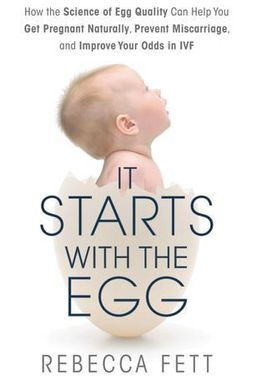
Transforming Fertility: It Starts with the Egg
What if the secret to improving your fertility lay not in medical miracles, but in your everyday choices — the food you eat, the supplements you take, and even the plastic containers in your kitchen? In It Starts with the Egg, molecular biologist Rebecca Fett argues that the quality of a woman’s eggs — once thought to be beyond her control — can, in fact, be improved through scientifically guided lifestyle changes. She presents a comprehensive, research-backed plan showing that women can reclaim their fertility by protecting and nurturing their eggs during the critical months before ovulation.
Challenging the Fertility Myth
For decades, women have been told that egg quality declines inevitably with age — that biology sets an unchangeable timer on their fertility. Fett dismantles this fatalism using evidence from hundreds of peer-reviewed studies. Drawing from her background in molecular biology and biochemistry, she explains that most chromosomal abnormalities in eggs don’t accumulate over a woman’s lifetime but develop during the final three to four months before ovulation. That’s the window of opportunity in which external factors like toxins, oxidative stress, and nutrient levels can either damage or protect eggs.
When Fett herself faced a fertility diagnosis — diminished ovarian reserve before age 30 — doctors offered little more than aggressive hormone protocols. Instead, she turned to scientific research and found actionable ways to restore her egg health. Her personal experience anchors her argument: with targeted interventions, she improved her ovarian response, producing a record number of high-quality embryos in a single IVF cycle. The message is empowering — biology isn’t destiny; knowledge is.
The Quiet Revolution in Fertility Science
The book opens a window into what Fett calls a “quiet revolution” in reproductive science. Researchers have discovered that energy production in mitochondria — the cell’s powerhouses — directly determines whether an egg matures with the right chromosomes. This makes mitochondrial health a central focus, influenced by factors like Coenzyme Q10, antioxidants, and insulin sensitivity. Rather than accepting age-related decline, understanding how to protect these energy systems allows women to extend and enrich their fertility potential.
Equally revolutionary is the evidence linking environmental toxins to poor egg quality. Everyday compounds such as BPA, phthalates, and endocrine disruptors in plastics and cosmetics can sabotage hormone balance and embryo viability. Fett translates laboratory findings—like those from Harvard’s School of Public Health and the University of Missouri—into practical, easy-to-follow steps for removing these toxins from one’s environment. This research-driven guidance helps transform confusion into clarity, replacing fear with agency.
A Blueprint for Change
Fett organizes her book into three major parts that function as an evidence-based roadmap to conception. The first, “What Your Doctor Isn’t Telling You,” introduces the biological basics of egg quality and the hidden dangers of toxins. The second, “How to Choose the Right Supplements,” is a masterclass in fertility nutrition, covering prenatal vitamins, CoQ10, melatonin, myo-inositol, and DHEA. She summarizes which supplements improve egg health, which are harmful, and which help under specific conditions like PCOS or diminished ovarian reserve. The final section, “The Bigger Picture,” zooms out to address diet, sperm health, and a step-by-step fertility action plan.
One of Fett’s key innovations is her system of Basic, Intermediate, and Advanced Plans. These flexible programs guide readers depending on their fertility stage and specific challenges — from those just starting to try conceiving, to those facing IVF or recurrent miscarriage. This structure makes the complex science highly practical, turning the daunting task of improving fertility into manageable daily actions.
Why It Matters: The Intersection of Science and Empowerment
Fett’s book isn’t just about biology; it’s about empowerment. For countless women frustrated by the vague reassurance of “just relax” or the cold precision of IVF statistics, It Starts with the Egg offers a middle ground — one where cutting-edge science meets self-care. By bridging academic research and accessible guidance, Fett gives women tools to take measurable control of their reproductive health.
Her message resonates beyond fertility treatments. The same mechanisms that protect egg DNA from damage also promote longevity, hormonal balance, and metabolic health. Improving egg quality, in Fett’s view, is about optimizing the foundation of life itself — the quality of the genetic material we pass on. Whether you’re preparing for pregnancy, facing unexplained infertility, or simply want to future-proof your reproductive health, her framework applies to every stage.
A Science-Backed Path to Hope
Ultimately, It Starts with the Egg transforms fertility from a matter of luck into a process of intentional preparation. Fett encourages women to think of themselves as “pre-pregnant” for at least three months before conception, using that window to nurture their eggs. With her combination of scientific precision and compassion, she reframes fertility not as a biological cliff, but as a system responsive to care, knowledge, and persistence. As she writes, the miracle of life doesn’t just start at conception—it starts months earlier, with the health of the egg.