
Idea 1
The Whole30 Philosophy: Food as a Driver of Health
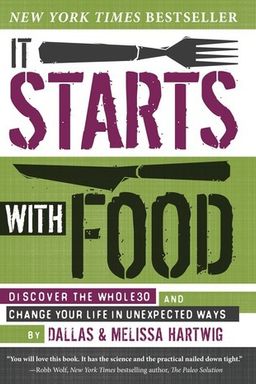
Every bite you take moves you toward or away from health. That stark principle anchors Dallas and Melissa Hartwig’s Whole30. They contend that food is never neutral—it either supports or undermines your body’s systems. This simple binary helps you navigate modern nutrition chaos: instead of counting calories, you ask whether a food strengthens your psychological relationship with eating, stabilizes hormones, protects your gut, and minimizes inflammation. These four Good Food standards form the book’s backbone and turn abstract nutritional science into actionable decisions.
Four Good Food Standards
The Hartwigs structure the entire program around four tests. A food passes only if it (1) promotes a healthy psychological response, (2) maintains hormonal balance (insulin, leptin, glucagon, cortisol), (3) preserves gut integrity and microbiota, and (4) supports immune function with minimal chronic inflammation. Fail one, and the food is suspect. They place psychology first because behavior drives biology: foods that hijack your reward system create cravings that cascade into hormonal, gut, and immune dysfunction. This sequence—from brain to hormones to gut to immune system—forms a cause-and-effect chain that organizes the book across multiple chapters.
From Cravings to Science
Modern processed foods exploit biological design. Our ancestors’ taste receptors evolved to seek nutrients—sweetness for energy, salt for electrolytes, fat for compaction and satiety. Food engineers now amplify those cues into “supernormal stimuli”—far sweeter, saltier, and fattier than anything found in nature. Your brain, wired for survival, cannot distinguish the trick. Dopamine drives the urge; opioids deliver reward. Stress and sleep deprivation intensify the loop. The result is not “weak willpower” but a hijacked reward system. Restoring sanity means removing these stimuli long enough to reset those circuits—a guiding purpose of the Whole30’s strict elimination period.
Hormones, Gut, and Immune Health
Hormonal misfires anchor many modern ailments. Insulin overload from sugars and refined starches creates resistance; leptin’s “we’re full” signal gets lost in translation; cortisol surges under stress. Meanwhile, poor food choices damage the gut lining—the body’s largest interface with the outside world—and alter bacterial populations. When that barrier leaks, fragments of food and microbes enter circulation, confusing the immune system and igniting chronic inflammation. The Hartwigs reframe these processes not as inevitable decline but as diet-driven dysfunction you can reverse. Each Whole30 phase—elimination, self-observation, reintroduction—becomes an experiment in restoring these signaling systems.
The Whole30 as a Self-Experiment
Scientific research plus clinical experience form the foundation; your results complete it. The program removes major physiological and behavioral offenders—sugar, alcohol, grains, legumes, dairy, seed oils—for thirty days. You then reintroduce them one at a time to observe reactions. This empirical approach turns abstract claims into practical proof. Thousands of stories—from allergy relief to stabilized blood glucose—illustrate its reach, but your own data matters most. The book repeatedly insists: “You are your own experiment.” If a food fails your body’s test, you’ll feel it.
Why Simplicity Works
The Whole30’s lasting appeal lies in translating complex biochemistry into direct experience. By following the four Good Food standards, you learn in real time how psychology leads biology, how hormones govern appetite and energy, how the gut manages immunity, and how diet shifts can dial inflammation up or down. The lesson is practical and radical at once: the choice between health and dysfunction sits on your plate, three times a day. Understanding that truth—and testing it for yourself—is what makes the Whole30 not merely a diet, but a lifelong method for self-knowledge and health recovery.