
Idea 1
Inherited Family Trauma: The Hidden Roots of Our Suffering
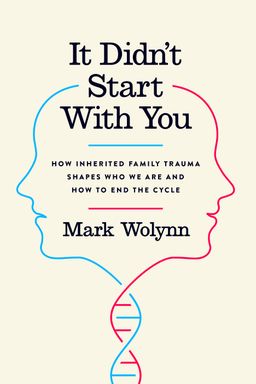
Have you ever felt trapped in cycles of fear, depression, or self-sabotage that seem bigger than you—patterns that repeat no matter how hard you try to change them? In It Didn’t Start with You, therapist and researcher Mark Wolynn asks a radical question: what if the source of our struggles lies not in our own experiences, but in the unresolved traumas of our parents, grandparents, and ancestors? Drawing on neuroscience, epigenetics, and decades of therapeutic work, Wolynn contends that pain, grief, and fear can be biologically inherited and psychologically embodied, living within us as remnants of events that happened generations before we were born.
Wolynn’s core argument revolves around the concept of inherited family trauma. He explains that unprocessed emotional pain doesn’t simply vanish but instead gets transmitted—through genes, behaviors, or even language—from one generation to the next. The result is a haunting phenomenon: people reliving feelings, illnesses, and behaviors that correspond to traumatic experiences long forgotten by the family. Recent discoveries in epigenetics substantiate his claim; stress and trauma, Wolynn shows, can alter the way genes are expressed, effectively changing the emotional blueprint we hand down to our children.
Through deeply moving case studies and scientific insight, he reveals how the echoes of war, loss, abandonment, or abuse ripple across generations, influencing our mental health, relationships, and sense of self. From Holocaust descendants exhibiting anxiety consistent with their ancestors’ trauma, to veterans’ children struggling with inherited PTSD symptoms, Wolynn traces how the body carries the burden of ancestral pain. Yet his message is ultimately hopeful: by recognizing these inherited imprints, we can release their grip and reclaim our own lives.
The Secret Language of Fear
Wolynn begins his personal story with a terrifying health crisis—an eye disease that left him partially blind and riddled with anxiety. Through years of meditation and travel, he discovered that his illness symbolized deeper emotional blindness: the inability to see and accept his parents’ love. His journey led him to uncover what he calls a “core language of fear”—emotionally charged words and phrases like “alone,” “helpless,” and “ruined” that reflected multigenerational pain. These words, Wolynn realized, function like breadcrumbs leading back through the forest of family trauma to the event that needs resolution.
As he rebuilt bonds with his mother and father, he began to heal physically and emotionally. This personal awakening became the foundation of his therapeutic technique—the Core Language Approach—that teaches us to decode the unconscious messages embedded in our fears and complaints. Understanding the roots of these words allows us to separate what belongs to us from what belongs to the generations before us.
Science Meets Emotional Truth
The book bridges hard science and emotional wisdom. Groundbreaking studies by researchers such as Rachel Yehuda demonstrate that trauma can leave epigenetic marks—small chemical tags that alter gene function—without changing DNA itself. For example, Yehuda found that children of Holocaust survivors inherited stress hormone imbalances identical to their parents. Similarly, animal studies show that mice conditioned to fear certain smells pass that fear to offspring who have never encountered the scent. These findings lend biological weight to Wolynn’s therapeutic observations: unhealed trauma reverberates through generations, embedding itself in both our psychology and physiology.
Yet science alone cannot heal; Wolynn insists that awareness and reconnection are the antidotes. His work integrates Bert Hellinger’s Family Constellation Therapy, which reveals how unacknowledged members, secrets, and losses bind future generations through invisible loyalty. Healing, Wolynn says, begins when we acknowledge these entanglements and release ourselves from the burden of carrying our ancestors’ pain as our own.
Mapping the Path Home
The book guides you through a practical map for healing—identifying the Core Complaint (your main emotional struggle), Core Descriptors (how you describe your parents), Core Sentence (the distilled essence of your worst fear), and Core Trauma (the historical event that gave birth to that fear). Together, these create a “Core Language Map” that helps trace your suffering back to its source. Through visualization, ritual, and compassionate dialogue, you can transform unconscious repetition into conscious integration, turning ghosts into ancestors, as psychiatrist Norman Doidge puts it.
These ideas matter deeply because they challenge the modern assumption that we are isolated individuals. Wolynn reframes identity as a continuum: we are not just the sum of our personal experiences, but the living extension of our family’s emotional history. Understanding this interconnectedness invites humility and compassion—both for ourselves and those who came before us—and offers a path toward genuine freedom. It Didn’t Start with You is ultimately a book about healing lineage, transforming inherited suffering into inherited strength.