
Idea 1
The Architecture of Modern Addiction
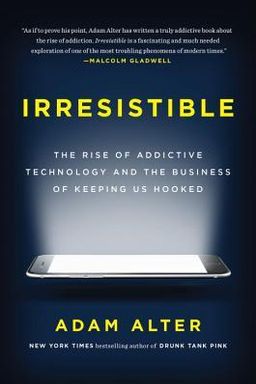
Why do you reach for your phone again and again even when you know it’s bad for you? In Irresistible, Adam Alter argues that modern addiction has evolved beyond substances into behaviors—engineered experiences that exploit your brain’s natural learning, reward, and social circuits. He shows that this epidemic springs not just from human weakness but from an environment optimized to keep you hooked. Behavioral addiction, he explains, is a recurring activity that produces immediate reward and long-term harm, difficult to stop despite knowing better.
Redefining addiction for a digital age
Alter reframes addiction as a relationship between psychology and context. It’s not just drugs or alcohol; it’s anything designed to generate compulsive engagement—smartphones, social media, gaming, shopping, work. Unlike simple habits or passions, addictions degrade quality of life while resisting conscious control. Studies summarized in the book show enormous prevalence. Mark Griffiths’ review across 1.5 million respondents found that 41% had experienced a behavioral addiction in the past year. Some communities report 40% internet addiction rates, and millions qualify as smartphone-dependent.
These numbers reflect environments built for temptation. Designers admit the power they wield: Steve Jobs banned iPads at home, and Instagram engineer Greg Hochmuth called the platform “bottomless.” Alter’s lens is structural rather than moral—if our surroundings trigger neural cravings, large-scale remedies are as vital as personal restraint.
Craving, learning, and the brain
Addiction flourishes because the human brain learns to desire rewards that relieve discomfort. The neurotransmitter dopamine doesn’t merely produce pleasure; it fuels wanting—a drive to seek and repeat behaviors that promise relief. Kent Berridge’s experiments revealed that rats without dopamine stop seeking rewards though they still enjoy them when given. The craving persists longer than enjoyment, which explains why recovering addicts still yearn for something they no longer like. In modern form, this means scrolling even when content feels stale: the wanting system is stronger than liking.
Dopamine pathways are persistent and easily hijacked by novelty and unpredictability. When technology delivers intermittent feedback—likes, comments, or new levels—craving is reinforced in the same way casinos create “losses disguised as wins.” Your brain stays attentive to possibility, not certainty.
How environment shapes compulsion
Circumstance determines the strength of addiction. Olds and Milner’s rat pressed a bar 7,000 times because the cage offered direct brain stimulation. Aryeh Routtenberg’s monkey Cleopatra repeated the behavior only inside her original cage—the context itself reactivated memory and craving. Lee Robins’ Vietnam veterans, who kicked heroin when returning home, proved that removing cues and environments can extinguish dependence. The same logic appears in tech rehab like reSTART: patients detox by leaving triggering contexts, then reintegrate slowly under new cues. Alter’s insight is clear—addiction inhabits memories and spaces, not immutable biology.
The modern landscape of hooks
Digital design weaponizes psychology. Tristan Harris notes that “a thousand people on the other side of the screen” analyze data to dismantle your self-control. Endless feeds, autoplay, unpredictable likes, and social comparison create continuous engagement loops. Feeds lack natural stopping points; metrics reward vanity and anxiety. Companies A/B test micro-interactions—the colors, vibrations, and sounds—to maximize time-on-device. Even simple games like Flappy Bird became cultural addictions by exploiting short-term retry cycles.
Such design success isn’t accidental; it’s behavioral science operationalized for profit. “If a feature maximizes time-on-device,” Alter warns, “it competes with your life goals.” Recognizing this relationship transforms your understanding: addiction is a design problem as much as a personal one.
Breaking the cycle
You can’t simply rely on willpower. The book advocates architectural solutions: change proximity and defaults. Store phones outside your bedroom, create friction where temptation lurks, and make healthy behaviors effortless. Programs like reSTART pair detox with behavioral architecture—structured routines, peer accountability, and gradual exposure. Self-determination theory supports autonomy and competence as drivers of sustainable change. You shift from “I can’t” to “I don’t,” reframing identity to reduce conflict.
Alter ends optimistically: the same mechanics that create compulsions can fuel good. Gamification, deliberately used for charity (FreeRice), health (Fitocracy), or therapy (SnowWorld), turns engagement science toward human benefit. The challenge, he says, is ethical intention. Harness psychology to build mastery and altruism—not manipulation.
Core lesson
Addiction today is environmental and behavioral. You live in a context engineered to exploit your brain’s reward wiring. Once you recognize design patterns—variable rewards, cliffhangers, social metrics—you can redesign your environment and reclaim attention for choices that reflect your deeper values.