
Idea 1
The Power of Invisible Excellence
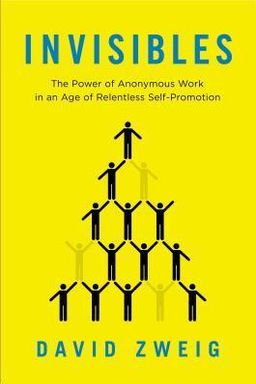
Why do some of the most talented professionals deliberately avoid fame? In Invisibles, journalist David Zweig explores the paradox of modern work: the people whose labor shapes our world most profoundly often go unnoticed. Through profiles spanning recording engineers, wayfinding designers, structural engineers, perfumers, and interpreters, Zweig reveals that invisibility is not a flaw in ambition but a marker of maturity. The book argues that in a culture obsessed with visibility and personal branding, the path to enduring fulfillment lies instead in mastery, meticulousness, and responsibility.
Zweig introduces you to professionals who define success not by recognition but by contribution. Andy Johns created Led Zeppelin’s massive drum sound in a stairwell yet credited the groove, not himself. Peter Canby, a fact‑checker at The New Yorker, finds pride in ensuring the magazine’s integrity, even though readers never know his name. Jim Harding designs airport wayfinding systems so efficient that travelers glide to their gates without realizing anyone designed them. Perfumer David Apel builds scents that sell worldwide, yet his name never appears on the bottle. For these Invisibles, perfection is measured by absence—if you notice their work, something has gone wrong.
The Three Core Traits
Zweig identifies three unifying traits. Ambivalence to recognition means they are motivated by intrinsic satisfaction rather than applause. Meticulousness signals their devotion to the smallest details, practiced daily until excellence becomes second nature. Savoring responsibility defines their pride in accountability—they take ownership of outcomes that others may shy away from. Together, these traits produce craftsmanship that endures across professions.
Dennis Poon’s design of Shanghai Tower exemplifies this mindset. Every calculation, from its 800 anchor piles to its 1,500‑ton damper, demanded obsessive care. Mistakes could cost lives, yet Poon speaks of the privilege of carrying that weight. Similarly, anesthesiologists savor the moment-by-moment responsibility of keeping patients alive through surgical chaos. Invisibility, in their world, is the ultimate reassurance that everything works flawlessly.
Flow and Intrinsic Motivation
Across diverse examples—from UN interpreters like Giulia Wilkins Ary to piano technician Peter Stumpf—Zweig connects invisibility to flow, the psychological state of total absorption in challenging work. These Invisibles find joy in process itself, echoing psychologist Mihály Csíkszentmihályi’s theory that deep focus breeds both happiness and elite performance. When you orient toward mastery rather than applause, motivation becomes renewable.
Psychological research supports this premise. Studies by Sonja Lyubomirsky and Edward Deci show that internal standards correlate strongly with long-term well‑being. In contrast, fame and external validation often trigger anxiety and fragility. Zweig frames Invisibles as a counterculture to the “Culture of Profile,” an era defined by self‑branding and follower counts. Invisibility thus becomes a quiet form of resistance: a commitment to integrity over image.
The Culture of Visibility vs. the Craft of Substance
Zweig contrasts Invisibles with the high‑visibility culture promoted by social media. You meet people such as Michele Catalano, whose one million followers brought stress instead of success, and writer Neal Pollack, who learned that viral attention is fleeting without craftsmanship to sustain it. Platforms reward branding, not depth, but the Invisibles show that quiet competence outlives trends. Their satisfaction stems from making something resilient, whether a fragrance, a bridge, or an orchestral performance.
Why They Matter Now
The modern world depends on those whose perfection remains unseen: engineers who prevent disasters, editors who preserve truth, pilots who land safely in storms. Zweig argues that our culture’s emphasis on visibility can obscure how much invisible excellence sustains civilization. When failures occur—the 2000 butterfly ballot, or rushed telecom tower builds that cost lives—society rediscovers the need for Invisible rigor. Visibility, ironically, often follows mistakes.
As the book unfolds, it becomes both a sociological study and a call to arms. Zweig champions meticulous preparation, collaborative humility, cross‑disciplinary competence, and an ethic of ongoing curiosity. He invites you to redefine success through craftsmanship rather than celebrity. If you take one lesson, it is this: invisible work may never trend, but it leaves a legacy of stability, trust, and enduring human value.