
Idea 1
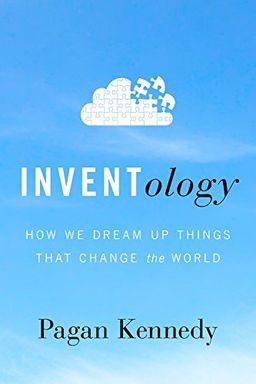
Inventology: How We Dream Up Things That Change the World
Have you ever looked at a simple object—like a Post-it note, a toothbrush, or a sippy cup—and wondered, why did it take so long for someone to think of that? In Inventology, Pagan Kennedy explores this question and argues that invention isn’t just for elite geniuses locked away in high-tech labs—it’s something all of us can do. She contends that invention follows patterns we can understand, learn, and repeat. More profoundly, she shows that the process of invention—our ability to imagine futures, solve problems, and connect ideas—is more democratic, emotional, and social than most people realize.
Kennedy, the creator of the New York Times “Who Made That?” column, interviewed more than a hundred inventors and combed through research in psychology, economics, engineering, and design. Her exploration boils invention down to five major paths: problem finding, discovery, prophecy, connecting, and empowerment. Each stage reveals not only how things are made but how imagination itself works.
The Democratization of Invention
Throughout the book, Kennedy dismantles the myth of the lone genius to reveal that everyday people—teachers, kids, parents, and patients—often make significant contributions to innovation. She highlights the work of Eric von Hippel at MIT, who coined the term “Lead Users.” These are people who experience problems before the general population does and, through necessity, create their own solutions. A striking example is pilot Robert Plath, who invented the modern rolling suitcase because he was tired of lugging heavy bags through airports. His creation didn’t come from an R&D lab; it came from lived frustration.
Von Hippel’s research shows that 80 percent of scientific equipment originated this way—developed by users, not companies. These insights shift our understanding of innovation: rather than being produced only by corporations, much of it bubbles up from user communities and amateurs tinkering in garages. The sippy cup, the 3D-printed prosthetic hand, and even Twitter’s retweet function all began as grassroots responses to real, lived problems.
From Eureka Moments to Processes
Kennedy challenges the romantic “Aha!” myth of invention. Drawing from historical cases—the myth of August Kekulé’s dream of the benzene ring or Elon Musk’s deliberate visualization process—she argues that true inventors work through cycles of observation, trial, and iteration. Jake Stap’s tennis ball hopper—a wire basket that collects balls without bending—didn’t appear out of nowhere; it emerged through hundreds of small mental experiments Stap played in his imagination while driving. Kennedy shows that creativity isn’t lightning—it’s a muscle trained through play, curiosity, and empathy.
She links this idea to research by psychologists such as Graham Wallas and Mihaly Csikszentmihalyi, suggesting that creativity depends less on divine inspiration and more on deliberate attention to frustration and failure. This understanding allows readers to see their own setbacks as part of a universal process of creative incubation.
Five Pathways to Creative Breakthrough
Kennedy structures Inventology around five key processes:
- Problem Finding: Discover needs no one has spotted yet—like Amy Smith’s ingenious incubator for rural clinics.
- Discovery: Remain open to serendipity—like the chemist who licked his hand and discovered artificial sweetener.
- Prophecy: Use imagination to pre-experience the future, as Vannevar Bush and Doug Engelbart did when they envisioned personal computing decades early.
- Connecting: Cross disciplines to combine existing ideas in new ways, as John Harrison did marrying carpentry with navigation.
- Empowerment: Democratize the invention process by training others, from hackerspaces to kids learning to code and 3D print.
Each path is anchored by vivid stories: a carpenter who builds a better hand, a Soviet visionary who invents TRIZ in prison, or a hospital doctor who reimagines catheters after reading an article about “thinking teeth.” Together, they map a universal blueprint for imaginative courage.
The Stakes of Human Creativity
Ultimately, Kennedy argues that invention is a survival instinct, not a luxury. From early humans shaping tools to modern engineers predicting climate-tech solutions, creative thinking determines our collective survival. She shows how decentralizing invention—through crowdsourcing, crowdfunding, and data sharing—can transform the world’s biggest challenges in health, energy, and education. Instead of waiting for the next Edison, she invites each of us to become part of a global “invention ecosystem.”
“We are the species that invents,” Kennedy reminds us. “Our imagination is our greatest survival tool.”
This sets the stage for her book’s deeper argument: invention isn’t just what creates gadgets; it is what sustains civilization. Through stories that range from NASA engineers to Soviet prisoners, Inventology celebrates the mind as both the laboratory and the machine of progress.