
Idea 1
Rethinking the Renaissance
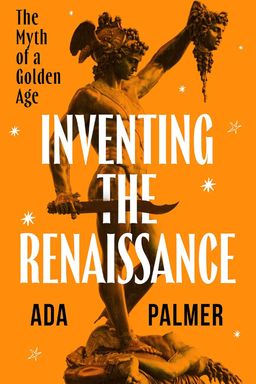
How can you admire the Renaissance’s beauty without swallowing its myth? In The Renaissance: A Reconsideration, Ada Palmer argues that the “Renaissance” we inherit is partly a brilliant historical period and partly a political construction—made by Petrarch, recrafted by Vasari, and gilded by nineteenth-century historians like Michelet and Burckhardt. The book contends that the age’s identity isn’t a single golden rebirth but a convergence of many forces—humanist education, banking and war, epidemics, patronage, and new information networks—whose meanings changed as later generations reused them for legitimacy.
You follow two intertwined threads. First, a myth-making story: how Florence and its champions (from Bruni and Vasari to modern tourism) came to dominate our picture of the period, and how “humanism” itself has been defined and weaponized across centuries. Second, a lived-world story: desperate politics, patronage dependencies, repeated plagues, and cross-border exchanges that shaped art, ideas, and everyday life from the Medici palaces to artisan workshops and women’s households.
Myth, lenses, and agendas
Palmer shows you the myth machine at work. Petrarch invented a Dark Age to motivate moral revival; Bruni mapped time into ancient/middle/modern; Vasari draped “rinascita” over art around 1500; Jules Michelet later expanded it into a sweeping era with modern, nationalist flavors. Each step attached contemporary values to the past. This is why you should interrogate single-cause stories (e.g., “the Renaissance invented the individual”): they often mirror the political needs of those who pronounce them (Burckhardt’s romantic individualism, Hans Baron’s Cold War–era “civic humanism”).
Florence’s glare and what it hides
Florence looks like the Renaissance’s cradle in part because the Medici stockpiled treasures and kept them in the city (Anna Maria Luisa de’ Medici’s bequest forbade dispersal), and because war and luck preserved its archives and monuments (Gerhard Wolf and Allied orders spared Florence in WWII). Abundance of surviving sources begot more study, which begot more canon-making—while places like Milan, Naples, or Bologna lost materials in wars and sales. The result is a self-fulfilling Florence that’s real yet distorting.
Humanism and the language of power
Humanism (the studia humanitatis) was more than pretty Latin; it was a political toolkit. Patrons “activated antiquity” (Johannes Helmrath’s phrase) to legitimize rule: Cosimo de’ Medici’s libraries, Alfonso V in Naples, and Matthias Corvinus in Hungary staged Roman-style pageantry, scholarship, and architecture to impress envoys. Umanisti—Filelfo, Poliziano, Pico—were tutors, diplomats, propagandists, and sometimes lightning rods for controversy. Women participated too, as learned performers (Alessandra Scala, Cassandra Fedele) and as prophetic nuns whose visions shaped policy (Sister Lucia Bartolini during Florence’s Last Republic).
Desperate times, consequential thinkers
The age’s beauty coexisted with war, coups, and plague. That pressure cooker helps you read Machiavelli correctly: a patriot-analyst, not a cartoon villain. He retooled humanist history into an empirical casebook and helped birth consequentialist politics after witnessing Cesare Borgia’s brutal efficiencies and Julius II’s effective betrayals. Meanwhile, justice performed mercy through patronage: harsh laws threatened death, but patrons often converted sentences to fines or lectures to imitate divine clemency (Nicholas Davidson’s Inquisition data, Shakespeare’s Portia). When protection failed, the stake awaited (Giordano Bruno).
Artists, bodies, and unfreedom
Patronage empowered and caged artists. Michelangelo’s life reads like a ledger of unfinished briefs under popes and dukes—Julius II’s tomb (the Slaves/Prisoners), the Sistine ceiling, Medici tombs, Saint Peter’s dome—while his nudes reveal a sculptor’s eye and a personal eros for the male body (Gherardo Perini, Febo di Poggio, Tommaso dei Cavalieri). A culture of male dual attraction coexisted with moral policing; patrons often insulated elites and artists (Il Sodoma, Cellini). Even art’s meanings were contested—David came to signify the Florentine Republic; Cellini’s Perseus broadcast Cosimo I’s ducal conquest.
Networks, print, and the skeptical turn
The Renaissance was international: Josquin des Prez moved among Burgundy, Milan, Ferrara, and Rome; the Portinari Triptych sailed to Florence and shaped Leonardo’s eye; bankers moved manuscripts with money. Crucially, printing only became a revolution once distribution networks matured (Venice as a hub, the Frankfurt Book Fair, pamphlet riders). That timing explains why Savonarola’s tracts stayed local while Luther’s theses reached London in 17 days. As new facts (New World plants, anatomy) and conflicting texts (Lucretius’s atomism) multiplied, the “presumptive authority of the past” cracked, seeding a Try‑Everything Age where alchemy, theurgy, and early labs (Accademia del Cimento) coexisted—then, with Bacon’s rhetoric, became the public project we now call progress.
Key Idea
You should read the Renaissance as a contact zone and a political program—its myths, patrons, and networks made antiquity a language of power, while its crises taught thinkers to privilege outcomes, build institutions, and, eventually, test claims against the world.
By the end you see two lasting lessons. First, narratives are tools: always ask who benefits when an age is labeled a rebirth. Second, change is braided: great forces (plague, print, finance) set the river’s flow; human agency—patrons, pranksters, prophets, and pragmatists—digs the dikes that decide who is flooded and who thrives.