
Idea 1
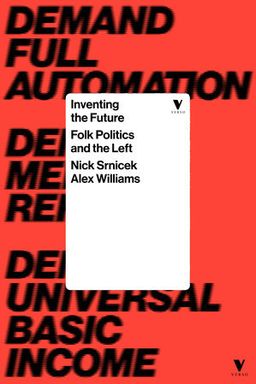
Inventing the Future: Reclaiming Tomorrow from Folk Politics
How can you build a future beyond neoliberal capitalism when political imagination seems exhausted? In Inventing the Future, Nick Srnicek and Alex Williams argue that the left has trapped itself in “folk politics”—a style of activism that values immediacy, localism, and moral authenticity over large‑scale strategy. They show that while folk politics helped resist global neoliberalism, its focus on the immediate and experiential has prevented effective long‑term transformations.
Their central claim is striking: if you want to reinvent the future, you must combine technological understanding, institutional capacity, and collective imagination. Small, ethical experiments and protests must be supplemented by global strategies capable of contesting capitalist hegemony at its scale. The book’s argument unfolds through diagnosis, history, and proposal: first defining the limits of today’s activism, then analyzing how neoliberalism became dominant, and finally sketching a counter‑hegemonic strategy for a post‑work society.
The Problem of Folk Politics
Srnicek and Williams describe folk politics as a reflex more than a doctrine: the impulse to make politics tangible and immediate when global systems feel incomprehensible. Its core traits—temporal immediacy, spatial localism, and conceptual affect—render activism emotionally rewarding yet structurally ineffective. Movements like Occupy Wall Street, the Argentine neighborhood assemblies, and alter‑globalization campaigns found solidarity but lacked strategies to outlast repression or scale institutionally. Folk politics, they argue, cannot rival capital’s global foundations through moral gestures alone.
Learning from How the Right Won
To understand strategic success, the authors turn to neoliberalism’s rise. Hayek’s Mont Pelerin Society and its network of think tanks show how the right invested decades building intellectual legitimacy, elite networks, and policy machinery. When crisis hit in the 1970s, those ideas were “lying around,” ready for adoption by Thatcher and Reagan. The lesson is simple and urgent: ideas only gain power when institutions nurture them. The left must therefore build research networks, media organs, educational programs and alliances with technical experts to generate durable ideological and policy influence. You reclaim hegemony by acting strategically across decades, not reacting overnight.
Reclaiming Modernity, Freedom, and Utopia
Rather than rejecting modernity, the authors insist the left must claim its future‑oriented promises. They develop the concept of synthetic freedom—a positive, material freedom made possible by time, resources, education, and technology. This counters neoliberalism’s "negative freedom" where you’re formally free but materially constrained. They also introduce “hyperstitional progress,” meaning political imaginaries that actively produce futures by motivating collective action and innovation. Utopian imagination is therefore not escapist; it expands what is thinkable, trains desire, and invites participation in the shaping of real change (a perspective resonant with Ernst Bloch’s Principle of Hope).
Crisis of Work and Structural Surplus
Late capitalism produces massive surplus populations—people excluded from stable employment due to automation, global labor integration, and austerity. Automation displaces both manual and cognitive jobs, informalization swells worldwide, and punitive carceral systems absorb dispossessed citizens. The authors argue that defending the work ethic under these conditions is futile. A credible left program must plan for post‑work futures that address inequality, racialized exclusion, and ecological limits rather than nostalgia for industrial labor. The surplus analysis grounds their call for universal basic income (UBI) and shorter working weeks.
From Diagnosis to Design: Post‑Work Politics
The proposed alternative centers on automation, reduced work hours, universal basic income, and dismantling the moral valorization of work. These are “non‑reformist reforms”—achievable steps that cumulatively transform society’s structure. UBI and automation, properly managed, can decommodify survival and sever the direct link between productivity and income. Cultural work must accompany economic change: art, education, and media should reimagine leisure, creative activity, and care as values in themselves, not as by‑products of wage labor.
Technology, Infrastructure, and Repurposing
Technologies are not neutral; design choices encode politics. Srnicek and Williams advocate repurposing existing infrastructures for collective use—like the Lucas Plan’s worker proposals for social production or Chile’s Cybersyn experiment under Allende. They call for mission‑oriented public investment to redirect innovation toward social goals (linking to Mariana Mazzucato’s work on the entrepreneurial state). Repurposing is thus pragmatic utopianism: using what exists to build what could exist.
Organizing for Hegemony
Strategic organization is required to translate ideas into power. The authors suggest building an ecology of organizations—movements, parties, unions, research institutes, and media acting in distributed coordination. Populist framing can unify diverse groups (“the 99%”) against a clear antagonist, but enduring success depends on institutional depth. Leadership should be mobile and accountable: enable vanguard moments without authoritarian permanence. This plural structure mirrors ecosystems of the right but is directed toward democratic futures.
Imagination as a Political Tool
Finally, utopian imagination becomes both analytic and affective weapon. Political realism without vision leads to paralysis. Utopias reveal hidden possibilities, critique the present’s inevitabilities, and mobilize desire for collective aim. Cultural projects like Afro‑Futurism or cosmism extend the scope of what you can want. The left, Srnicek and Williams conclude, must learn again to dream—and to build institutions capable of turning those dreams into structure. You invent the future not by waiting for it, but by designing, organizing, and desiring it into being.