
Idea 1
Inventing for the Long Term
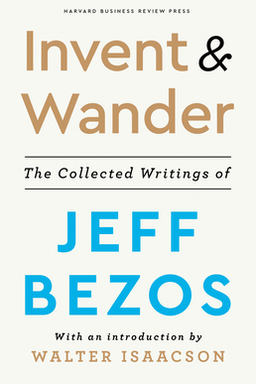
How do you build a company designed to thrive for decades, not quarters? The book built from Jeff Bezos’s shareholder letters reveals Amazon’s central operating principle: long-term value through relentless invention. From its founding in 1994 to its mature global businesses, the letters show a sustained obsession with customers, disciplined reinvestment, and a willingness to endure short-term pain for durable advantage. It’s a manual for how to think, decide, and build when you want enduring results instead of transient wins.
Long-term thinking as a foundation
Bezos’s first public letter in 1997 declared Amazon’s goal: to make investment decisions in light of long-term market leadership considerations rather than short-term profitability. Every subsequent letter illustrates this commitment through infrastructure expansion, technology investment, and cultural discipline. Amazon reinvested IPO proceeds into fulfillment capacity and systems even when profits looked weak, viewing each move as a long-dated option with asymmetric upside if scale succeeded. (Note: This long-termism resembles Warren Buffett’s idea of compounding businesses, but applies it to high-growth technology.)
Customer obsession as operational DNA
Amazon’s growth flows directly from its intense customer focus. The letters repeatedly state the ambition to build “the world’s most customer-centric company.” Practical outcomes include customer reviews, 1‑Click ordering, low pricing, and Prime—all decisions that sacrificed short-term margins for trust. Bezos argues that doing what’s right for customers—even when it hurts near-term profits—creates loyalty that compounds over time. Repeat purchase rates, customer satisfaction scores, and engagement metrics are the ultimate proof.
Building with invention and experimentation
Invention isn’t chaos—it’s systematic. Amazon treats experimentation as a portfolio: many small failures offset by occasional massive successes. Kindle, AWS, Marketplace, and Prime were all born from internal challenges solved creatively. AWS turned internal compute chores into cloud infrastructure; Kindle applied a “working backward” discipline from the ideal reading experience; Marketplace emerged after auction failures taught what customers wanted. Bezos emphasizes that big winners pay for many experiments, so bold bets are essential.
Culture and people who build for mission
The company’s culture favors “missionaries” over “mercenaries.” Missionaries build for passion and purpose; mercenaries chase short-term gain. Bezos and his leaders hire using three questions: do you admire the person, will they raise the team’s effectiveness, and do they have a superstar dimension? Stock ownership ties employees to long-term outcomes. This culture reinforces Amazon’s demanding ethos—long hours and high standards combined with autonomy and invention.
Operational excellence and scale
Infrastructure is an investment in innovation. Fulfillment centers expanded from hundreds of thousands to millions of square feet in just a few years, forming the foundation for fast delivery and cost efficiency. Each improvement—from the simple packing-table fix that doubled productivity to advanced robotics—illustrates how operational detail compounds into strategic advantage. The flywheel effect emerges: more selection attracts more customers; customers attract more sellers; sellers expand selection, and scale lowers cost.
Decision-making and leadership discipline
Amazon formalized clear decision frameworks: distinguish “one-way doors” (irreversible choices) from “two-way doors” (reversible choices). Move fast on reversible decisions and deliberate on the rest. Use “disagree and commit” to preserve speed and unity. Combine data-driven analysis for quantifiable problems—like inventory planning—with judgment-based intuition for strategic bets—like Prime. Bezos’s morning routines, narrative memos, and cognitive discipline all reflect a belief that fewer, better decisions matter more.
Technology as a system of leverage
Amazon’s technological architecture—service-oriented, distributed, and powered by machine learning—enables invention at scale. Internal APIs became AWS; machine learning enhances recommendation engines, demand forecasting, and Alexa; and real-time vision drives initiatives like Amazon Go. Instead of treating technology as a side department, Bezos treats it as the engine for customer experience and free cash flow.
Responsibility and the broader mission
Scale creates obligation. Amazon uses its reach to raise employee standards, invest in renewable energy, design sustainable packaging, and fund philanthropic programs like the Day One Fund. Blue Origin reflects this same long-term builder mindset applied to space: create infrastructure first—reusable rockets and lunar landers—so future generations can build on it. The Washington Post acquisition shows civic stewardship through revitalizing institutions.
Across all chapters, you see one worldview: never stop being Day 1—curious, inventive, customer-obsessed, patient, and bold. Bezos’s letters are not just Amazon’s history; they are a lesson in building any enduring enterprise. If you apply these principles—customer obsession, experimentation, high standards, and long-term patience—you can build systems that outlast market cycles and keep inventing for decades.