
Idea 1
Breaking Free from the Diet Trap
Why do diets fail even when they seem to work? The book argues that nearly all conventional diets activate a powerful biological and psychological backlash that makes lasting change harder. This central insight—called the diet paradox—reveals that efforts to tightly control food intake often trigger survival mechanisms that sabotage those very goals. Your body slows metabolism, intensifies cravings, and stores fat more efficiently, while your mind rebels against deprivation. Together, these reactions create a trap: the more you restrict, the more the body fights back.
The Body’s Starvation Response
Physiologically, dieting resembles famine. Studies like Ancel Keys’s World War II semistarvation experiment show the devastating effects of calorie restriction: obsessive food thoughts, slowed metabolism, anxiety, and binge-like eating. Even moderate restriction can trigger neurochemical signals—such as increased neuropeptide Y—that drive carbohydrate cravings and fat conservation. Over time, repeated dieting teaches the body to defend higher weight set points.
Psychology of Deprivation and Rebellion
The mind reacts no less fiercely. When you forbid foods, your brain interprets the prohibition as scarcity. The result is the “Last Supper” effect—overeating before a diet starts—and guilt when you inevitably break rules. The harder you pull against restriction, the tighter it grips, like a Chinese finger puzzle. The book uses characters such as Sandra and Marilyn to illustrate how chronic self-denial leads to deeper shame and loss of trust in one’s own body.
Cultural Reinforcement of Failure
Society worsens the cycle. From advertisements to product names like “Ultra Slim,” dieting is sold as moral virtue. Yet large-scale studies show chronic dieting predicts later weight gain, eating disorders, and even increased mortality. You’re taught to admire thinness rather than health, trapping you in the “one-last-diet” fantasy that promises transformation but perpetuates distress.
Core Warning
“If dieting were a medication, it would fail safety trials—short-term benefit, long-term harm.” This line captures the authors’ message: you don’t fail diets; diets fail you.
Toward a New Relationship with Food
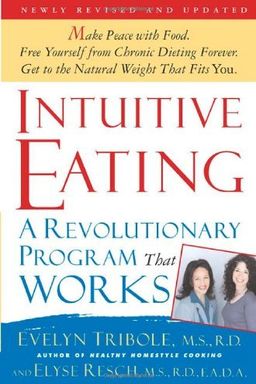
The solution is not more discipline but a new paradigm: Intuitive Eating. You reject external rules and rebuild internal trust—learning to recognize hunger and fullness, seek satisfaction, cope emotionally without food, and respect your body without shame. This shift marks the book’s argument: sustainable well-being arises when biology, psychology, and culture align through self-compassion and attunement instead of control.