
Idea 1
Building Products Customers Love
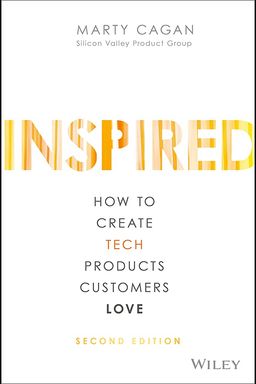
Have you ever wondered why some products instantly click with people while others vanish without a trace? In INSPIRED: How to Create Tech Products Customers Love, veteran product leader Marty Cagan argues that creating successful technology products is not about luck, nor about rigid process—it is about building empowered, cross-functional teams that discover, design, and deliver solutions customers truly love and businesses can sustain. Cagan, drawing from decades at Hewlett-Packard, Netscape, and eBay, contends that behind every great product lies a strong team guided by vision, empowered by leadership, and obsessed with solving real customer problems.
Cagan’s premise is simple but radical: most companies fail not because they lack good ideas but because they use outdated, feature-driven, waterfall-style product management. They confuse output (building features) with outcome (creating customer and business value). The best product organizations—like Amazon, Netflix, Google, and Apple—succeed because they’ve built systems that prioritize continuous discovery, collaboration across design, engineering, and product, and cultures that trust teams to innovate responsibly.
Technology-Powered Innovation
Cagan focuses exclusively on technology-powered products—those that rely on software, data, and digital interactions to deliver value. From Apple’s iPhone to Uber’s mobile apps, innovation today depends on harnessing tech to solve customer pain points at scale. He warns that companies ignoring this shift are doomed to disruption. Yet, technology alone isn’t magic: it must be married to design that delights and business models that make sense. The author invites you to think holistically about product—seeing not just features, but the entire user journey, operational infrastructure, and revenue engine that make experiences work.
From Startups to Enterprises
To ground these ideas, Cagan moves through the lifecycle of companies: the startup stage (where the race is to find product/market fit before cash runs out), the growth stage (where scaling brings stress, process, and new coordination challenges), and the enterprise stage (where bureaucracy often kills innovation). Each phase brings its own traps. Startups fail because they build too slowly or cling to untested visions; growing firms lose alignment and autonomy; enterprises become feature factories serving stakeholders instead of customers. The only path to survival is to cultivate continuous discovery and empower autonomous teams.
Beyond Lean and Agile
Cagan acknowledges the contributions of Lean Startup (Eric Ries) and Agile methods but insists they’re only part of the puzzle. Lean taught us to validate assumptions quickly, and Agile improved software delivery, but both can fail when reduced to rituals. The best teams go beyond Lean and Agile: they focus on solving real problems by addressing four kinds of risks early—value, usability, feasibility, and business viability—through rapid prototyping and experimentation. Discovery and delivery, he insists, must happen continuously and collaboratively, not sequentially.
Empowered Product Teams
The centerpiece of Cagan’s philosophy is the empowered product team: a durable, cross-functional group, usually comprising a product manager, designer, and several engineers, all dedicated to a shared mission. These teams should feel like “mini startups” within the company—missionaries, not mercenaries. Instead of receiving roadmaps from above, they own outcomes tied to measurable business objectives (typically using OKRs). They use prototypes to test ideas quickly, balancing discovery and delivery in parallel. When this model is embraced—he notes—it transforms both morale and performance.
Human Leadership and Product Culture
Cagan’s lessons also target senior leaders. True product leadership is not micromanagement or approval chains—it’s about context, not control. Executives should articulate clear product vision and strategy, then trust teams to find the path. The best companies, he writes, possess an innovation culture—a blend of customer obsession, technology curiosity, and courage to experiment. Adobe’s shift to the Creative Cloud under Lea Hickman, and Netflix’s evolution into streaming under Kate Arnold, illustrate how visionary leadership and cross-functional collaboration can reinvent entire markets.
Why These Ideas Matter
In an era where digital disruption topples complacent giants—think Blockbuster versus Netflix or Kodak versus Apple—Cagan’s message couldn’t be more urgent. If you lead, build, or influence technology products, mastering these principles is no longer optional. You’ll learn how to transform a roadmap-driven organization into a mission-driven culture; how to empower product managers as the “CEOs of the product”; how to discover what customers really need before writing a single line of code; and how to build teams that combine product vision, design craft, engineering excellence, and business sense. Ultimately, INSPIRED shows you how to create products people love—and cultivate the kind of company that can keep doing it again and again.