
Idea 1
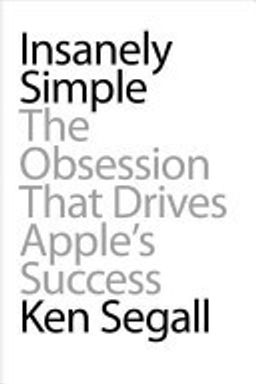
Insanely Simple: The Power of Simplicity at Apple
When was the last time you looked at something complex—your inbox, your company’s strategy, or even your phone—and thought, “Why does this have to be so complicated?” Ken Segall’s Insanely Simple: The Obsession That Drives Apple’s Success argues that this craving for clarity isn’t a quirk; it’s a competitive advantage. Segall, who spent over a decade as Steve Jobs’s ad creative partner at NeXT and Apple, insists that Simplicity isn’t just an aesthetic choice—it’s a business weapon. It’s what made Apple the most valuable and beloved company on Earth while rivals drowned in bureaucracy and jargon.
The book explores how Apple’s “religion of Simplicity” under Steve Jobs became its secret operating system. Jobs wielded what insiders half-jokingly called “the Simple Stick,” using it to smash unnecessary complexity—in meetings, in products, in marketing, and in processes. Simplicity, at Apple, was never about cutting corners. It was about stripping away the nonessential until only what truly mattered remained. As Segall reveals, this pursuit of purity influenced everything from the design of the iMac to the wording of an ad, from the size of a meeting to the architecture of the company itself.
The Philosophy of Simplicity
Segall frames Simplicity as a universal human preference—people, animals, and even amoebas respond better to simple solutions. The irony, he says, is that while everyone craves it, few are willing to fight for it. Complexity is seductive because it masquerades as sophistication. In truth, it’s “simplicity that looks easy but is hard as hell to achieve.” This is why Jobs called Apple’s products “insanely great”—achieving that level of clarity required insane discipline. Segall argues that the difference between companies like Apple and Dell or Microsoft isn’t talent, but an unrelenting obsession with staying simple in philosophy, design, and behavior.
The Ten Elements of Simplicity
Drawing from 17 years of experience with Apple and other tech giants, Segall identifies ten core elements or “weapons” of Simplicity, each explored in a separate chapter: Think Brutal, Think Small, Think Minimal, Think Motion, Think Iconic, Think Phrasal, Think Casual, Think Human, Think Skeptic, and Think War. These aren’t abstract mantras but actionable lenses to simplify how you lead, create, and decide. They show how Apple avoided bureaucratic traps, how Jobs kept teams tight, how he made decisions quickly but decisively, and how he connected emotionally with customers through marketing that spoke to humans, not engineers.
Throughout the book, Segall contrasts Apple’s methods with those of Intel, Dell, and IBM—the “bozos,” in Jobs’s phrasing. These companies, he shows, constantly succumbed to their love of process, committees, and focus groups. Apple, by contrast, empowered a small group of smart people led by a clear decision-maker, with no committees or layers. Where Intel tested every ad, Apple relied on instinct and craft. Where Microsoft named its products Centrino or Zune, Apple chose iMac and iPod—short, memorable, human. Each decision reaffirmed Apple’s DNA: make things for people, not programmers.
Why This Matters to You
Segall’s central message is both business philosophy and personal challenge: anyone can wield the Simple Stick. Whatever your field, simplifying what you do—your meetings, your writing, your customer experience—is how you stand out. Simplicity, he writes, “isn’t available with a switch; it needs a champion.” You become that champion when you insist on honesty (Think Brutal), focus on essentials (Think Minimal), and talk like a human (Think Human). The payoff is clarity, creativity, and stronger relationships—with customers and colleagues alike.
In the end, Insanely Simple offers more than behind-the-scenes anecdotes about Steve Jobs or Apple’s marketing. It’s a manifesto for clear thinking in a complicated age. It shows how the world’s most admired company thrived not through complexity but by doing the hard, unglamorous work of keeping things simple. As Thoreau said, “Simplify, simplify.” Or as Apple would edit him: “Simplify.”