
Idea 1
Unlocking Your Innovation Engine
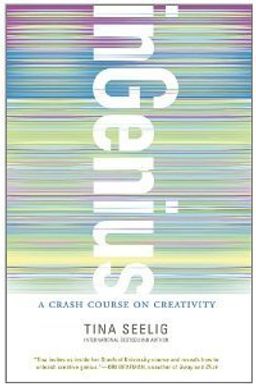
Have you ever wondered why some people seem to generate great ideas effortlessly while others struggle to think outside the box? In inGenius: A Crash Course on Creativity, Tina Seelig argues that creativity isn’t a rare gift—it’s a skill you can learn, practice, and amplify. She contends that your imagination is not just a quirky attribute but a powerful engine of innovation fueled by how you think, what you know, and the world you live in. Her central idea is that creativity arises from the interplay between internal attitudes and external environments—a system she calls the Innovation Engine.
Seelig challenges the myth that creative thinking belongs only to artists or inventors. Instead, she demonstrates that creativity can flourish anywhere—from science labs to classrooms to boardrooms—when you understand how to reframe problems, connect ideas in new ways, and experiment fearlessly. Drawing from more than a decade of teaching innovation at Stanford University, as well as insights from students, entrepreneurs, and scientists around the world, Seelig turns creativity into a practical discipline you can intentionally train.
Creativity as a Natural Resource
Seelig opens with an arresting metaphor: creativity is as renewable and free as air, and it costs nothing to generate but everything to ignore. Yet most people treat innovation as mystical—as though some divine muse selectively dispenses good ideas. This misunderstanding, she argues, is why adults lose the creative spark that comes so naturally to children. As we grow up, our environments discourage play and exploration, replacing curiosity with rules, grading systems, and performance metrics. But creativity, Seelig stresses, is learned behavior that simply needs the right conditions to thrive.
The Innovation Engine Framework
At the core of the book is Seelig’s Innovation Engine—a six-part model showing how creativity emerges from both inner and outer forces. The three internal elements are knowledge (what you know), imagination (your capacity to generate new combinations of ideas), and attitude (your willingness to take risks and believe problems can be solved). The external factors are resources (the assets around you), habitat (your physical and social environment), and culture (the collective beliefs that shape what’s seen as possible). These pieces are mutually reinforcing: your knowledge fuels imagination; imagination creates innovative habitats; habitats shape culture; and a culture of creativity loops back to inspire new attitudes. This system, she says, powers the world’s most inventive communities—from Silicon Valley’s collaborative ecosystems to the classrooms of the d.school.
Why Creativity Matters
In a world of constant change, Seelig insists, creativity is a survival skill. Individuals and organizations that fail to innovate stagnate, like Kodak missing the shift to digital photography or educators clinging to outdated teaching methods. Conversely, those that embrace creative thinking—such as Google, Facebook, and IDEO—continually reinvent themselves by reframing assumptions, experimenting with constraints, and fostering collaborative play. Creativity, she writes, transforms challenges into opportunities and propels progress both personal and societal. It’s the difference between seeing a dead end and spotting a hidden detour to something better.
The Roadmap of the Book
Throughout the book, Seelig unpacks each element of the Innovation Engine through stories and exercises. She starts with reframing (how altering the way you see a problem multiplies solutions) and connecting (how linking unrelated ideas triggers imagination). Then she moves into practical tools for brainstorming, observation, spaces that spark innovation, working with constraints, designing incentives, building collaborative teams, experimenting without fear, and cultivating a mindset of perseverance. Her narrative oscillates between profound theory and joyful play—from the story of a violinist ignored in a subway station to lessons from mountain climbers, chefs, startup founders, scientists, and students. Each chapter builds toward the realization that creativity is not the privilege of genius—it’s the outcome of attitude plus action.
Why You Should Care
Seelig invites you to ask a radical question: What if creativity wasn’t optional, but essential to how you think, work, and live? She wants readers to shift from viewing ideas as lucky accidents to seeing them as results of deliberate cognitive engineering. You can learn to see the world as full of open-ended questions, just like Einstein said he’d spend fifty-five minutes finding the right one before solving the problem in five. Whether you’re redesigning a name tag (like her Stanford students) or rethinking your career path, every moment offers a chance to activate your Innovation Engine. In short, Seelig’s argument is simple but transformative: creativity isn’t born—it’s built. And once you learn to turn the key, the engine runs for life.