
Idea 1
The Hidden Brain and the Limits of Consciousness
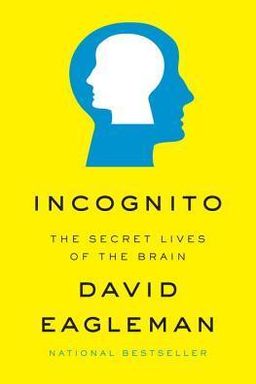
How much of what you call 'you' actually lies beneath awareness? In Incognito, neuroscientist David Eagleman invites you to reconsider the self not as a single voice but as a chorus of hidden systems. He argues that consciousness is merely the summary screen—a small visible surface on a massive iceberg of unconscious processes.
This dethronement of the conscious mind recalls earlier scientific revolutions. Galileo displaced Earth from the center of the cosmos; Darwin stripped humanity of privileged origin; neuroscience now reveals that your conscious mind is not the captain of the ship. Rather, it reads reports from thousands of specialized modules—each evolved to solve survival problems long before reflection existed.
The brain as a vast, loopy machine
Eagleman describes the brain as three pounds of electrical chemistry generating trillions of firings per second. Its architecture is reentrant and predictive: information flows both upward to make sense of input and downward to generate expectations. What you perceive, feel, and decide reflects not raw data but ongoing negotiation among feedback loops. You act and sense within fractions of seconds long before 'you' catch up. When a batter swings at a 100-mph fastball, his body executes in milliseconds—far faster than conscious calculation.
Perception as a constructed best guess
To understand this architecture, Eagleman walks you through vivid demonstrations: Mach bands, blind spots, and motion aftereffects reveal how your brain fills gaps and edits reality. You don’t see the world; you simulate it through prediction. When those predictions succeed, you feel stability. When they fail—like noticing a sudden change in a photograph—your consciousness wakes up to error correction. This predictive model extends to time itself: your brain blends information across milliseconds to give the illusion of synchrony between sight, sound, and touch.
Unconscious expertise and the hunch
Most learning occurs invisibly. Chicken sexers, World War II plane spotters, and gamblers in lab tasks display implicit knowledge—skills and intuitions arising from feedback rather than explicit reasoning. You may get a 'gut feeling' that one choice is risky; physiological signals often reveal this understanding before conscious language forms. (Antonio Damasio’s somatic marker hypothesis frames these bodily cues as internal compasses.) Your hunches are thus statistical summaries of countless hidden experiences rather than mystical whispers.
The modular, evolutionary mind
Eagleman situates the hidden brain in evolution. Each organism lives inside an umwelt—a slice of available reality. You sample the world through narrow sensory windows tuned for fitness, not truth. Human instincts, from attraction to fairness detection, reflect ancient adaptive programs. You carry circuits for face reading, social cooperation, and mate selection, yet most of these run silently beneath awareness. Even beauty itself—symmetry, waist-to-hip ratios, pheromonal cues—has biological underpinnings that the 'I' simply narrates after the fact.
The team-of-rivals brain
Just as governments and corporations require committees, your brain houses competing subagents. Emotional drives, rational planning systems, and reactive instincts each present their bids; frontal control areas act as a CEO that arbitrates among them. When these systems disagree, consciousness emerges to mediate—explaining why you feel deliberation most clearly at points of conflict. Damage the CEO (as in frontal-lobe injury), and subroutines run unchecked, resulting in impulsivity or disinhibition. The healthy self, Eagleman argues, is a negotiated coalition, not a monarch.
From free will to accountability
Neuroscience challenges the moral idea of a ghostly chooser. Libet’s experiments showed readiness potentials before conscious intent, and clinical cases—from Tourette’s tics to sleepwalking homicide—demonstrate action without volition. Eagleman reframes the debate: instead of metaphysical free will, we should adopt a forward-looking view of responsibility grounded in brain function. Society should emphasize prevention and rehabilitation rather than retribution, tailoring interventions to neural realities.
Knowing yourself anew
The final dethronement is liberating, not nihilistic. Just as Copernicus expanded cosmic horizons, neuroscience expands personal ones. True self-knowledge means pairing introspection with biological insight. You are not reducible to firing neurons, yet you cannot be understood apart from them. By learning how hidden programs, genetics, and experiences interact, you gain compassion—for yourself and others—and glimpse a deeper wonder: a universe that evolved matter capable of asking where its thoughts come from.