
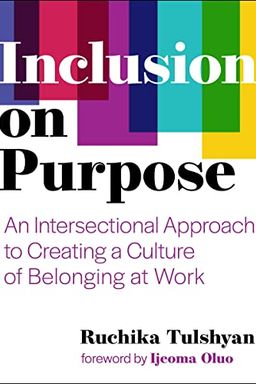
Inclusion on Purpose cover

Inclusion on Purpose

by Ruchika Tulshyan

Inclusion on Purpose by Ruchika Tulshyan reveals how leaders can actively foster a culture of diversity, equity, and belonging at work. With a focus on the experiences of women of color, it provides transformative strategies that benefit all employees, enhancing innovation and productivity while addressing systemic inequalities.

Inclusion on Purpose: A New Standard for Leadership

What if genuine leadership today meant doing more than avoiding bias—what if it meant confronting it head-on? In Inclusion on Purpose, Ruchika Tulshyan urges us to redefine inclusion not as an automatic outcome of goodwill or diversity programs, but as a conscious, daily practice. She argues that workplaces thrive only when inclusion becomes intentional—when leaders actively dismantle structural barriers and build spaces where women of color can belong, advance, and lead.

Tulshyan contends that progress toward diversity often stalls because organizations equate good intentions with meaningful action. The missing link, she says, is intentional inclusion: a mindset and behavior framework that guides leaders to see privilege clearly, empathize deeply, and act with accountability. Her message is simple but radical—being inclusive is not a trait; it’s a skill you must practice with purpose.

The Moral and Economic Imperative

Tulshyan opens with vivid statistics and stories to illustrate why inclusion matters at every level. Diversity drives moral progress, but it also fuels growth—McKinsey data show that engaging women fully in the workplace could add trillions to economies worldwide. Yet women, especially women of color, remain excluded from leadership, pay equity, and advancement. The author reframes inclusion as leadership’s defining skill of the future: without it, organizations will fail to thrive in an increasingly multicultural world.

To make this case personal, she grounds the argument in real-world experiences—stories of Black, Latinx, and Asian women who endure daily disbelief, tokenism, and biased feedback. These narratives expose how institutional inequalities and unchecked privilege continue to shape careers and workplaces. Tulshyan shows that systemic problems demand systemic solutions—but they start with individual behavior. Inclusion begins with what leaders choose to see, ask, and do.

Moving Beyond Comfort: The BRIDGE Framework

Central to Tulshyan’s approach is her six-part BRIDGE framework, a step-by-step model for cultivating an inclusion mindset. Each pillar captures a habit of self-awareness and growth: Be uncomfortable with your biases, Reflect on what you don’t know, Invite feedback, remember that Defensiveness doesn’t help, Grow from your mistakes, and Expect that change takes time. Instead of seeing inclusion as a moral stance alone, Tulshyan reframes it as a developmental process—akin to Carol Dweck’s “growth mindset.”

She argues that discomfort is not a deterrent but a sign of progress. When leaders face difficult truths about privilege or exclusion, those moments reveal opportunities for learning. Real inclusion requires staying in that discomfort long enough to change behaviors. This emphasis on personal growth transforms DEI work from a corporate checklist into a lifelong practice—a discipline of empathy and accountability.

From Individual to Organizational Action

Tulshyan divides her book into three stages of change: individual actions, organizational behaviors, and global applications. The first requires introspection—how we see privilege and practice empathy. The second demands institutional courage—creating fair hiring, equitable pay, safe feedback systems, and cultures of psychological safety. The final step, she says, is scaling inclusion beyond borders, from corporations to global marketplaces and technology frameworks.

Her thesis is clear: inclusion is not achieved by passive belief or HR programs; it is sustained through intentional design. Every decision—from who sits in meetings to who gets sponsorship, promotions, or credit—reflects a leader’s values and power. Inclusion on purpose asks us to look at those choices directly and change them deliberately.

Why This Matters Now

Tulshyan situates her work in the wake of global reckonings—racial injustice movements, the pandemic’s impact on women of color, and the urgent need for empathy in leadership. She believes we are at a crossroads: organizations can either double down on comfort or lead with courage. To be inclusive on purpose means recognizing privilege not as guilt but as responsibility—to use power to elevate others, not just protect oneself.

“Inclusion is leadership,” Tulshyan writes. Until we actively create environments where everyone can bring their authentic selves, leadership remains incomplete. Inclusion on purpose separates average managers from transformative leaders—the ones building workplaces that will stand for justice, creativity, and belonging in the next century.

If you want to understand why inclusion fails and how it can succeed, this book gives you both the mirror and the map. It challenges you to look inward, act outward, and build workplaces—and societies—that reflect the full potential of humanity united rather than divided by identity.


Seeing Past Privilege and Defensiveness

Tulshyan begins by addressing the hardest part of inclusion: recognizing privilege without shame or denial. She opens with her own story—an Asian woman educated in elite schools, unaware of her privilege until she entered a white-dominated tech workplace and experienced bias firsthand. Through this lens, she teaches that understanding privilege is not about guilt; it’s about insight. Privilege, whether racial, gender, or socioeconomic, shapes who gets to belong and who gets questioned.

Understanding Privilege

Privilege means having unearned advantages—social, racial, or financial—that make some people’s success easier. Tulshyan cites organizational psychologist John Amaechi: recognizing privilege does not invalidate struggle; it illuminates others’ burden. For leaders, acknowledging privilege opens a pathway toward empathy and accountability. If you have never worried about being interrupted or underestimated because of your race, you have privilege that others do not.

Tulshyan also challenges the myth of meritocracy—the comforting idea that hard work alone determines success. She draws from evidence showing that meritocracy masks bias, because those with privilege often have more opportunities, safety nets, and second chances. The author recounts how her belief in meritocracy crumbled when she saw men promoted faster despite lesser performance in tech. The message is clear: recognizing privilege is the first act of inclusion.

Framing Systems, Not Individuals

To help readers overcome defensiveness, Tulshyan offers a powerful framing: focus on systems, not people. She tells her students, “The problem isn’t men—it’s patriarchy. The problem isn’t white people—it’s white supremacy.” This distinction invites accountability, not blame. When you frame inclusion as dismantling oppressive systems rather than attacking individuals, defensiveness fades and learning increases.

She models vulnerability by admitting her own complicity: as an Asian woman, she benefits from the “model minority” myth that sometimes positions Asians as compliant and successful at the expense of Black peers. By confessing “I am racist and benefit from racist systems,” Tulshyan demonstrates that only honest self-reflection paves the way for authentic inclusion.

From Comfort to Courage

Tulshyan urges readers to step outside homogeneous social circles. Most white Americans, she notes, have 91 percent of their social networks made up of other white people—limiting empathy and perspective. In organizations, this leads to leadership teams that reward sameness over competence. To truly lead inclusively, you must ask, “Who is missing from my table?” and then make space deliberately.

Tulshyan’s most transformative recommendation: use privilege for good. Speak up when bias occurs, especially when your power shields you from consequence. Silence protects oppressors; action protects justice. This is inclusion on purpose—using advantage not to dominate but to elevate.

The chapter ends with a challenge: stop rehearsing comfort. Inclusion asks for courage, humility, and action. When you recognize privilege, shift the spotlight, and act with empathy, you help build workplaces where equality isn’t aspirational—it’s lived reality.


Developing an Inclusion Mindset

Many leaders claim to support equality, but few possess the mindset to make it real. Tulshyan draws from psychologist Carol Dweck’s theory of the growth mindset to define what she calls the inclusion mindset—a belief that inclusion is learnable and improvable through continuous effort, humility, and feedback. Leaders must reject the excuse, “I can’t change, I’m a product of my time,” and instead commit to growth and discomfort.

Learning Through Discomfort

The first step is being uncomfortable. Tulshyan shares the BRIDGE framework’s “B”: Be uncomfortable. Real inclusion demands facing the pain of one’s own biases. It means listening to voices that unsettle you, hearing truths that sting, and resisting the urge to dismiss or defend. She compares this to her toddler learning to ride a bike—falling, bruising, but getting up again. Inclusion requires the same perseverance.

Reflect, Invite, and Accept

Leaders must constantly reflect on what they don’t know. Tulshyan tells stories of executives who attended Black employee resource meetings and discovered realities they’d never imagined. Reflection leads naturally to inviting feedback—perhaps the most difficult task of all. She provides questions managers can ask: “Do you feel like you belong here?” and “Was there a moment I made you feel excluded?” Listening is not enough—leaders must act on the feedback and ensure it never becomes punishment for honesty.

Growing from Mistakes

Tulshyan cites Starbucks CEO Kevin Johnson’s public apology after racial profiling in a store as a powerful model of growth. Instead of defensiveness, he accepted accountability and implemented long-term anti-bias programs. Neuroscience supports this approach: psychologist Jason Moser found that people with growth mindsets learn better from mistakes—their brains literally fire more when they err and reflect. Leaders should expect imperfection and treat missteps as opportunities for adaptation.

Expecting Time and Patience

Finally, inclusion takes time. Tulshyan warns against “action bias”—the reflex to act fast after moments of social reckoning, like after George Floyd’s murder, without deep listening or sustained commitment. Real change comes from reflection and endurance. She quotes DEI author Amber Cabral: “You must be silent and pay attention before you speak.” Listening itself is an act of leadership.

The inclusion mindset transforms leadership from compliance into compassion. When you embrace discomfort, ask for feedback, stay humble, and learn from mistakes, you build organizations capable of justice—and innovation.

Cultivating an inclusion mindset means seeing inclusion as a lifelong skill, not a training module. It’s both internal practice and external discipline—one that reshapes not only workplaces but the leaders within them.


Empathy as the Engine of Inclusion

Empathy, Tulshyan argues, is the connective tissue of inclusive leadership. Without it, diversity efforts become hollow. Drawing from psychology and human experience, she explains empathy as more than feeling—it’s understanding the lived realities of those unlike you and acting accordingly. Through stories like Ayesha Syed’s experience of Islamophobia at law firms, she illustrates why empathy must be deliberate.

Building Empathy Through Awareness

Tulshyan introduces three dimensions of empathy—affective (feeling others’ emotions), cognitive (understanding their perspectives), and empathic concern (acting with compassion). Inclusion relies particularly on cognitive empathy: the ability to grasp how biases shape others’ experiences. Many white leaders, she notes, lack opportunities for cross-cultural empathy because their social circles remain racially homogenous. Expanding those circles is essential to learn what bias feels like on the receiving end.

Practicing Empathy Daily

Tulshyan offers powerful tools: active listening (silencing devices, suspending judgment), seeking shared experiences, and using fiction or film to inhabit others’ worlds. She recalls a workshop where employees mapped visible and invisible identities, discovering deep commonalities beyond race or gender. Empathy grows when we see connection across difference—not sameness, but humanity.

Aligning Empathy with Action

Empathy must translate into advocacy. Leaders should intervene when witnessing microaggressions—those subtle slights like mistaking competence for luck or asking “Where are you really from?” (A term reconsidered by scholars like Ibram X. Kendi, who calls these not micro but abuse.) Empathy also means designing policies rooted in compassion—flexibility, feedback, and accountability. It sparks inclusive innovation by centering lived experiences over convenience.

Empathy isn’t soft skill—it’s strategic advantage. Teams led by empathetic leaders perform better, trust more, and stay longer. As Tulshyan notes, empathy separates transactional management from transformative leadership.

For Tulshyan, empathy is not optional—it’s actionable love. It asks you to listen, imagine, and stand up even when it costs comfort. That is the heart of inclusion: using understanding not as knowledge but as power shared.


Shine the Light, Then Get Out of the Way

One of Tulshyan’s most practical lessons is about leadership humility: create space for women of color to shine and then step aside. Through Laura Gómez’s story—whose AI diversity start-up idea was stolen by a male peer—she shows how exclusion often unfolds through the theft of ideas and silence of bystanders. True allyship means using privilege to amplify others, not overshadow them.

Why Credit and Visibility Matter

Women of color rarely get credit for their contributions. Tulshyan distinguishes "glamour work," high-visibility projects that lead to promotion, from "office housework," tasks that sustain but don’t advance careers. Researcher Joan C. Williams calls this invisible labor the reason women of color stagnate while white peers rise. Leaders must assign visibility intentionally and reward contributions openly.

Using Privilege Responsibly

Tulshyan spotlights Marilyn Monroe’s allyship toward Ella Fitzgerald—how Monroe used her fame to secure Fitzgerald’s concert slot and then stepped back from the stage so Fitzgerald could receive full recognition. That’s the model: advocate, amplify, and withdraw. In meetings, interrupt interrupters, repeat women of color’s ideas, and defer credit back. In Hiroshu’s research on amplification (used by Obama’s female staffers), repeating and attributing women’s ideas changes room dynamics entirely.

Practical Steps for Leaders

Leaders can build inclusion through structured practices: rotating note-taking (“office housework”), diversifying speakers at conferences, sponsoring women of color for stretch roles, and challenging biased feedback. Sponsorship is key: Denise Reese’s story shows how mentors who believed in her transformed her into an international executive. When leaders see potential and act on it, they reshape careers—and the workplace itself.

To shine the light and then get out of the way is to understand humility as power shared. Inclusion thrives when leadership becomes the act of clearing space for brilliance that’s been sidelined too long.

Tulshyan leaves readers with a checklist for auditing meetings, high-visibility projects, and pay equity. Ask yourself daily: who’s missing, who’s overshadowed, and how can I make room? Those questions, asked consistently, create systemic change far more lasting than statements of support.


Psychological Safety: The Core of Belonging

Tulshyan pairs inclusion with another essential concept: psychological safety. Based on Harvard scholar Amy Edmondson’s groundbreaking research, psychological safety means the belief that you can speak up without fear of punishment. Tulshyan grounds this abstract idea in vivid real stories—like journalist Shefali Kulkarni’s humiliation at a political convention—and explains why women of color most need this safety yet rarely receive it.

Building a Safe Culture

Tulshyan outlines four warning signs of unsafe cultures: absence of complaint systems, penalty for truth-telling, prioritization of white comfort, and lack of allies. In each, women of color bear the weight. She contrasts Dawn Wooten, a nurse punished for whistleblowing on unethical practices, with organizations like Intel, which created confidential “WarmLine” hotlines for employees facing bias. Safety requires systems that encourage reporting and accountability, not silence.

The ADAPT Framework

Her framework for creating safety—ADAPT—offers tangible action: Analyze engagement data by race and gender, Develop clear codes of conduct, Accept failure as part of learning, Propel and fund employee resource groups, and build Team tenets to set priorities when inclusion conflicts with other goals. These tools move safety beyond policy into daily behavior.

Active Allyship and Courage

Managers must act as active bystanders, disrupting bias when it appears, not waiting for victims to speak up. Tulshyan cites DEI expert Minda Harts’s advice that white women must not just “send the elevator back down” but “ride it with women of color.” That commitment transforms safety from concept to practice. Safety also means creating cultures that reward honesty and imperfection—fail fests, candid conversation, and empathy over ego.

Psychological safety powers innovation and growth because inclusion without safety is incomplete—no one can innovate if they’re afraid to speak or fail. Tulshyan reminds readers that true progress demands brave spaces, not just safe ones.

For leaders, safety is the new cornerstone of creativity. In cultures where women of color can speak freely, make mistakes, and still belong, organizations don’t just survive—they flourish.


Creating Inclusive Systems of Power

In Tulshyan’s conclusion, she widens the lens from workplaces to societies. True inclusion demands redefining power itself—not as finite privilege held by a few but as a shared force that multiplies when distributed. She draws from Nilofer Merchant’s concept of “onlyness,” the idea that each person’s unique perspective is a source of authority. To build inclusive futures, leaders must stop hoarding power and start sharing it.

Inclusion as a Practice, Not a Project

Tulshyan insists that inclusion is never “one and done.” It’s not achieved through hiring a token diversity lead or one woman of color on a team. Inclusion is continual reflection and adaptation—a discipline akin to practicing antiracism. She uses the Ubuntu principle, “I am because we are,” to remind us that injustice anywhere harms everyone. Workplaces must operate as communities, not silos of competition.

Sharing Power and Building Coalitions

Inclusive leadership means coalition-building—especially among privileged allies who vocalize their support for marginalized peers. Tulshyan points to women like Beyoncé and venture capitalist Arlan Hamilton, who use influence to demand diversity and fund underestimated talent. Power multiplies when invested in others. She argues that workplaces with women of color at the center drive the innovation needed for the global future.

The Global and Technological Frontier

Tulshyan closes by connecting inclusion to technology and globalization. Systems built by the privileged reproduce bias, but inclusive design can transform both technology and global markets. She imagines a future where every decision—algorithmic or corporate—asks: Who is missing, and how can we ensure they are represented? That simple question, asked intentionally, can redefine leadership and equity worldwide.

“Until everyone is intentionally included, someone will always be excluded.” Tulshyan repeats this lesson as both warning and invitation. Inclusion on purpose isn’t just a book—it’s a blueprint for reimagining power so that humanity, in all its diversity, can shine.

Tulshyan leaves readers empowered: inclusion starts with you, scales through community, and transforms through persistence. In the end, inclusion on purpose is not about fixing women of color—it’s about fixing the places where they work, live, and lead.

Dig Deeper

Get personalized prompts to apply these lessons to your life and deepen your understanding.

Go Deeper

Get the Full Experience

Download Insight Books for AI-powered reflections, quizzes, and more.