
Idea 1
Inclusify: Balancing Uniqueness and Belonging
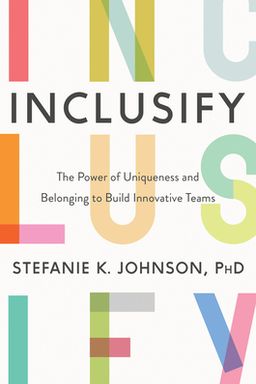
Have you ever felt torn between wanting to fit in and wanting to stand out? That tension—between belonging and being your authentic self—sits at the heart of Stefanie K. Johnson’s Inclusify. She argues that leaders must learn to cultivate cultures where people can feel both unique and part of something larger. The book reveals how inclusion isn’t simply about diversity metrics; it’s about the daily behaviors that make people feel valued, seen, and accepted.
Johnson contends that inclusion arises from balancing two deeply human needs: the desire for belonging and the desire for uniqueness. Leaders often excel at one but neglect the other—creating workplaces that either demand conformity or highlight differences without connection. By exploring real corporate case studies, psychological research, and leadership archetypes, Johnson outlines how organizations can move beyond superficial diversity efforts to truly Inclusify—creating environments where everyone thrives.
The Two Core Drives: Belonging and Uniqueness
Humans are wired with two competing drives: we want to be accepted, yet we crave individuality. Belonging matters because social rejection activates the same pain centers in the brain as physical injury. At work, leaders often try to make people fit the existing culture—hiring for "culture fit" and inadvertently excluding difference. But belonging without space for individuality leads to conformity and burnout. On the other hand, focusing solely on uniqueness can alienate people who feel disconnected from the group. True inclusion exists in the space where both coexist.
Why Diversity Efforts Fail
Although corporations invest billions in diversity programs, representation at the top levels of leadership remains staggeringly low. Johnson points out that only 5% of Fortune 500 CEOs are women, and a tiny fraction represent people of color. Why? Because most inclusion programs stop at diversity—hiring individuals who look different but are expected to act the same. Leaders often fail to value diverse perspectives or fail to weave belonging into the fabric of the organization. Mere representation doesn’t guarantee inclusion or innovation.
The Six Leadership Archetypes and the Four Follies
Through her interviews with hundreds of executives, Johnson identifies six archetypes and four common follies. The follies are traps leaders fall into when they miss either uniqueness, belonging, or both. These include the Meritocracy Manager who prizes fairness but stifles diversity, the Culture Crusader who builds great cohesion but excludes outsiders, the Team Player who assimilates to the dominant group, the White Knight who paternalistically protects others, the Shepherd who supports selectively, and the Optimist who hopes inclusion will happen naturally but never acts decisively.
Each archetype reflects how good intentions can go awry. For example, a Meritocracy Manager might believe they’re being objective by hiring purely on performance, yet unconscious bias leads them to favor candidates who resemble themselves. Culture Crusaders, in contrast, create strong, unified teams but risk groupthink when everyone “fits the culture” too perfectly. In short, these leaders focus on either belonging or uniqueness—but rarely both.
How Inclusifiers Rise Above
Inclusifiers consciously practice behaviors that honor both drives. They celebrate difference and create psychological safety for belonging. Across industries—from PayPal to Airbnb to Salesforce—the best leaders model empathy, transparency, and courage. When PayPal’s CEO Dan Schulman discovered a gender pay gap, he invested millions to fix it. At Airbnb, Brian Chesky turned a crisis over race discrimination into a cultural shift toward belonging. These leaders act, measure progress, and change systems rather than issuing hollow statements.
Why It Matters Now
In a post-#MeToo and increasingly diverse world, learning to Inclusify is no longer optional. It’s a moral and business imperative. Diverse organizations outperform their competitors in innovation, profitability, and growth, but only when inclusion moves beyond metrics. Johnson challenges readers to expand their empathy, examine biases, and design workplaces where individuals can be fully themselves and deeply connected. For leaders, Inclusifying means shifting from avoiding difference to embracing it—so that belonging and uniqueness fuel shared success.