
Idea 1
Addiction as a Response to Pain and Disconnection
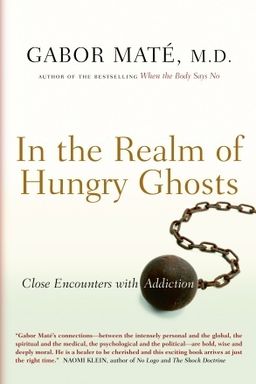
Why do people keep using substances or behaviors that destroy their lives? Gabor Maté’s In the Realm of Hungry Ghosts answers this by turning addiction upside down. Instead of a moral flaw or a disease isolated in the brain, he argues that addiction is a flight from distress—a desperate attempt to self-soothe unbearable emotional pain that began long before the first drug was ever taken. Every addict’s story, he insists, is a story of suffering seeking relief.
A survival mechanism, not a pathology
Maté invites you to see the addict’s behavior as logical: when you can’t bear what you feel, any reliable relief will do. Nick, who uses heroin to numb the grief of his twin’s suicide, says it plainly: 'I do drugs so I don’t feel the feelings I feel when I don’t do drugs.' From Sharon, who returns to Vancouver’s Downtown Eastside after each recovery attempt, to Celia, who chases opiate oblivion after childhood sexual abuse, every portrait reinforces the same pattern—pain, relief, repetition.
The idea reframes addiction as a form of unconscious problem-solving. If distress is the disease, addiction is the maladaptive medicine. Punishment or shame can only deepen the wound, driving further use. Compassionate curiosity—asking not “why the addiction?” but “why the pain?”—becomes the starting point for understanding.
The biochemistry of relief
In neurobiological terms, drugs hijack the same brain systems meant to moderate pain and promote connection. Opiates plug into the endorphin circuits that soothe both physical and emotional pain, while stimulants like cocaine flood dopamine pathways, creating motivation and energy. These overlapping systems—the opioid calm and the dopamine drive—normally sustain life by bonding parents to children and propelling people toward reward. When early environments distort these systems, the person becomes both hypersensitive to pain and hypofunctional in comfort. Drugs then replace what caring human relationships were meant to provide.
The role of early experience
The book’s recurring message is developmental: infants are born with immature brains shaped by the environment. When parents are stressed, disconnected, or traumatized, their lack of attunement—the ability to emotionally mirror and calm the child—impairs the wiring of stress and reward circuits. Maté connects this to his own infancy in wartime Budapest, when his mother’s depression and separation left a lifelong imprint of emotional hunger that later revealed itself in workaholism and compulsive CD buying. The same mechanism appears in Celia, Clarissa, and countless clients whose childhood abuse translated into adulthood addiction.
This childhood lens does not excuse behavior; it explains it. It also redirects attention from judging to preventing—by supporting parents, reducing stress in pregnancy, and building emotionally responsive communities.
Dislocation and the social body
Maté situates addiction within its broader ecology. The Downtown Eastside, a neighborhood thick with poverty and disease, is for him both clinic and classroom. He describes it as the realm of 'hungry ghosts'—borrowed from Buddhist cosmology—souls that can never fill their emptiness. Their suffering is not only psychological but social: colonization, homelessness, racism, and punitive policy sever people from dignity and belonging. In this dislocated world, drugs become counterfeit community, providing the illusion of connection where society has withdrawn it.
Harm reduction and compassion as medicine
Against this backdrop, harm reduction emerges as pragmatic compassion. Clinics like Vancouver’s Portland Hotel and Insite provide housing, supervised injection, and medical care—not as rewards for virtue but as preconditions for survival. Residents such as Sharon or Claude show that safety, shelter, and acceptance are the first rungs on any ladder of recovery. By contrast, the 'War on Drugs' only drives the wounded further underground. Maté draws on both data and decency to argue that only humane environments can produce healing brains.
Integration of brain, self, and society
By weaving neuroscience, clinical narrative, and social critique, Maté gives a unified picture: addiction arises when biological vulnerability meets emotional loss in a toxic environment. The addicted person’s prefrontal cortex—the brain’s seat of self-control—fails to restrain the pull of distorted reward circuits. But that is not irreparable. Through mindfulness, structured support, therapy, and community, the cortex can regain influence. Emotional attunement, not punishment, repairs the systems that trauma once miswired.
Ultimately, the book leaves you with a moral imperative and a scientific insight: where there is connection, addiction loosens its grip. If society insists on shame and exclusion, the hungry ghosts will keep returning. Healing begins when compassion replaces judgment—within the brain, within families, and within the culture that shaped both.