
Idea 1
Freedom Has a Price
What would you risk—your career, your income, even your family ties—to tell the truth in public? In In The Name Of Freedom, Enes Kanter Freedom argues that real liberty demands sacrifice. He contends that the modern world too often treats freedom like a brand—celebrated in slogans, sidelined when it costs money—while dissidents pay with time, safety, and relationships. His core claim: moral courage is a daily practice, not a performance. It begins with a promise to see people as they are (not as propaganda says) and grows into a willingness to confront power—from an autocrat in Ankara to boardrooms in Beaverton and Manhattan—even when it ends your dream job.
Framed as a high-velocity memoir of an NBA center turned activist, Freedom’s book weaves immigrant grit, locker-room candor, and the cold mechanics of authoritarianism into a single throughline: freedom is not free. He shows you how a boy from Van, Turkey—who once refused to shake a Jewish roommate’s hand—becomes a man who builds interfaith basketball camps in Jerusalem, studies the Torah beside the Quran, and changes his last name to “Freedom” the day he becomes a U.S. citizen. Along the way he escapes a kidnapping attempt in Indonesia, sleeps on a floor in Heathrow to avoid Interpol, watches his father jailed, his passport revoked, and his NBA minutes vanish after he calls out China and Nike from center court.
What The Book Argues
Freedom’s core argument unfolds in three moves. First, authoritarianism thrives on propaganda and fear; you defeat it by seeing clearly and speaking plainly. Second, western institutions—leagues, brands, media—often preach values at home while bowing to profits abroad; you must be ready to stand apart from your industry’s herd. Third, America, for all its flaws, remains the rare place where a private citizen can push back, find allies on both sides of the aisle, and build bridges across faiths and races. That’s why he calls the U.S. an “imperfect but essential beacon,” worthy of critique and defense at the same time (a stance reminiscent of Garry Kasparov’s and Natan Sharansky’s dissident memoirs).
What You’ll Learn
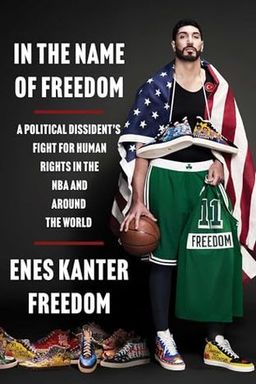
You’ll discover how a nine-year-old’s promise to his mother—“don’t hate anyone before you meet them”—becomes a life compass. You’ll follow the Great Escape from a six-year, $6 million deal in Istanbul’s Fenerbahçe (he describes the club’s tactics as mafia-like), the NCAA saga that birthed #FreeEnes, and the meeting with Senators and DHS officers who helped him outrun an Interpol scare. You’ll see what it costs to challenge China’s abuses and Nike’s supply chains: custom on-court shoes with “Free Tibet” and “Made With Slave Labor,” equipment managers begging him to take them off, the NBPA threatening a league-wide shoe rule, a private call with Adam Silver, and then a benching, a trade to Houston, and a quiet waiver—followed by Celtics games returning to Chinese TV.
You’ll also hear the quieter lessons: learning to taste Thanksgiving turkey (after hiding it in a backpack the first time), breaking a cross above a host family’s bed—and then learning to bake cookies with them; calling a Jewish friend to apologize; discovering the American sentence that changes everything: “This is not Turkey, this is America.” It’s a crash course in deprogramming prejudice and exercising the First Amendment responsibly (compare with Tara Westover’s Educated on unlearning inherited beliefs, or Maria Ressa’s How to Stand Up to a Dictator on speaking truth under pressure).
Why It Matters Now
This story lands in a moment when moral clarity is often outsourced to institutions—and then bargained away. Freedom shows you the difference between a hashtag and a habit. He refuses to romanticize sacrifice: his father was imprisoned, his family disowned him under duress, and he now lives with a public bounty, State Department travel constraints, and daily death threats. Yet he also refuses cynicism. He builds interfaith camps at the Vatican and in Jerusalem, meets the Dalai Lama and Pope Francis, launches schools to unite kids across faiths, and doubles down on joy as fuel for endurance.
Anchor Quote
“Freedom is not free. I gave up everything to fight for everything.”
How To Read This Summary
We’ll start with the promise that reshaped his beliefs and career. Then we’ll track the decision to leave money for meaning, the face-to-face with Erdoğan’s repression, and the NBA’s clash between values and revenue. We’ll examine the price tag of dissent and the blueprint he offers for everyday courage. Finally, we’ll return to America’s role in all this—and how you can apply these lessons, whether you’re on a court, in a company, or at a dinner table where people disagree. If you’ve ever wondered how to stand tall when your job depends on not rocking the boat, this book offers both a cautionary tale and a playbook.