
Idea 1
The Transformative Power of Walking
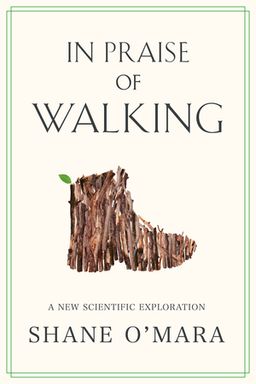
When was the last time you took a long, unhurried walk—one not dictated by errands or clocks, but by curiosity and breath? In In Praise of Walking, neuroscientist Shane O'Mara invites you to rediscover this most natural human act as not just movement, but a profound key to understanding how we think, feel, create, and connect. He argues that walking is more than exercise—it's the foundation of our physical health, emotional well-being, social life, and even our civilization. Walking is the rhythmic dance between the body and the brain that shapes what it means to be human.
O'Mara contends that walking upright on two feet—our distinctive adaptation known as bipedalism—is what set humanity apart from the rest of the animal kingdom. It made our minds mobile, sparked our migration across continents, and freed our hands to build, gesture, and create. Yet, despite this evolutionary gift, modern life has pulled us away from it: we sit for hours, travel in cars, and design cities hostile to pedestrians. The result is a silent depletion of health, creativity, and connectedness.
Walking as Evolution’s Masterstroke
The book journeys deep into evolution, showing how walking emerged as a brilliant solution for movement in a complex world. O'Mara compares humans to sea creatures like the sea squirt, which digests its own primitive brain once it becomes stationary—a vivid reminder that brains evolved for movement. When our ancestors stood upright, they gained the ability to walk vast distances, hunt, gather, and imagine beyond the horizon. Walking didn’t just change our posture—it changed our consciousness.
From the fossil footprints of “Walking Eve” in South Africa to the tetrapod tracks found on Valentia Island in Ireland, O'Mara connects the dots of our deep past. He explains how bipedalism reshaped our anatomy—from the repositioning of the foramen magnum at the base of the skull to the arch of our feet. Walking created the conditions for tool use, language, and society itself.
A Prescription for Mind and Body
Beyond evolution, O'Mara reveals the surprisingly vast scientific evidence for walking’s effects on mind and body. Walking improves cardiovascular health, lowers stress, enhances memory, generates new brain cells, and reshapes mood. He describes studies proving that even short bouts of daily walking increase blood flow to the brain and stimulate the release of neurotrophic factors—natural fertilizers for neural growth. In one study, older adults who attended simple walking groups reversed age-related decline in memory regions such as the hippocampus. Movement, he insists, is medicine—no pill compares.
He mixes scientific findings with vivid narrative: stories of his own walks through Belfast or Glendalough, of sea squirt brains and alpine explorers, to show how walking grounds us in the world again. He reminds us of the mental clarity Rousseau felt when wandering, or the insight Einstein described when walking with thought experiments in mind.
Walking as Cognitive Freedom
A major idea running through the book is cognitive mobility—the notion that when you move your body, you move your mind. The brain evolved to work “on the go,” constantly integrating sensory information from sight, balance, and movement. Experiments show that attention, creativity, and learning all improve when people walk. Even the brain’s navigation systems—the hippocampus and surrounding regions—activate most robustly at walking speed.
Through that lens, walking is not passive transport—it’s active thinking. The mind works differently while pacing a forest path than when sitting still. Mental maps form. Ideas recombine. Emotions settle. As O'Mara says, “We are minds in motion.”
Walking, Society, and the Future
Finally, O'Mara brings the discussion home: walking knits society together. From ancient migrations to modern protest marches, from evening passeggiatas in Italian towns to children learning their first steps, walking is the thread that binds communities. It’s also a civic issue. Cities built for cars trap us in sedentary isolation. Cities designed for feet—those that follow EASE principles (Easy, Accessible, Safe, Enjoyable)—promote creativity, health, and equality.
In the age of digital distraction and urban sprawl, In Praise of Walking reminds you that the simplest act—placing one foot before the other—can restore both body and soul. Walking awakens ancient rhythms of the brain, enriches our sense of place, improves health, deepens creativity, and reconnects us to others. O'Mara’s message is both scientific and spiritual: walking is not a minor habit but a central human practice, one that shapes who we are and how we live. When you walk, you are quite literally thinking with your whole being.